Corporate sustainability strategy has grown more sophisticated every year. Emissions reporting frameworks, renewable energy procurement, packaging redesigns, supply chain audits — the vocabulary and the ambition have both expanded considerably. Yet one of the most consequential sustainability decisions a business makes every few years barely registers in most ESG discussions: what happens when an employee’s smartphone hits the floor.
Device durability — or the deliberate lack of it — sits at the intersection of procurement policy, environmental responsibility, and corporate financial health. With a wave of new Apple hardware arriving in September 2026, the question of how businesses and consumers choose to protect their devices is worth treating as the ESG issue it actually is.
The True Cost of a Shattered Screen in the Global Market
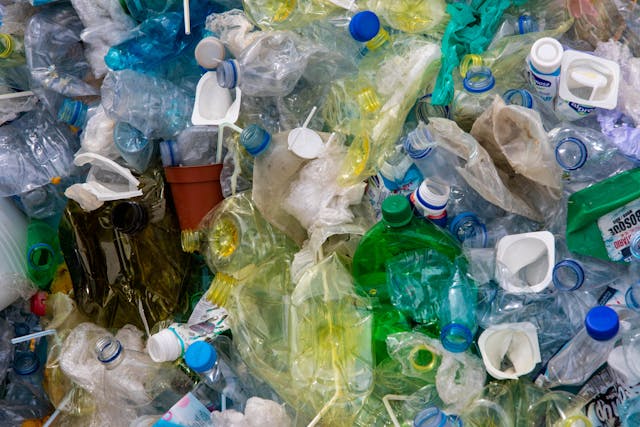
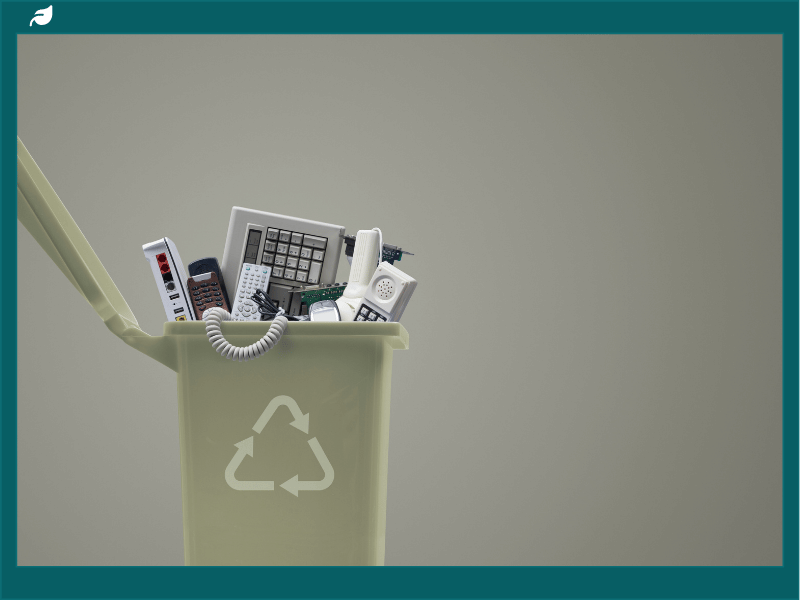
The scale of the global e-waste problem is no longer in dispute. According to the UN’s fourth Global E-waste Monitor, published in March 2024 by UNITAR and the International Telecommunication Union, a record 62 million tonnes of electronic waste were generated worldwide in 2022 — an 82% increase from 2010. On current trajectories, that figure is expected to reach 82 million tonnes by 2030. The more troubling statistic is the gap: e-waste is rising five times faster than documented formal recycling. In 2022, only 22.3% of the year’s e-waste was formally collected and processed in an environmentally sound manner, leaving an estimated $62 billion worth of recoverable natural resources lost to landfill or informal processing.
The UN Environment Programme has calculated that poor e-waste management generates around $78 billion in external costs to human health and the environment annually, as hazardous substances including lead, mercury, and cadmium leach into soil and water in regions with limited regulatory oversight.
Smartphone damage is a significant, underappreciated contributor to this cycle. Research is consistent on one point: approximately 80% of a smartphone’s total carbon footprint is generated during manufacturing, before the device is ever powered on. Mining the rare earth elements inside a modern iPhone — tungsten, cobalt, lithium, gold — is an energy-intensive, ecologically disruptive process. When a device is prematurely retired due to physical damage rather than functional obsolescence, that entire manufacturing carbon liability is incurred again for the replacement unit.
In the United States, consumers spent $8.3 billion on smartphone screen repairs in 2023, according to Allstate Protection Plans — nearly triple the $3.4 billion spent in 2018, over the same period that 78 million Americans reported damaging their smartphones in a single year. A meaningful share of those damaged devices were not repaired. They were replaced. Every unnecessary replacement is, in emissions terms, a significant event.
Why a High-Quality iPhone 18 Pro Case is a Micro-ESG Investment
Apple’s iPhone 18 Pro and iPhone 18 Pro Max are expected to launch in September 2026, featuring Apple’s A20 chip built on TSMC’s 2nm process, under-display Face ID, and further camera system upgrades. For businesses planning a hardware refresh cycle to coincide with that release, the moment of purchase is also a moment of environmental decision-making — even if it rarely gets framed that way.
Equipping a flagship device with an intelligently engineered iPhone 18 Pro case is not incidental. It is a practical intervention in the device replacement cycle. Drop protection reduces screen failures; screen failures are among the most common triggers for unplanned device retirement. A case that reliably prevents damage over a three-to-four-year ownership period is, functionally, a product-life extension tool — and extending product life is one of the clearest contributions a business can make to reducing its technology-related carbon footprint.
ESR, a global tech accessories brand founded in 2009 and now trusted by over 130 million customers worldwide, has built its product philosophy around exactly this principle. Named #7 in the Consumer Electronics category on Fast Company’s Most Innovative Companies List 2025, ESR was recognised in part for its approach to sustainability — specifically its efforts to reduce e-waste by enhancing product longevity, backed by responsible manufacturing and sustainable packaging practices. Its protection cases deploy military-grade drop resistance through dual-layer construction, reinforced Air Guard corner engineering, and precision geometry that absorbs impact without adding unnecessary bulk.
For enterprise procurement teams, the financial logic is straightforward. A well-engineered iPhone 18 Pro case reduces the actuarial risk of unplanned replacement across a device fleet — directly lowering IT asset depreciation and the carbon liability that accompanies each new device order. When organisations are increasingly expected to report scope 3 emissions, device-level decisions begin to matter at the portfolio level.
Scaling Protection for Fall 2026: From Pocket to Wrist
The iPhone 18 Pro Max, anticipated at 6.9 inches with a prominent camera plateau, presents a larger surface area exposed to physical risk than any previous standard Pro model. Larger screen, longer fall arc, greater impact energy on contact — the engineering case for a quality iPhone 18 Pro Max case is proportionally stronger. For employees who work across multiple locations, travel frequently, or operate in physically demanding environments, the protection specification matters more than brand loyalty to any particular case manufacturer.
The sustainability conversation extends beyond the phone itself. Apple Watch adoption within corporate workforces has grown steadily as wearables become embedded in health and productivity programmes. A precision-engineered Apple Watch case addresses a specific vulnerability: the watch face and aluminium or titanium casing are exposed to constant low-level physical stress throughout the working day, making protective accessorisation an intelligent extension of the same logic applied to smartphones. ESR’s Armorite® protection range covers both product categories, applying consistent materials engineering to wearables as well as handsets — so the full device ecosystem benefits from the same longevity calculus.
Sustainable Minimalism: Doing More with Less
There is another dimension of sustainable consumption that receives insufficient attention in enterprise contexts: accessory proliferation. The average professional accumulates a significant number of device accessories over a three-year cycle — multiple cases across device upgrades, charging stands, separate straps for different occasions, cables that become obsolete with each connector change. Most of these items have short useful lives and low recoverability at end of life.
A more considered approach aligns with sustainable minimalism: fewer products, designed to last longer and serve multiple functions. A watch band manufactured from durable, material-conscious stock — and designed to remain compatible across successive watch generations — avoids the low-value disposal cycle that accompanies every hardware refresh. ESR applies this principle to its watch band range, selecting materials for longevity and all-day wearability rather than novelty, which means consumers are not compelled to replace functional accessories whenever a new model arrives.
Cases that integrate additional functionality — built-in stands, MagSafe-compatible wallet systems, card holders — take the same approach at the handset level. For B2B buyers standardising device kits across teams, this kind of consolidation reduces waste per employee, per cycle, and simplifies logistics for IT departments managing equipment at scale.
Beyond Carbon Neutrality: The Responsibility of Accessory Innovators
Apple’s 2030 carbon neutrality commitment — covering its entire supply chain and the lifecycle of every product it sells — sets an ambitious standard for its extended ecosystem. As of 2024, more than 320 Apple suppliers representing 95% of the company’s direct manufacturing spend had committed to using 100% renewable energy for Apple-related production by 2030, part of a broader strategy that has already reduced the company’s emissions by 40% since 2015. Apple has been explicit: the goal is for every device sold to carry net zero climate impact by the end of the decade.
Achieving that goal involves the entire ecosystem around Apple’s hardware — including the companies that produce the accessories people use to protect and extend the life of their devices. If a quality iPhone case prevents just one unnecessary replacement over a four-year ownership period, the avoided manufacturing emissions are significant. Multiply that across an enterprise fleet, or across the millions of consumers upgrading to iPhone 18 Pro hardware this autumn, and the aggregate effect becomes material.
Brands that understand this dynamic and invest accordingly in durability, materials integrity, and verifiable environmental commitments play a supporting role in Apple’s carbon goals that the industry rarely quantifies. ESR has offset 262,000 kg of CO₂-equivalent emissions through ClimatePartner, a third-party carbon management platform — a figure independently verifiable under ClimatePartner ID 21531-2303-1002 at climatepartner.com. The company holds certification across three recognised environmental standards: Climate Pledge Friendly, the Carbonfree® certification, and Carbon Neutral Product status under the ClimatePartner framework. These are not self-declared labels; each involves third-party audit and ongoing accountability. For procurement officers and ESG reporting leads evaluating the sustainability credentials of their accessory supply chain, this level of transparency is precisely the kind of documentation that holds up under institutional scrutiny. ESR’s recognition through the iF Design Award, Red Dot Design Award, and French Design Award further reflects a product culture oriented toward precision and longevity — values that are intrinsically aligned with reducing the volume of devices entering the waste stream prematurely.
Prepare for the Next Generation of Tech Responsibly
With the iPhone 18 Pro and Pro Max arriving in September, the window between now and launch is a natural planning point for businesses building device protection into their upgrade strategies — not as a line item afterthought, but as a defined component of technology sustainability policy.
The EU Right to Repair Directive, transposed into member state law in 2026, formalises what responsible consumption advocates have argued for years: repaired and maintained devices are the preferred environmental outcome over replacement. Similar principles are beginning to surface in US corporate ESG disclosures and federal procurement guidance. Businesses that can demonstrate a documented approach to reducing device replacement frequency — including protection standards applied across their device fleet — are better positioned when reporting against the environmental performance metrics that institutional investors and regulators increasingly demand.
ESR’s 2026 protection range, built to accommodate the form factors and camera dimensions of incoming iPhone 18 Pro and iPhone 18 Pro Max hardware, is available ahead of the September launch window at esrtech.com. For procurement leads and sustainability officers evaluating their autumn device strategy, the range represents a practical starting point.
Durability has always been good engineering. In 2026, it is also good ESG.
Sources: UN Global E-waste Monitor 2024, UNITAR/ITU (March 2024); UN Environment Programme, e-waste externalities data; Allstate Protection Plans Mobile Mythconceptions Survey (2023); Fast Company Most Innovative Companies 2025; Apple Newsroom, 2030 Carbon Neutral Commitment; ESG Today, Apple Supplier Clean Energy Programme (2024); MacRumors / Macworld iPhone 18 Pro Rumor Roundup (July 2026); ClimatePartner, ESR Carbon Offset Certification ID 21531-2303-1002 (climatepartner.com).