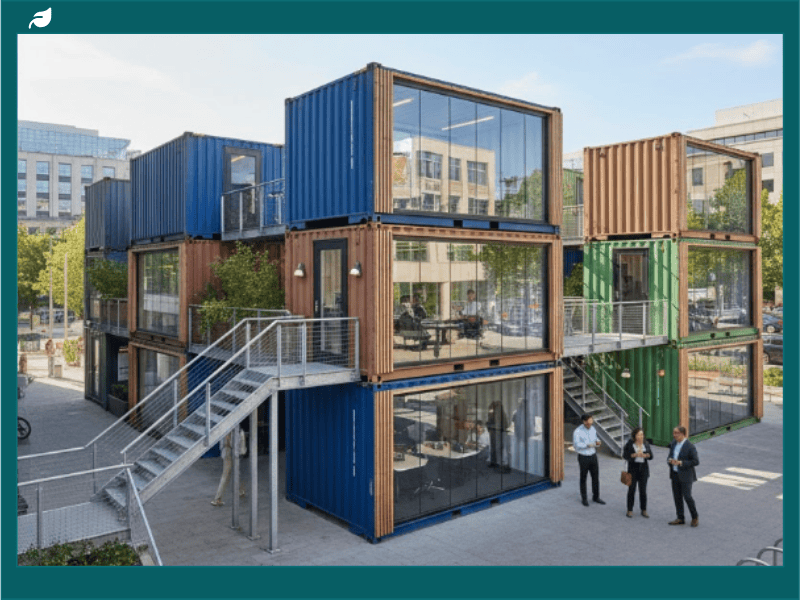
Modern businesses are under constant pressure to grow faster, stay flexible, and control operational costs at the same time. Traditional construction methods often slow this process down with long timelines, high expenses, and limited adaptability. As a result, many companies are turning to modular solutions that can be deployed quickly and scaled as needed. One of the most practical options is business office storage containers, which combine durability, mobility, and cost efficiency. Within the first stages of expansion, these container-based offices allow companies to add workspace without committing to permanent structures, making them an increasingly strategic asset across multiple industries.
Why Shipping Container Offices Are Gaining Popularity
Shipping container offices are repurposed steel containers that have been modified to function as comfortable, professional workspaces. Their growing popularity is driven by a simple reality: businesses need space quickly, and they need it to adapt as operations evolve.
Unlike traditional buildings, container offices can be delivered, installed, and operational in a matter of weeks or even days. This speed gives companies a competitive advantage, especially in industries where project timelines are tight or market conditions change rapidly. Additionally, their standardized dimensions make planning and expansion more predictable.
Supporting Rapid Business Expansion
One of the main ways businesses use shipping container offices is to support rapid growth. When a company wins a new contract, opens a temporary location, or launches a new department, waiting months for construction is rarely an option.
Container offices provide immediate workspace for management teams, administrative staff, and technical specialists. They can be placed directly on-site, eliminating the need for off-site offices and reducing travel time. As the business grows, additional units can be added without disrupting existing operations.
This scalability is particularly valuable for companies that are unsure how long additional space will be needed. Containers can be relocated, resold, or repurposed, ensuring that investments remain flexible rather than fixed.
Enhancing On-Site Operations
For many businesses, having decision-makers close to day-to-day operations is critical. Shipping container offices make this possible by bringing administrative and supervisory staff directly to the operational environment.
Manufacturing plants, logistics hubs, and distribution centers often use container offices as on-site control rooms or management offices. This proximity improves communication, accelerates problem-solving, and allows managers to respond quickly to operational issues.
Because container offices are built from steel, they also offer excellent security. Sensitive documents, equipment, and IT infrastructure can be stored safely, even in high-traffic or industrial environments.
Cost Control and Budget Predictability
Another key reason businesses adopt shipping container offices is cost control. Traditional construction projects are notorious for budget overruns caused by labor shortages, material price fluctuations, and unexpected delays.
Container-based offices offer a more predictable cost structure. The base unit is already manufactured, and modification costs are typically fixed upfront. This allows businesses to plan their budgets more accurately and allocate resources to other growth-related activities.
Maintenance costs are also relatively low. Steel containers are designed to withstand harsh conditions, which reduces long-term repair and replacement expenses compared to conventional buildings.
Flexibility Across Industries
Shipping container offices are not limited to a single sector. Their versatility makes them suitable for a wide range of business applications.
In construction, they serve as site offices, meeting rooms, and planning centers. In retail, they can function as pop-up offices or back-of-house spaces. In agriculture, they are used as administrative hubs near fields or processing facilities. Even technology companies use container offices for temporary project teams or remote operations.
This cross-industry adaptability highlights why container offices are increasingly viewed not just as temporary solutions, but as strategic tools for modern business operations.
Customization for Professional Work Environments
A common misconception is that container offices are cramped or uncomfortable. In reality, modern modifications allow these spaces to meet professional standards comparable to traditional offices.
Containers can be insulated, climate-controlled, and fitted with electrical systems, lighting, and data connections. Interior layouts can include private offices, open work areas, conference rooms, and even break spaces.
From the outside, container offices can be branded with company colors and logos, reinforcing a professional image. This is especially important for businesses that host clients or partners on-site.
Sustainability and Responsible Growth
Sustainability is becoming a core consideration for business expansion. Shipping container offices align well with environmentally responsible strategies.
By repurposing existing containers, businesses reduce the demand for new construction materials. Many container office projects also incorporate energy-efficient insulation, LED lighting, and solar-ready designs.
For companies aiming to demonstrate environmental responsibility while expanding operations, container offices offer a practical balance between growth and sustainability.
Operational Benefits Near the End of a Project Lifecycle
As projects near completion or transition into new phases, businesses often need temporary office space that can be removed without leaving permanent structures behind. Container offices excel in these scenarios.
They can be dismantled and transported to the next site, minimizing waste and avoiding demolition costs. This makes them especially attractive for project-based industries where mobility is essential.
In these later stages, businesses often highlight key advantages such as:
- Reduced teardown and site restoration costs
- Faster relocation to new projects
- Continued use of existing assets instead of new investments
These benefits help maintain efficiency even as operations shift or conclude.
Key Strategic Reasons Businesses Choose Container Offices
From a strategic perspective, shipping container offices support long-term planning as well as short-term needs. Companies value solutions that can evolve alongside their operational goals.
Common strategic drivers include:
- The ability to scale office space up or down quickly
- Improved on-site management and communication
- Lower capital investment compared to permanent buildings
By aligning workspace solutions with business strategy, container offices become more than temporary fixes, they become integral components of operational planning.
A Smarter Way to Expand
Shipping container offices have proven to be a powerful tool for businesses looking to expand operations without sacrificing flexibility or financial control. Their speed of deployment, adaptability across industries, and predictable costs make them an attractive alternative to traditional construction.
As businesses continue to face changing markets, tighter timelines, and higher expectations for sustainability, container-based offices offer a practical and forward-thinking solution. For companies operating in construction and renovation environments, the advantages are even more pronounced. To explore this perspective further, review the benefits of using shipping container offices on construction and renovation sites https://branchandstone.com/benefits-of-using-shipping-container-offices-on-construction-and-renovation-sites-in-fresno/, which reinforces how these modular spaces support efficient, modern business growth.