An agricultural technology startup has established their first fully automated indoor vertical farm in Westland, Netherlands.
The Israeli-Dutch joint venture led by Future Crops and the Israeli Agricultural Research Organisation has revealed the creation of its nine-story solar-powered urban vertical farm.
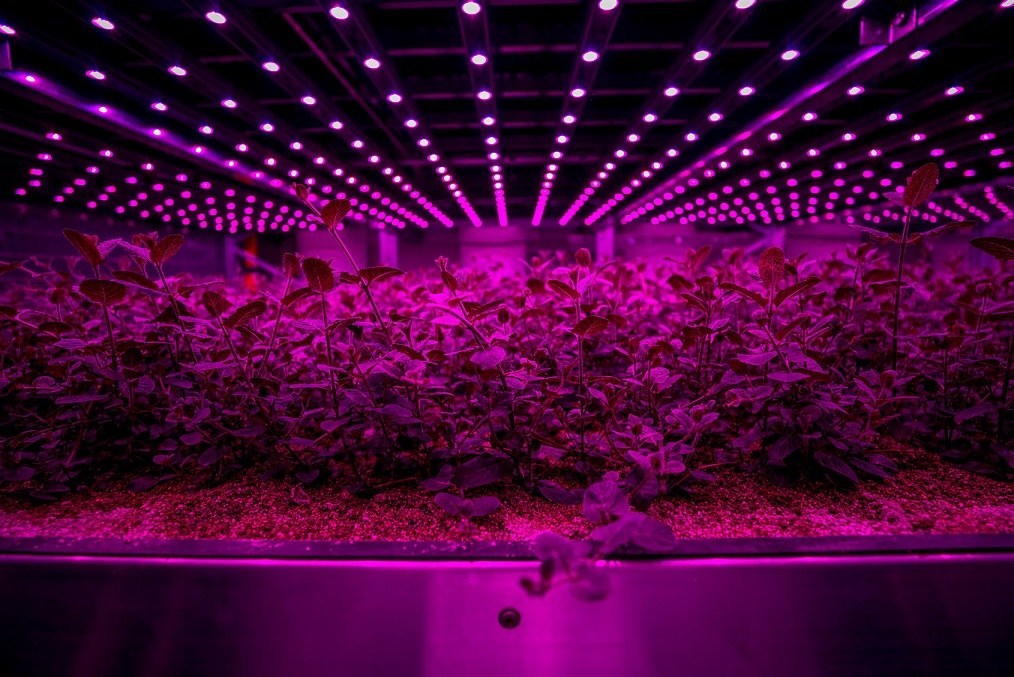
The vertical farm has 8,000 square metres of growing space and, in its current form, provides growing conditions for a variety of leafy greens and herbs.
Future Crops claims that their advanced cultivation methods not only result in high-quality fresh produce, but also allows the plants to develop taste and subtleties which might have been damaged by reliance on pesticides and industrial farming.
“Plants will draw what they need from nature,” explains Gary Grinspan, Future Crops CEO and Co-Founder. “Our team of agronomists are able to ‘listen’ to each plant to determine its individual needs in real time – how much ‘sleep’ versus light, the type of light, air quality, how much water, specific nutrient needs.”
“The plants ‘respond’ in their own unique language as expressed via small nuances such as changes in morphology, shape, size, and color. Via these signals, our algorithm can be primed to provide the plants precisely what they need at each stage of their life cycle.
“We composed a unique nutrient enriched soil-like recipe as the bed for growing all our produce to keep it as close to what nature intended. We learned from nature and did not want to change its rules.
“Our system can consistently grow a comprehensive range of herbs and leafy microgreens throughout the year, completely free of any pesticides or biological substances, and with zero dependence on climate conditions.”
The loss of usable farmland is one of many risks associated with climate change, and one that Future Crops hopes to specifically alleviate. Using their indoor vertical farms, food can be grown using much smaller land footprints and without reliance on environmental or seasonal conditions to grow.
“Food system resilience is at the core of Future Crops’ vision and the key to building a better future for generations to follow,” said Nativ Dudai, Head of the Medical and Aromatic Plant Unit at the Agricultural Research Organisation Institute.
“It’s time to re-evaluate the way we use our natural resources, to deliver clean, sustainable crops and ensure food security.”