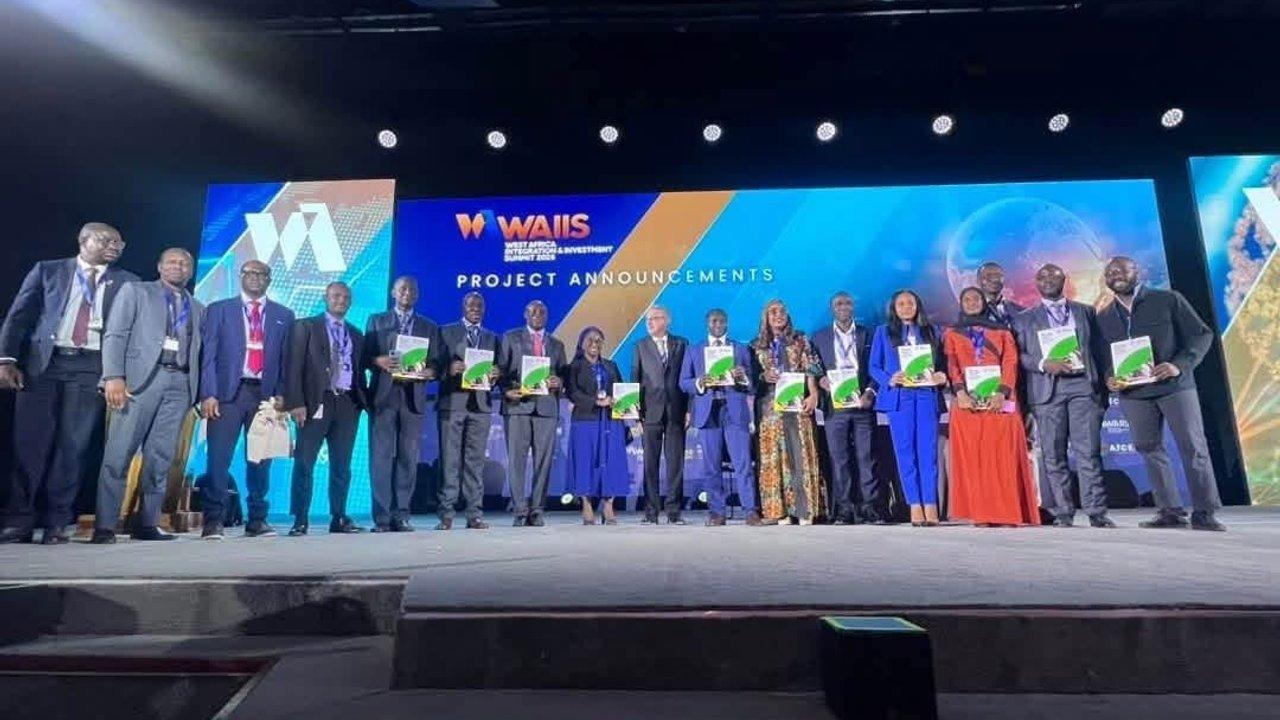
The International Fund for Agricultural Development has joined the Government of Sierra Leone and the World Bank Group in launching the Sierra Leone AgriConnect Compact, a national programme intended to strengthen agricultural productivity, market access, investment and employment. Unveiled at the inaugural West Africa Integration and Investment Summit in Lungi, the Compact targets one million farmers and one million people with improved food and nutrition security by 2030. It also sets out to create 120,000 jobs and support 750,000 farmers to adopt climate-smart technologies. The partnership gives Sierra Leone a structured route to connect rural production with finance, infrastructure and commercial markets.
A National Agricultural Framework
The AgriConnect Compact brings together public institutions, development finance partners and private-sector participants around six value chains: rice, maize, cassava, cocoa, oil palm and poultry. Its focus reflects the central place of agriculture in Sierra Leone’s economy, where the sector contributes an estimated 25 to 30 per cent of GDP and supports the livelihoods of more than half of the population.
There remains considerable scope for production to expand. Only 15 per cent of Sierra Leone’s 5.4 million hectares of arable land is cultivated, while much of today’s output remains rainfed and only weakly connected to markets. The Compact is designed to address these constraints through investment that reaches from farm-level production to the routes, facilities and financial services needed to move goods through value chains.
Implementation will be led by the Ministry of Agriculture and Food Security through the Agricultural Sector Working Group. Rather than creating another institution, the programme will bring ongoing and planned investment under common priorities and measurable results, an approach that could help make coordination more practical for farmers, investors and public agencies alike.
From Production To Markets
Irrigation, improved seeds, mechanisation and digital agricultural services are among the measures identified for support. The Compact also includes climate-smart practices and stronger livestock value chains, placing resilience and productivity within the same investment agenda.
For rice and maize, the programme aims to increase yields by up to 40 per cent. That ambition is paired with investment in rural roads, aggregation, storage and processing, all of which are important in helping producers turn harvests into reliable marketable supplies. Expanding access to commercial finance is another central feature, with the intention of giving farmers and rural businesses stronger links to capital.
The programme’s design recognises that improved production alone will not deliver lasting rural prosperity. Connecting smallholders with organised markets, finance and processing capacity can help create more dependable routes for food crops and higher-value agricultural products, while also supporting employment beyond the farm gate.
Investment For Rural Communities
An estimated US$1 billion will be needed to implement the Compact between 2026 and 2030. Around US$900 million in committed and expected financing has been identified from the World Bank Group, the African Development Bank, the Islamic Development Bank, the OPEC Fund, the Government and the private sector. IFAD is expected to provide US$150 million of that total.
IFAD’s role builds on more than four decades of work in Sierra Leone. Since 1980, it has invested over US$250 million through 14 rural development projects, reaching more than 1.3 million people. Its current investments cover agricultural value chains, rural finance, climate resilience and livestock development, with particular attention to women and young people.
This existing presence gives the Compact a substantial foundation. The new framework can draw together experience in rural development with a larger financing and market-access agenda, aligning investment around the parts of the agricultural economy where better connections can help unlock stronger outcomes.
A Regional Summit Platform
The launch took place in the presence of President Julius Maada Bio during the inaugural WAIIS, held from 16 to 18 November 2026 at the Julius Maada Bio International Conference Centre in Lungi. The summit brought together 15 West African countries and more than 1,000 expected participants around energy, strategic minerals, agribusiness and food systems, and digital transformation.
AgriConnect is a World Bank Group initiative intended to help smallholder farmers shift from subsistence farming towards production that generates marketable surpluses. Its model centres on stronger farmers’ organisations, improved access to markets and finance, digital solutions and private-sector participation in food systems. IFAD is a founding partner and, at the initiative’s announcement in October 2025, pledged to reach at least 70 million small-scale farmers by 2030.
For Sierra Leone, the Compact offers a clear framework for turning these goals into nationally coordinated action. With value chains, delivery arrangements and funding requirements set out to 2030, the programme provides a promising basis for a more productive, climate-smart and commercially connected agricultural sector.