Why companies should get involved, by CEO of GlobalGiving UK, Alex Ritchie.
GlobalGiving is a nonprofit that connects community-led charities and nonprofits with individual and corporate donors across the world. Since 2002, they have been on a mission to transform the way aid and philanthropy work for people in 175+ countries.
Founded in the US in 2002, and established in the UK in 2006, their goal is to accelerate community-led change and make it easy and safe for individuals and companies to donate and empower change at a local level.
GlobalGiving has a strong vetting process for their local causes and established method of quickly transferring funds through fiscal agents, allowing funds to immediately activate. GlobalGiving’s meticulous vetting and due diligence process means they’re a trustworthy option for citizen donors, companies and high net worth individuals who want to do good with their money and see how their donations are being used at a local level.
The increasing effects of climate change are impacting those working in the humanitarian sector. Rising global temperatures are connected to extreme weather events, worsening food and water insecurity and greater incidence of disease.
Research indicates that 3.6 billion individuals currently reside in regions highly prone to the impacts of climate change. It’s projected that between 2030 and 2050, climate-related factors such as undernutrition, malaria, diarrhoea, and heat stress could lead to roughly 250,000 additional deaths annually.
The climate crisis is a threat multiplier to areas already suffering from conflict. The IMF (International Monetary Fund) reported last year that climate change is likely to make existing conflicts worse as well as exacerbating underlying issues such as hunger and poverty.
As a nonprofit that supports humanitarian disaster response—whether environmental or geopolitical—GlobalGiving sees, via local partners, the need for companies to support not only reactive efforts following shocks, but also resilience efforts, helping equip communities in advance of incidents.
WHY ARE LOCAL COMMUNITIES BEST PLACED TO TACKLE THE CLIMATE CRISIS?
Alex Ritchie, Chief Executive of GlobalGiving UK believes the best way to combat climate change and support sustainable development is through community-led initiatives. She says:
“Projects that align community development with climate work are ultimately going to have greater positive impacts, helping improve quality of life while supporting climate adaptation and mitigation projects.
“In situations like this, the community leaders are best placed to lead these projects because they understand local contexts like plant life, biodiversity and cultural factors like staple foods, markets, community meeting structures. Communities themselves know the barriers to their success and what they need to do to change this, and donor businesses have an opportunity to give these issues an international stage.
“According to the 2022 Global Humanitarian Assistance report from Development Initiatives only 2% of funds donated in 2022 to international humanitarian assistance reached local changemakers, with the vast majority channelled through few large nonprofits who have tight restrictions on how the money can be used.
“Investing in community projects like those that GlobalGiving supports can have wider implications for protecting global biodiversity. Smallholder farmers have a role in protecting all of us from climate change, but they cannot do this when their resources are depleted.
“Community resilience means that communities themselves have a plan, and resources ready for when disaster hits.
Ultimately, if we are always investing in communities when they are on the brink of destruction, then they can never move out of the survival stage.”
Role Of Corporates In Community Climate Resilience
Businesses are stepping up when it comes to climate change, even moving faster than government regulations in some places.
But expectations of their role are changing at pace too. In reality, just as through the UNFCCC framework nations discuss climate response in terms of mitigation, adaptation and loss and damage, businesses need to address the climate crisis from these same multiple angles.
In late 2023, Net Zero Tracker found that in late 2023 94% of UK-based companies in the Forbes 2000 have set net zero targets; however this target-setting and tracking of corporate carbon footprints, while important, cannot be the end of the road for businesses seeking to be responsible corporate actors.
A paper published by the WEF (World Economic Forum) ahead of COP28 found that while most of the 30 global businesses polled are beginning to invest in adaptation, only a small proportion are providing significant funding for operational or community resilience. This indicates that outside this very top level of multinationals, there is also likely to be a lack of investment and consideration of the need for climate adaptation and resilience strategies.
Larger companies also have a business imperative to support their supply chain, and supporting community climate resilience projects will support global socio-ecological resilience, with SMEs representing about 90% of businesses and more than 50% of employment worldwide.
Ultimately in a shared economy, climate risks are shared too. Businesses have an opportunity to expand their understanding of risk and contribute to community resilience with programmes which foster local empowerment and climate action.
Community Resilience Through Agroforestry
Building community resilience to the impacts of climate change is the focus of many projects – guided by community participation and knowledge.
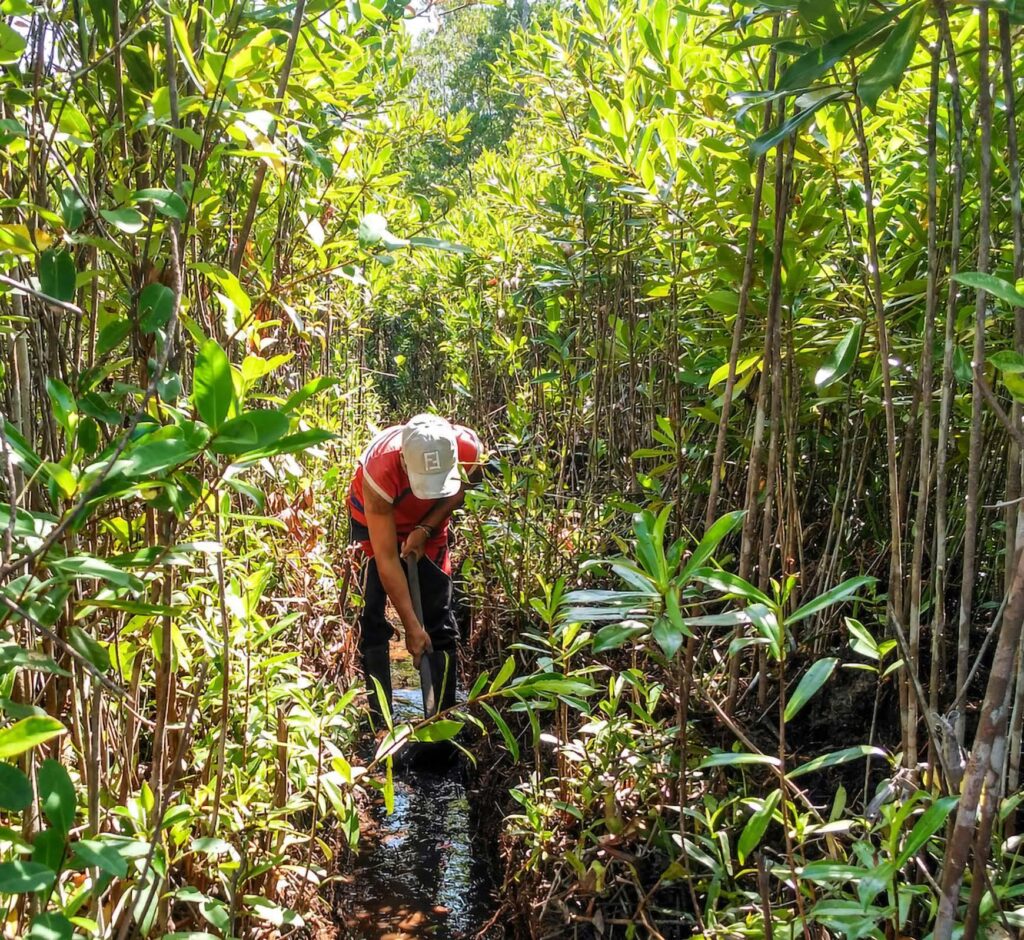
One example is an agroforestry project in the Central Kalimantan region of Borneo by Yayasan Usaha Mulia, a GlobalGiving partner. In this area, climate change has led to increased temperatures, water shortages and flooding during the rainy season, threatening the livelihoods of communities reliant on agricultural work.
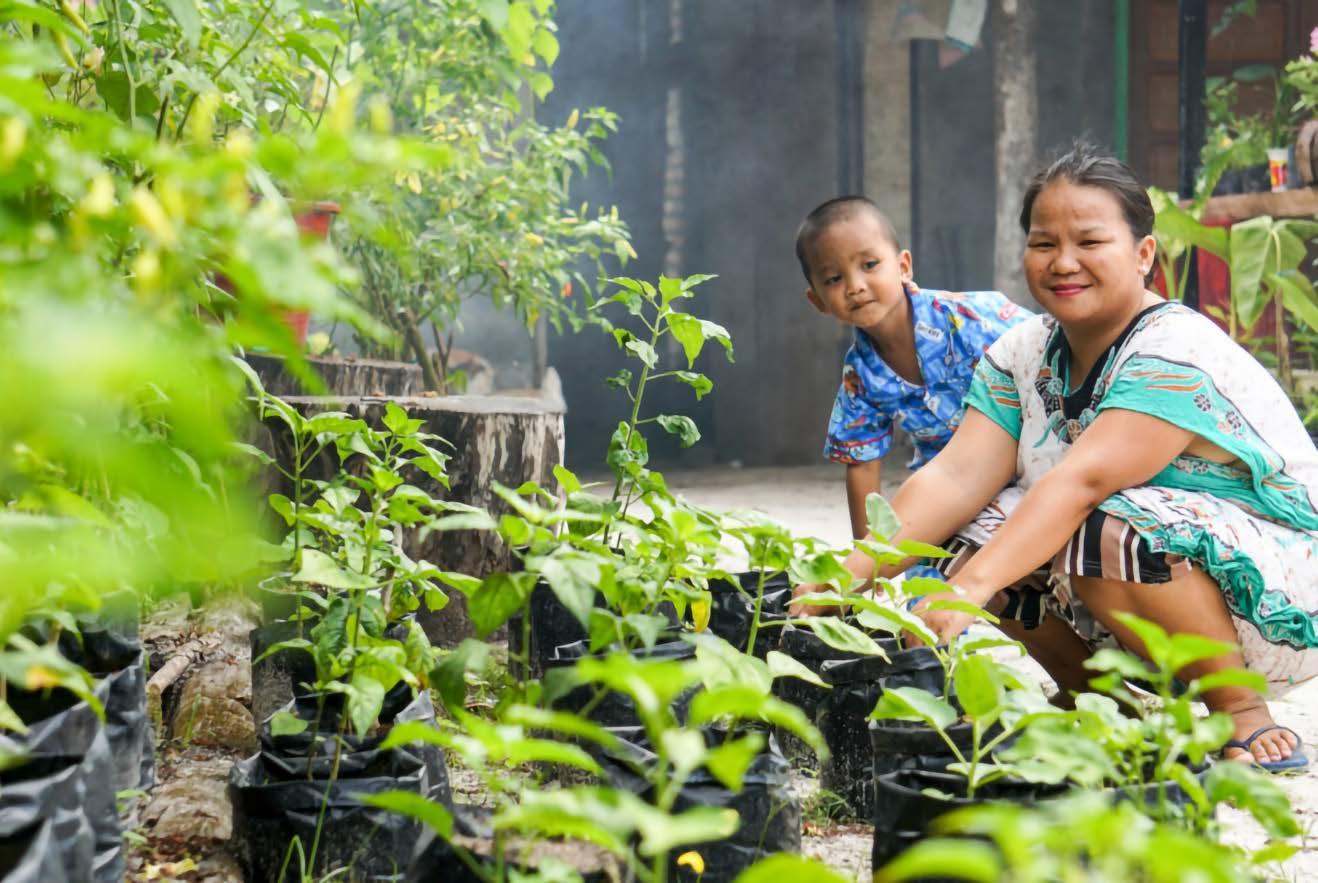
Community leaders have established agroforestry methods and models in their communities. Agroforestry prioritises plant variety to encourage greater soil fertility, helping farmers to transition away from harmful pesticides. An increased variety of plants supports a cooler, greener landscape which enhances working conditions for farmers, and maintains soil hydration.
This project demonstrates the value of framing projects around climate resilience. Rather than victims of the climate crisis, communities in Central Kalimantan are supported to transition to a more sustainable form of income which reduces damage to the land done by slash-and-burn forestry techniques and pesticide use, while also increasing preparedness for temperature rises and supporting women community leaders to take an active role.
In conclusion, empowering local communities to develop solutions tailored to their specific contexts can have far-reaching benefits across social and environmental fields. By stepping up to support community-led projects, businesses not only have the opportunity to mitigate their own climate risks, but also drive equitable solutions that empower vulnerable populations on the frontlines of the climate crisis.
Indeed, the most effective climate action happens at the community level, with local leaders and stakeholders driving the change. By channelling more resources and decision-making power to these community organisations—who have deep relationships and access into communities—impact will increase by expanding reach, contributing to a sustainable and resilient future for all.