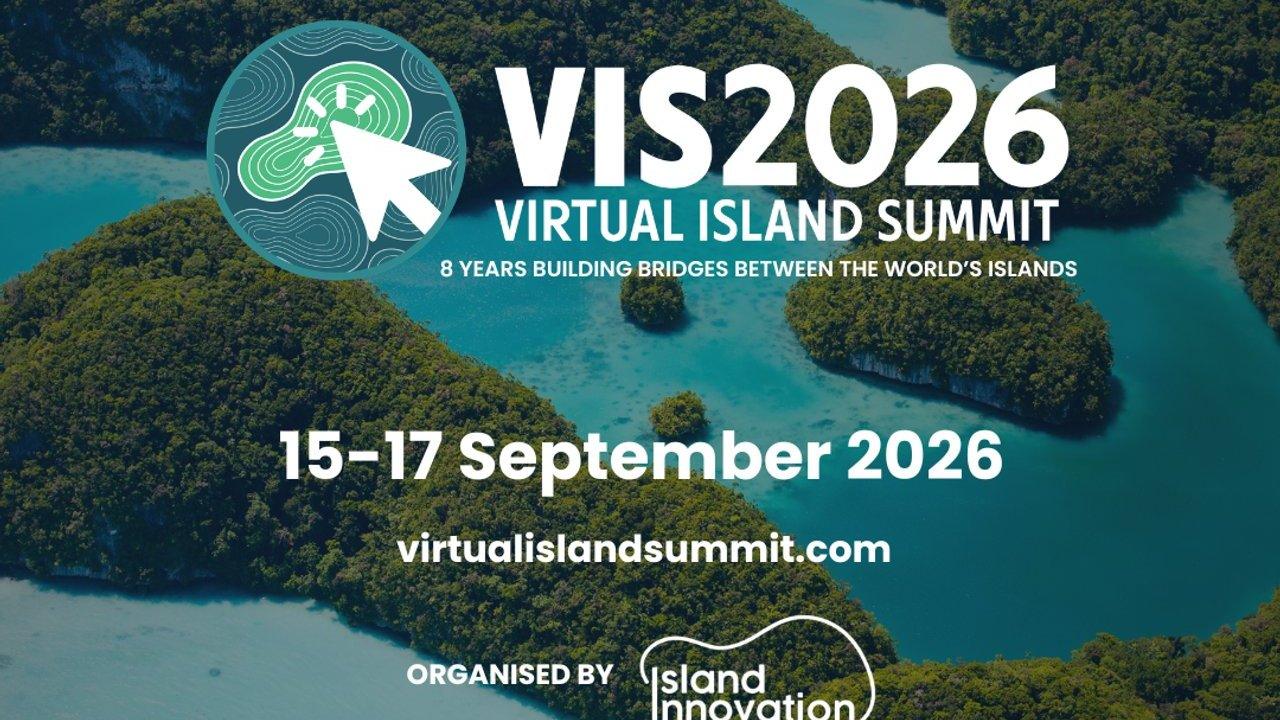
Island Innovation brought more than 6,000 participants together for the eighth Virtual Island Summit, placing climate adaptation, ocean governance and access to finance firmly on the agenda ahead of COP31. Held online from 15 to 17 September, the event connected leaders, policymakers, researchers and practitioners from the Pacific, Caribbean, Europe, Indian Ocean, Arctic and other island regions. Twelve sessions explored coastal erosion, food and energy security, tourism, ocean governance and climate finance across three themed days: Adapt to Change, Transform Systems and Mobilise Action. The discussions made a clear case that island communities already hold practical knowledge and tested solutions, while the finance and partnerships needed to scale them must reach islands more effectively.
Adaptation Knowledge Takes Centre Stage
The Summit opened with a focus on Tuvalu’s forthcoming pre-COP leaders’ side event, scheduled for 6 October. Prime Minister Hon. Feleti Penitala Teo highlighted the Tuvalu Coastal Adaptation Project, which has reclaimed approximately 15.3 hectares of land on Funafuti, the country’s capital. The project offers a tangible illustration of the scale of adaptation measures being pursued by low-lying island nations facing physical climate risks.
Alongside engineered responses, the programme stressed that local and traditional knowledge should be treated as essential adaptation infrastructure. Participants returned repeatedly to the role of communities, culture and intergenerational connections in sustaining resilience beyond individual projects.
Hon. Feleti Penitala Teo, Prime Minister of Tuvalu, said:
“Traditional knowledge must not sit at the margins of climate action. It must be at the centre of climate action…We must therefore invest in the people who carry that knowledge, connect generations and communities, and ensure that adaptation protects more than physical infrastructure.”
Finance Gap Remains Acute
Access to climate finance was one of the most pressing issues raised during the three-day programme. Mafalda Duarte, Executive Director of the Green Climate Fund, pointed to the imbalance between island states’ exposure to climate impacts and their share of international adaptation finance. The Summit heard that small island states receive just 0.2% of global international adaptation finance, despite more than 34 million islanders having been affected by storms, floods or drought over the past decade.
The Green Climate Fund’s island portfolio was presented as evidence of the value of targeted support. Nearly a quarter of its projects are in small island developing states. In Tuvalu, a $36 million GCF commitment made a decade ago helped unlock a further $67.9 million from Australia, New Zealand and the Asian Development Bank for resilience efforts.
Mafalda Duarte, Executive Director of the Green Climate Fund, said:
“Islands are often described as being on the front line of climate change, and that is absolutely true, but they are also home to some of the world’s deepest experience in adapting to change.”
Ocean Priorities Before COP31
Ocean governance and ocean-climate finance formed another central thread, particularly in the final-day session, Mobilising Ocean-Climate Finance at COP31. The discussion examined what would be needed for ocean priorities to attract comparable urgency and funding to other climate issues, with the programme citing an estimated annual requirement of $149 billion to address global ocean priorities.
Rachel Kyte, UK Special Representative for Climate, called for debt pause clauses following extreme weather events to become mandatory for all creditors. Salome Tukuafu of the Pacific Regional Environment Programme, known as SPREP, reported that the Pacific has accessed less than 1% of available climate finance. The figures reinforce the need for funding mechanisms that are suited to the circumstances of island governments and communities, particularly after climate-related disasters.
The Summit also considered the practical ingredients of effective marine protection. Speakers identified technology, policy, community engagement and institutional capacity as complementary elements in safeguarding marine resources, rather than standalone answers.
Resilient Economies And Communities
The programme broadened the resilience debate beyond infrastructure, examining food systems, livelihoods, culture and local capacity. Communities from the Pacific to Scotland’s Outer Hebrides are rebuilding local food systems in order to reduce reliance on imports, while indigenous languages were recognised as supporting cultural continuity, education and community resilience.
Contributions came from leaders including the Governor of Guam, Premier of Prince Edward Island, Premier of Anguilla, Minister of Environment for Bermuda and representatives of the Scottish Government and Australian Government. Experts from organisations including The Nature Conservancy, the Alliance of Small Island States, the Global Sustainable Tourism Council, Waitt Institute, Caribbean Biodiversity Fund, Edge Foundation, Pacific Environment, Instituto Tecnológico de Canarias and Global Compact Network Indian Ocean Region also featured in the programme.
The event also launched Island Blue Economies: Building Ocean Livelihoods That Last, a professional development programme beginning on 13 October. The programme is designed to provide island practitioners with practical skills and knowledge to support sustainable ocean economies.
A Global Platform For Islands
Since its launch in 2019, the Virtual Island Summit has connected participants from more than 500 islands and territories. Its eighth edition showed the strength of an island-led forum that places practical experience alongside high-level discussion, while drawing attention to the finance gap facing communities already implementing adaptation and resilience measures.
With the Tuvalu pre-COP event and COP31 approaching, the Summit’s message was directed at institutions, funders and international partners as much as island communities themselves. The priority is not a lack of ideas, but the ability to direct resources, collaboration and long-term support towards locally grounded action.
James Ellsmoor, Chief Executive Officer of Island Innovation, said:
“This year’s Summit demonstrated the breadth of expertise that exists across island communities worldwide. It highlighted how islands are not short of knowledge or solutions. What they need is finance and partnerships that reach them, and with pre-COP and COP31 weeks away, that is the gap the world needs to close.”