Understanding Geomagnetic Storms and Their Impact
When the sun throws a tantrum, Earth feels it. Charged particles race outward at millions of kilometres per hour, slam into our magnetic field, and suddenly the sky above the poles is on fire with colour while satellites hiccup and power grids flinch. Geomagnetic storms are not abstract physics problems. They’re real disruptions with real consequences, and understanding them matters whether you’re an aurora chaser, a radio operator, or a grid manager trying to keep the lights on. According to EPOS France, an X1.9-class solar flare on January 18, 2026 triggered a geomagnetic storm with Dst below -200 nT, pushing aurora borealis visible as far as France despite the event involving only one CME during the descending phase of Solar Cycle 25.
Solar activity sits at the root of all of it. Solar flares, coronal mass ejections, solar radiation bursts. Each one has the potential to shorten the distance between a quiet Tuesday and a moderate or severe space weather event. The more we understand the mechanics, the better we can prepare.
The Role of Solar Wind in Geomagnetic Storms
Think of solar wind as the sun’s exhaled breath, except this breath carries enough energy to distort a planet’s magnetic field. It’s a continuous stream of charged particles flowing outward from the sun at all times, but when a solar flare or coronal mass ejection accelerates that stream, things get interesting fast.
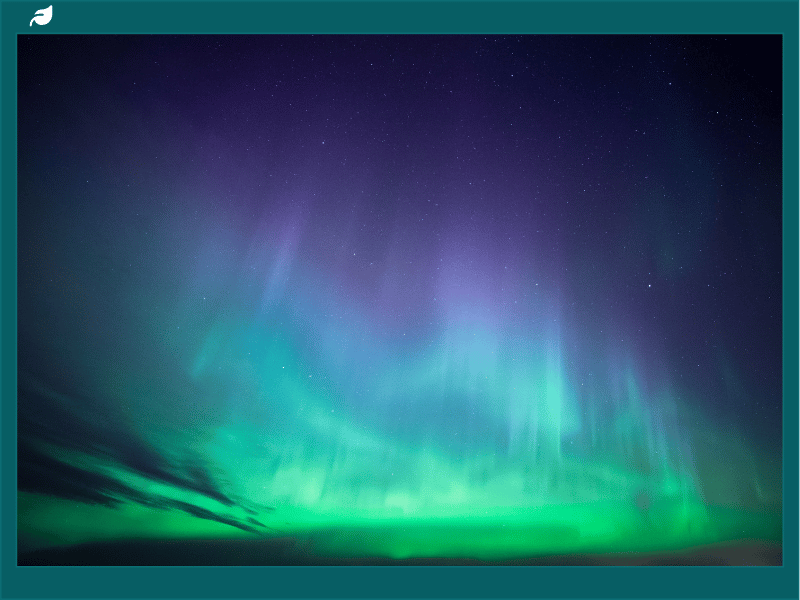
The interaction is the key thing. When that intensified solar wind reaches Earth, it compresses and warps our magnetosphere. That compression drives electrical currents in the upper atmosphere, which in turn produce the dazzling auroral activity most of us associate with the aurora borealis. But the same process that paints the sky green and violet also puts stress on satellites, disrupts high-frequency radio communications, and can induce currents in long conductive infrastructure like pipelines and power lines.
NOAA’s Space Weather Prediction Center monitors solar wind speed and density around the clock, issuing forecast advisories that give operators time to act. A moderate geomagnetic storm is classified as a G2 event on NOAA’s five-point scale. That’s enough to push the aurora borealis down to mid-latitude skies, visible across parts of the northern United States or central Europe, and enough to degrade radio signals and require satellite operators to adjust orbital drag calculations. Anything above G3 starts threatening power infrastructure directly.
Tracking solar wind data is, in other words, practical. It feeds the forecast models, sharpens the warnings, and buys time for the people who need it most.
Effects of Space Weather on Earth’s Environment
Space weather touches more of daily life than most people realize. Airline pilots on polar routes receive radiation exposure guidance tied directly to solar activity. GPS systems lose precision during geomagnetic disturbances because the charged particles interfere with the signal path through the ionosphere. Amateur and professional radio operators know the frustration of a solar flare killing a long-distance contact mid-conversation.
Solar radiation from a major flare can reach Earth in as little as eight minutes, travelling at the speed of light. The particle cloud behind it, the heavier matter driving geomagnetic storms, takes one to three days. That window is what NOAA uses to build its forecast, and it’s a narrow margin when you’re talking about potential disruptions to technology that billions of people rely on. In research by Raeder and colleagues, analysis of 67 years of data confirms that a single strong geomagnetic storm can unleash dramatic local weather changes, including significant shifts in temperature, pressure, wind, and precipitation, unlike the slow 11-year solar cycle.
None of this makes the aurora borealis any less beautiful. But it does reframe it: the same geomagnetic activity that produces those breathtaking light shows is the force you need to watch carefully. They’re two faces of the same event. Understanding one helps you appreciate the other.
Aurora Borealis: A Stunning Result of Geomagnetic Activity
Stand somewhere dark, somewhere north, on a night when a moderate geomagnetic storm is active, and you might see the whole horizon pulse green. It moves the way water moves, which makes sense because it’s a wave. It’s energy cascading through the upper atmosphere as excited oxygen and nitrogen atoms release photons. That’s the aurora borealis, and it’s one of the few places where high-school physics and genuine awe occupy the same moment.
The aurora is a direct product of geomagnetic activity. The stronger the solar disturbance, the further south the display reaches, and the more dramatic the colours become.
Cultural Significance of the Aurora Across Different Regions
Long before anyone had the physics to explain it, people looked up and made meaning from what they saw. The Sámi people of northern Scandinavia interpreted the aurora as the spirits of ancestors. The Inuit described it as spirits playing games across the heavens. Both traditions treated it with reverence, not as spectacle but as presence.
In Scandinavian mythology, the aurora was the reflected light from the shields of the Valkyries, those celestial figures who decided which warriors fell in battle and which survived. The aurora wasn’t just a light show; it was a decision being made. In Chinese and Japanese traditions, dragons moving across the night sky carried the auroral displays, symbols of strength and fortune rather than portents of doom.
What’s striking about all these interpretations is how consistent the emotional register is across cultures: awe, reverence, and a sense of something larger than human scale at work. The aurora borealis forced a confrontation with the cosmos long before telescopes and satellites made that confrontation routine. Today it still does. The science doesn’t flatten the experience; it deepens it.
Best Practices for Photographing the Aurora
Here’s the thing about aurora photography: half the work happens before you leave the house. Check the aurora forecast. A forecast showing elevated geomagnetic activity, particularly a G2 moderate event or higher, is your green light. Then find a location free of light pollution.
Even a moderate aurora can be washed out by a nearby town, so distance matters.
Gear setup is straightforward if you know what you’re doing. You need a camera with full manual control, a wide-angle lens with an aperture of f/2.8 or faster, and a solid tripod. No tripod means no sharp images, full stop. Set your ISO between 1600 and 3200 and experiment with shutter speeds from 5 to 30 seconds depending on how much the aurora is moving.
A fast-moving display needs a shorter exposure to avoid blur; a slow, diffuse glow can handle a longer one.
Foreground matters more than beginners think. A frame filled with pure sky looks flat. Mountains, trees, a frozen lake reflecting the light, these elements give the image scale and context. Get there early enough to scout your composition before the activity peaks.
And then: wait. Auroral activity is unpredictable even on a good forecast night. The display can go from nothing to overwhelming in three minutes, and the reverse just as fast. Patience isn’t optional.
Tracking Space Phenomena and Their Influence on Traffic
There’s a direct, measurable relationship between solar events and website traffic spikes, and it’s one of the more unusual corners of digital analytics. When NOAA issues a forecast for a moderate geomagnetic storm or a significant aurora event, search traffic for space-related terms jumps within hours. Platforms focused on space and astronomy, including the Daily Galaxy, see that surge directly in their visitor numbers.
It makes sense when you think about it. A solar event is inherently time-sensitive news. People want to know: will I see the aurora tonight? Is my GPS going to misbehave?
Should the radio club cancel their long-distance session? Those questions drive searches, and those searches drive traffic.
Predicting Website Traffic Increases during Astronomical Events
When NOAA issues a geomagnetic storm forecast, the ripple into digital behaviour is almost immediate. Casual skywatchers check aurora visibility maps. Scientists and students look for technical data. Journalists pull context for their stories.
Radio operators head to space weather dashboards. All of that translates into measurable spikes in activity across astronomy and space news sites.
The traffic isn’t just from hobbyists, either. Educational institutions, media organizations, and infrastructure operators all contribute to the surge. Airlines and satellite operators track NOAA advisories closely because a moderate geomagnetic disturbance changes their operational calculations in real time. Every advisory pushes another wave of people toward reliable online sources.
Radio enthusiasts occupy their own specific niche in this. Geomagnetic activity can either improve or devastate high-frequency radio propagation depending on the storm’s characteristics, and amateur radio operators monitor solar and geomagnetic conditions obsessively. That community alone generates substantial search and site activity around every significant solar event.
Free access to good space weather data is a genuine public good, and the sites that provide it well earn consistent, loyal audiences. When a moderate geomagnetic storm is forecast, the Daily Galaxy and platforms like it become the first stop for anyone trying to understand what’s happening above them. That’s not accidental. It reflects years of publishing credible, clear information at exactly the moments when people need it most.
The broader point is this: space phenomena and digital engagement are now tightly linked. Solar activity shapes the sky and the search bar simultaneously. And as long as the sun keeps producing solar flares, geomagnetic storms, and aurora displays, that traffic relationship will hold.