Essential Skills and Competencies for Energy Assessors
Start with the technical foundation. A domestic energy assessor needs a working understanding of how buildings are constructed and how that construction affects heat loss. You need to read architectural plans, spot the difference between cavity wall and solid wall construction, and know why a 1930s semi behaves so differently from a 2005 new build. That knowledge doesn’t come from instinct.
It comes from study, site experience, and paying close attention during training.
Analytical ability matters enormously. You’re not just collecting observations; you’re interpreting data and making recommendations that homeowners will act on. The energy assessment software used in the field, tools like RdSAP (Reduced Data Standard Assessment Procedure), requires accurate data input. A small measurement error or a misidentified wall type can shift an EPC rating and give the client misleading information.
Precision here is professional integrity, not pedantry.
Communication is where a lot of technically capable assessors fall short. You might understand exactly why a property’s energy performance is poor, but if you can’t explain that clearly to a homeowner with no technical background, the assessment loses much of its value. Plain, direct language is the job. Leave the jargon at the door.
A client who leaves the conversation understanding exactly what needs doing, and why, is far more likely to act on your recommendations than one who nods politely and files the certificate away.
Problem-solving rounds it out. Every property is different. An unusual construction type, a recent extension, a non-standard heating setup: these situations require an assessor who can think clearly rather than just follow a checklist. Detail matters, too.
And finally, technology fluency. The assessment software, digital measuring tools, and reporting platforms used by modern DEAs are not optional extras. Getting comfortable with them early makes the whole process faster and more reliable, and it signals to clients and employers that you’re running a professional operation rather than improvising.
Pathways to Achieve Certification as a DEA
The most common route into the profession starts with a dedicated DEA training programme. A domestic energy assessor must complete an approved Level 3 DEA qualification, which is the specific credential required to legally assess residential properties and produce Energy Performance Certificates, regardless of prior degree history. These courses are designed specifically for energy assessors and cover everything from the fundamentals of domestic energy use to the practical mechanics of producing an accurate EPC. Many programmes include site-based sessions where you conduct real assessments under supervision, which is genuinely more useful than any number of hours in a classroom. Seeing how an experienced assessor handles an awkward property or an unclear construction type teaches things that no textbook can.
After completing the training, you’ll need to pass a qualification exam and gain accreditation from a recognised scheme provider. Accreditation is not a formality. It’s the credential that allows you to lodge EPCs on the national register and signals to clients and employers that you meet the required professional standard. Without it, you can’t legally produce EPCs, and any assessment you conduct has no official standing.
So the accreditation step isn’t bureaucracy to endure. It’s the moment the qualification becomes real.
Some people enter the field through apprenticeships, working alongside an experienced assessor while completing their training. This route takes longer, but the hands-on mentorship it provides can accelerate your confidence and competence considerably. If you can find a placement with an established DEA or a retrofit organisation, take it. The combination of structured learning and live site experience is hard to replicate any other way.
Ongoing support and continuing education are built into the role rather than being an afterthought. Energy regulations change, new technologies emerge, and the standards that underpin EPCs get updated. Reputable accreditation bodies and training providers run workshops and provide access to updated learning materials so that qualified DEAs stay current. That commitment to learning doesn’t stop at certification; it runs through the whole career.

The pathway is clear and achievable. Training, qualification, accreditation, and then continuous professional development. For anyone with an interest in buildings, sustainability, and practical problem-solving, it’s a genuinely satisfying progression with a visible end point and a credible professional identity at the other side of it.
The Process of Conducting an Energy Assessment
Walk up to almost any UK street and you’re looking at a mix of construction types, ages, and conditions. The 1960s council flat. The Victorian terrace with solid brick walls and original sash windows. The 2015 new build wrapped in insulation from the ground up.
Understanding Energy Performance and Its Impact on Homes
An energy assessment typically begins before the assessor even arrives on site. Reviewing available information about the property, its construction date, any previous EPC records, and the property type, gives context for what to expect and helps the assessor prepare the right questions and focus areas for the visit.
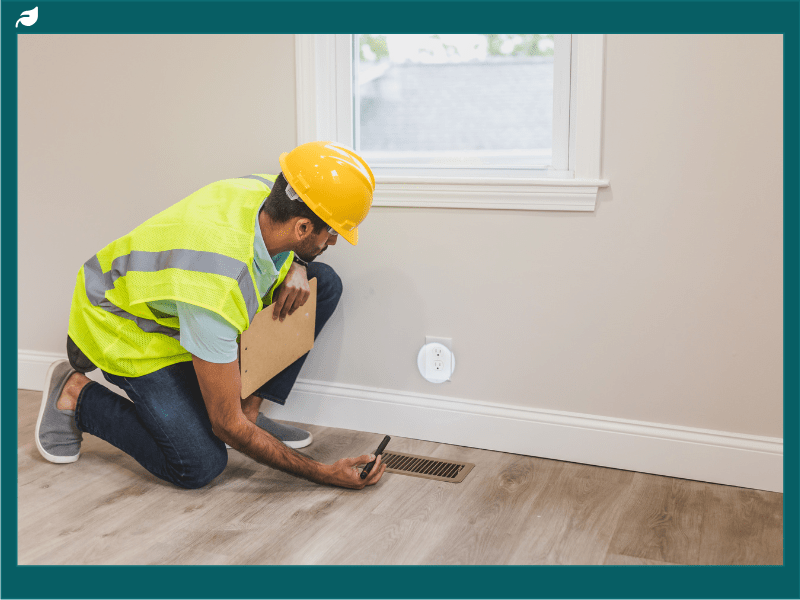
On site, the assessor works through the building methodically. Wall construction type and thickness. Roof insulation depth and condition. Floor type.
Window glazing. The heating system: what fuel it runs on, how old it is, how it’s controlled. Hot water provision. Lighting.
Each element feeds into the RdSAP calculation that produces the final energy performance rating. Miss one element or record it inaccurately, and the whole calculation drifts. That’s why experienced assessors develop habits of thoroughness that border on routine, checking twice, photographing evidence, and documenting the basis for every judgment call.
The resulting energy performance certificate rates the property from A to G. An A-rated home is the gold standard, efficient, cheap to run, low-carbon. A G-rated home is burning fuel and money at a rate that should alarm anyone looking at the utility bills. The EPC also shows a potential rating, the score the property could achieve with the recommended improvements.
That gap between current and potential is where the practical advice lives, and a skilled DEA knows how to make that gap feel achievable rather than overwhelming.
For homeowners, the EPC opens a conversation. A domestic energy assessor who takes the time to explain what the certificate shows, and what it would take to improve it, gives the client something far more useful than a rating on a page. They get a roadmap. Better insulation here, a more efficient boiler there, maybe solar panels on that south-facing roof.
Each step has a cost and a payback period, and a good DEA can help make that case clearly, in plain language, without overselling or underselling what the improvements will deliver.
The wider impact accumulates. When domestic energy assessors work across thousands of properties, the data they generate helps local authorities, housing associations, and government bodies understand where the worst-performing homes are clustered and where investment will have the greatest effect. That’s not a minor contribution. It’s a live intelligence system for the UK’s housing stock, one that grows more valuable as more assessments feed into it.
The environmental stakes are high. A single poorly insulated terrace might emit several tonnes of excess CO2 every year compared to an equivalent well-insulated home. Multiply that across millions of properties, and the scale of the challenge becomes clear. Multiply the impact of good assessments and good advice across the same number of homes, and the potential for change is equally large.
The assessor visiting a draughty semi in November is doing work that connects, in a direct line, to targets set in Westminster and commitments made at international climate negotiations.
Domestic Retrofit and Its Role in Energy Energy Efficiency
An EPC is a diagnosis. Domestic retrofit is the treatment.
Retrofit, in this context, means upgrading an existing property to improve its energy performance: adding insulation, replacing an ageing boiler with a heat pump, fitting double or triple glazing, installing solar panels, or improving ventilation to prevent damp and heat loss. The UK’s housing stock is among the oldest and leakiest in Europe. Retrofit is not a niche concern; it’s a national priority, and the money, the policy attention, and the skilled workforce flowing into it are all growing fast.
For DEAs, domestic retrofit represents both an extension of their existing role and a growing area of opportunity. An assessor who understands retrofit options can give advice that goes well beyond the standard EPC recommendations. They become a trusted first point of contact for homeowners trying to navigate a complex and sometimes confusing upgrade market, where product claims are loud and independent guidance is hard to find.
Elmhurst, one of the leading organisations in this field, provides guidance and support for professionals working across energy assessment and retrofit. Their frameworks and resources help DEAs and retrofit coordinators stay aligned with the latest standards and access the training needed to work effectively in this space.
The Benefits of Domestic Retrofit for Property Owners
The financial case for retrofit is strong and getting stronger. Energy prices in the UK have risen sharply in recent years, and that trend shows no sign of reversing. A home that was expensive to heat a decade ago is now a genuine financial liability. Insulation that cost a few thousand pounds to install can pay for itself within a handful of years through reduced energy bills, and that payback period shortens every time energy prices climb.
Beyond the savings on utility costs, retrofit improvements push the property’s EPC rating upward. That matters increasingly because from 2025, properties will need to meet specific energy standards to remain legally lettable. Landlords sitting on poorly rated stock are already running out of time. Buyers are increasingly factoring EPC ratings into their offers.
And financial products, including some mortgages, are beginning to offer better rates for energy-efficient homes. The market, in other words, is starting to price energy performance the way it prices square footage.
Specific retrofit measures make a significant difference. High-performance insulation in the loft and walls reduces heat loss at the points where most homes shed warmth fastest. Modern heating solutions, particularly heat pumps paired with good insulation, can deliver the same or better comfort levels at a fraction of the running cost of an old gas system. Better windows cut both heat loss and noise, improving livability alongside efficiency.
Each upgrade stacks on the others, and a coordinated retrofit plan, rather than a series of isolated improvements, is almost always more effective than tackling changes one by one. A home that moves from an E or F rating to a C or above through a joined-up programme of improvements is a different place to live, not just a different entry on a register.
The support available to property owners pursuing retrofit has also grown. Government schemes, local authority funding, and programmes run by organisations like Elmhurst create access points for homeowners who want to act but don’t know where to start. A domestic energy assessor who understands these schemes becomes an invaluable guide, connecting clients to funding they might not otherwise know exists and helping them sequence improvements in the order that delivers the best return. That advisory role is one of the most valuable things a DEA can offer, and it’s one that clients remember and talk about.
And the benefits extend beyond individual homes. As more properties in a street, a neighbourhood, or a region undergo meaningful retrofit, the aggregate reduction in domestic energy demand and carbon emissions becomes genuinely significant. The UK’s net-zero ambitions depend on that kind of distributed, property-by-property improvement. Domestic energy assessors and the retrofit professionals they work alongside are not peripheral to that effort.
They’re doing the core work, visiting the homes, gathering the data, explaining the options, and helping owners take the first step.
For anyone considering a career in this field, the timing is good. Demand for qualified DEAs is rising steadily. The legislative pressure on landlords and sellers to produce up-to-date EPCs keeps the work consistent. And the growing retrofit sector is creating new roles for assessors willing to expand their skills and step into that advisory space.
The combination of technical purpose, practical impact, and genuine job security makes DEA training one of the more straightforward bets you can make right now in the green economy. The work is real, the need is documented, and the career, once built, goes somewhere.