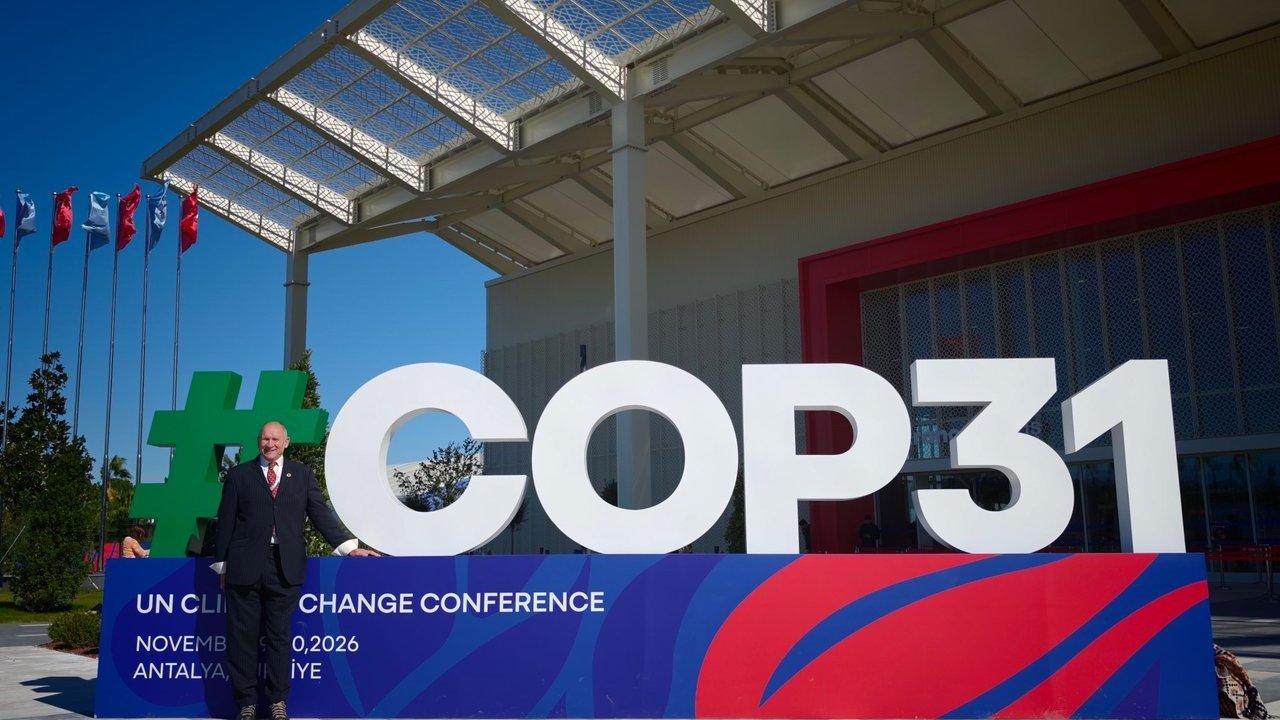
University of Leicester postgraduate researcher Nedim Sladić will represent Bosnia and Herzegovina as a Youth Representative at COP31 in Antalya, Türkiye, from 9 to 20 November. The third-year PhD student, whose work focuses on climate modelling, joins the annual United Nations climate conference with support from UNICEF Bosnia and Herzegovina. His appointment brings a researcher with experience in meteorology, broadcasting and climate communication into a prominent international forum. Sladić intends to draw attention to youth participation and local environmental pressures including air quality, water security, and food and soil security.
A Youth Voice At COP31
COP31 is the annual United Nations Climate Change Conference, where international delegates gather to negotiate climate action. Sladić was selected by the UNICEF Bosnia and Herzegovina team and the country’s previous youth delegate, Layla Jusko Serdarević, following his climate advocacy through social media and Bosnian and Herzegovinian mass media.
The role gives Bosnia and Herzegovina’s young people representation at a summit that will bring together political leaders, negotiators and climate advocates. It also offers a platform for a researcher whose public-facing meteorological work has connected climate science with everyday experience.
Nedim Sladić, postgraduate researcher at University of Leicester, said:
“Undoubtedly, it is an excellent opportunity, but it is simultaneously a great test and a chance to showcase my homeland in the brightest light.”
Energy Imbalance In Focus
Sladić’s stated concern centres on the sharp rise in Earth’s energy imbalance caused by anthropogenic greenhouse gases. The issue is identified as a key climate indicator in the World Meteorological Organization’s State of the Global Climate 2025 report, which confirmed that 2015 to 2025 were the hottest 11 years on record. The report found that 2025 was about 1.43 °C above the 1850 to 1900 average.
By bringing this scientific context to COP31, Sladić’s participation links the global climate discussion with the public understanding challenges he identifies in Bosnia and Herzegovina. His focus reflects the value of climate communication that is rooted in both research and local concerns.
Nedim Sladić, postgraduate researcher at University of Leicester, said:
“The sharp rise in Earth’s energy imbalance, which has significantly amplified over the last 20 years due to anthropogenic greenhouse gases.”
Children And Environmental Pressures
At the conference, Sladić will focus on UNICEF’s latest global report on climate policies addressing child health and vulnerabilities. He will also highlight the intersection of environmental degradation in Bosnia and Herzegovina, concentrating on air quality, water security, food security and soil security.
The agenda places young people at the centre of a discussion that reaches beyond emissions targets. It acknowledges that children and young people will experience the long-term consequences of a warmer climate, while also recognising their capacity to participate meaningfully in climate decisions.
Nedim Sladić, postgraduate researcher at University of Leicester, stated:
“Our youth must be actively involved in discussions, and their voices must be heard and respected. We cannot afford to put them aside or underestimate their competence.”
Climate Modelling Experience
Sladić’s PhD research at the University of Leicester has helped prepare him for the representative role. Over the past two and a half years, he has been building an energy balance climate model to investigate hydroclimate characteristics in a warmer climate, under the supervision of Dr Tim Trent, Dr Adam C. Povey, Professor Richard P. Allan and Dr Kate Willett from the Met Office.
The research connects his earlier professional experience as a meteorologist and weather presenter with deeper climate science. This combination gives his COP31 contribution a practical grounding in both climate modelling and public communication.
Nedim Sladić, postgraduate researcher at University of Leicester, shared:
“This research has allowed me to expand my knowledge well beyond a traditional meteorological background. This was my first hands-on experience with climate modelling, which beautifully bridges my foundational interest in operational meteorology with deep climate science.”
Participation With Purpose
Sladić’s COP31 appointment offers a considered example of how early-career researchers can contribute to international climate discussions while remaining connected to the communities affected by environmental change. His priorities bring scientific evidence, child health, youth participation and local environmental security into the same conversation.
The representative role also gives Bosnia and Herzegovina a visible youth voice at a major climate summit. As COP31 convenes in Antalya, Sladić will bring both his country’s concerns and the perspectives of its younger generation to the conference.