Tackling a Critical Industry Weakness
John Crane has unveiled the Type 8628VL mechanical seal, a next-generation technology designed to address one of the most persistent challenges in the oil and gas sector: maintaining seal integrity in multiphase ethane and ethylene pipelines.
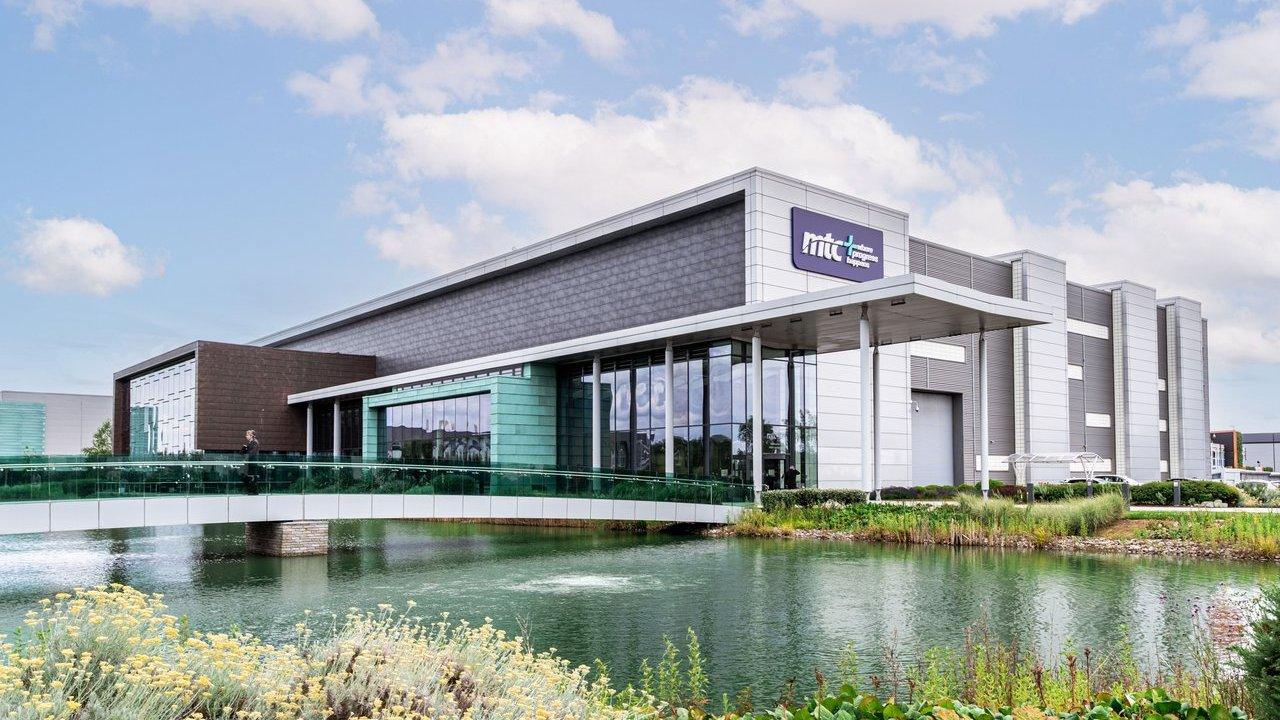
Launched on 9 September in Slough, the new seal builds on spiral groove non-contacting technology to deliver reliable performance in pipelines where pressure and temperature fluctuations often trigger disruptive phase changes. By eliminating friction and wear, the Type 8628VL offers operators a more sustainable, lower-maintenance option for pipeline sealing.
Mike Eason, Chief Technology Officer at John Crane, described the development as pivotal. “Unlike hybrid or contacting seals, the Type 8628VL delivers pure non-contacting operation, even during rapid phase transitions. It’s a significant step forward for the sector.”

The Multiphase Challenge
Ethane pipelines are unique in that the fluid frequently shifts state, cycling between liquid, vapour, and supercritical phases depending on environmental conditions. Conventional seals often struggle under these circumstances, leading to premature failures and costly downtime.
Peer-reviewed research published in Lubricants (MDPI) confirmed that spiral groove non-contacting seal faces provide superior hydrodynamic lift and resilience to phase changes. The Type 8628VL applies this research by using dual non-contacting faces in a tandem configuration. This enables the seal to use the process fluid itself for lubrication, regardless of its phase, resulting in zero-wear operation.
For an industry under pressure to improve operational efficiency while reducing emissions, solving the multiphase challenge could prove transformative.
Field Results from the U.S. Gulf Coast
The first field installations took place earlier this year along the U.S. Gulf Coast, where a major ethane transmission company had been grappling with phase-change-induced failures. Ethane typically exists as a liquid at around 18°C and 40 bar but transitions to vapour at roughly 32°C, creating major reliability issues.
Four Type 8628VL seals were installed on pump equipment experiencing inconsistent performance at pressures near 1,100 psi. After three months of continuous operation and shutdown cycles, results showed:
- Non-contacting performance across liquid, vapour, and supercritical states
- Extremely low leakage
- Zero failures
“The performance is exactly what we hoped for – consistent, reliable, and robust. We now have full confidence in uptime,” said a senior reliability engineer at the operator’s site.
The company also reported faster service turnaround, reduced refurbishment times, and lower costs, thanks to the seal’s ability to eliminate one of the main causes of premature failure.
Sustainability and Efficiency Gains
The Type 8628VL brings additional advantages that align with the energy sector’s transition goals. Unlike traditional contacting seals that require high volumes of flush fluid, the new seal operates with only 2–3 gallons per minute, compared to the 10–30 gallons typically needed.
This reduction lowers both operating costs and the environmental footprint, as smaller fluid systems consume less energy and water. With a mean time between repair (MTBR) of up to 48 months, the design also minimizes waste associated with refurbishment and replacement.
Importantly, the seal’s unpressurised dual arrangement eliminates the need for complex support systems such as API Plan 54 or 53B. That means no liquid barrier fluids or associated cooling water, simplifying operations and removing another source of emissions.
Eason highlighted this point, adding: “We will continue to expand our portfolio with products that meet customer reliability and energy transition goals. The Type 8628VL is a testament to our commitment to innovate for greater efficiency zero greenhouse gas (GHG) emissions.”
Industry Context: Aligning with Transition Goals
The launch comes at a time when the oil and gas sector is under scrutiny to cut operational emissions and extend equipment lifecycles. Mechanical seals, though a small component of overall infrastructure, play an outsized role in leakage prevention, energy efficiency, and maintenance costs.
Methane and ethane leakage is increasingly regulated, with U.S. and European policymakers tightening emissions standards for transmission and distribution networks. Technology that can both reduce fugitive emissions and support uninterrupted operations is therefore strategically valuable.
Independent market analysts forecast that demand for advanced sealing technology will rise as operators seek ways to balance efficiency with compliance. With capital expenditure in petrochemical and midstream infrastructure remaining strong, solutions like the Type 8628VL are positioned to support both reliability and sustainability mandates.

A Century of Innovation
John Crane, part of Smiths Group plc, has been a fixture in rotating equipment technology for over 100 years. The company maintains more than 200 service centres in 50 countries, supporting a customer base that spans energy, chemicals, and process industries.
Its latest innovation underscores a broader industry trend: developing technologies that not only enhance operational reliability but also enable emissions reductions. By focusing on both economic and environmental outcomes, John Crane’s new seal reflects how engineering solutions are adapting to the dual demands of energy security and climate responsibility.