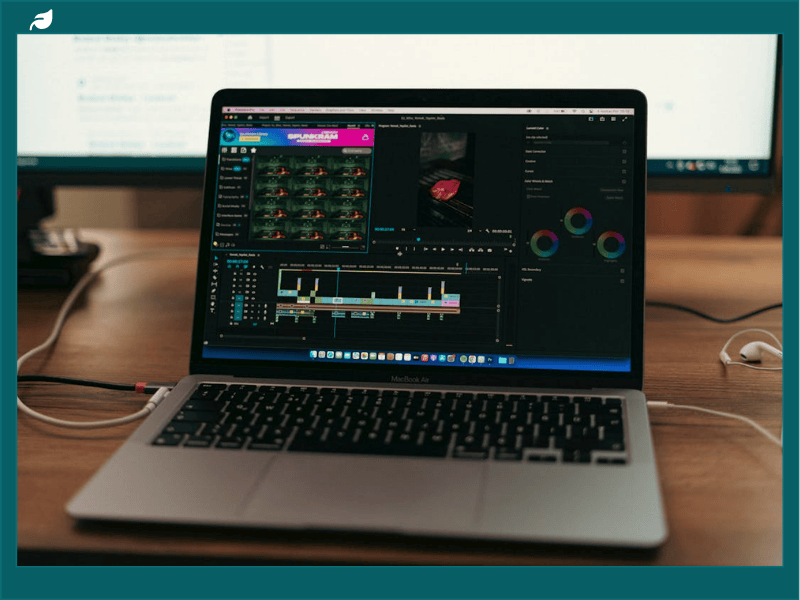
Most businesses don’t have a production team on standby. They have a marketing manager, a content calendar, and the quiet pressure of posting consistently across TikTok, Instagram, and YouTube while everything else keeps moving. That’s the environment where AI video tools are changing how media gets made.
Rather than replacing creative work, these tools compress the mechanical parts of video production: scripting drafts, subtitle generation, format resizing, and basic editing prep. What once required coordinating multiple people over several days can now be handled within a single workflow. The result isn’t just faster output; it’s a more repeatable process that doesn’t collapse under volume.
That shift matters because sustainable media strategy isn’t built on one well-produced video. It’s built on consistent, qualified output that can be maintained week after week without burning through budget or bandwidth. Workflow automation is what makes that consistency achievable, particularly for small and mid-sized businesses that need social media video to perform without the overhead of a dedicated production team.
The platforms that have seen the most development in this space reflect how broadly the demand has grown, with upgraded AI video generation capabilities now reaching teams that previously couldn’t justify the investment. The sections ahead break down where that efficiency shows up in practice, and what it actually takes to build something sustainable around it.
What AI Video Tools Change Right Away
The most immediate shift AI video tools create isn’t speed for its own sake. It’s the removal of the coordination overhead that makes consistent video production so difficult to maintain. Scripting, editing, captioning, resizing, and publishing prep are all steps that previously required separate tools, separate people, or both. When those steps are compressed into a single automated workflow, the entire production cycle becomes something a small team can actually repeat.
That repeatability is the foundation of a sustainable media strategy. A business that can produce social media video for TikTok, Instagram, and YouTube on a reliable schedule, without rebuilding the process each time, is in a fundamentally different position than one that treats every video as a standalone project. Workflow automation doesn’t just save time on individual assets; it changes the structural relationship between team capacity and output volume.
Best AI Video Tools to Fit Different Business Needs
Choosing the right AI video tool isn’t about finding the most feature-rich platform. With the rise of every modern AI video generator, the best choice often comes down to which tool fits your workflow, content style, and production goals most effectively. It’s about matching the tool’s strengths to how a team actually produces content, what inputs they’re starting with, and how often they need to publish. The following platforms each serve a distinct part of that picture, and understanding where each one fits makes the selection process considerably more straightforward.
Freebeat
Freebeat music video maker is built around the idea that existing assets shouldn’t sit unused. It handles audio layering and visual formatting in ways that reduce the number of hands involved in production, making it a practical option for teams that want to repurpose recorded content into music-led or visually reformatted outputs. Alongside captioning, clipping, and resizing workflows, it fits naturally into a broader reuse strategy where a single source recording generates multiple channel-ready formats. For businesses that publish regularly across social platforms, that kind of format flexibility reduces the production overhead that typically accumulates over time.
Synthesia
Synthesia is built for scripted, presenter-style delivery. Rather than requiring on-camera talent or a studio setup, it generates AI avatars that read from a prepared script, making it well-suited for internal training videos, product explainers, and structured communications that need to stay consistent across multiple versions.
Brand consistency is one of the clearest advantages here. Teams can produce the same type of video repeatedly without visual or tonal drift, which matters when content needs to meet compliance or onboarding standards. For businesses running regular training cycles, that repeatability is more valuable than creative flexibility.
Lumen5
Lumen5 is oriented around text-to-video conversion. It pulls from written content, including blog posts, newsletters, and articles, and maps that material to a visual sequence. The result is a narrated or captioned video that reflects the source content without requiring a full production setup.
This fits editorial teams that already maintain a content calendar built around written assets. Rather than treating video as a separate production track, Lumen5 lets teams fold it into an existing workflow, turning published articles into video recaps that extend reach without extending the production timeline.
Pictory
Pictory works from the other direction, taking long-form recorded material and condensing it into short clips formatted for social media video. Interviews, webinars, and recorded sessions become channel-ready assets with minimal manual editing.
The workflow automation built into Pictory’s clipping and caption tools makes it practical for teams publishing at a fast cadence. Combined with the repurposing model covered earlier, it allows a single long-form recording to fill multiple content slots across TikTok, Instagram, and YouTube without additional production time.
How Sustainable Video Output Actually Works
Sustainability in media is rarely about a single high-production asset. It’s about whether a business can maintain consistent output over months without rebuilding the workflow from scratch each time. That requires a different approach to how content gets made and where resources go.
Repurpose Once, Publish Many Times
Content repurposing is the operational core of sustainable video output. A single webinar recording, long-form interview, or podcast episode contains enough material to generate multiple short-form content pieces across different platforms, without scheduling another shoot.
Text-to-video tools extend this further. A well-written blog post can become a narrated explainer, and a case study can become a series of 30-second clips. The source material doesn’t change; what changes is how many usable formats it produces.
This model matters for production efficiency because it reduces the ratio of output to input. Rather than producing one asset per content slot, teams can extract five or six pieces from a single session. That shift directly supports a digital media strategy for sustainable impact, where volume no longer depends on proportional increases in time or spend.
Reduce Reshoots, Crews, and Editing Drag
The cost reduction argument for AI video tools isn’t primarily about software price. It’s about the production inputs that quietly drain resources: additional shoot days, freelance crew bookings, revision cycles, and manual formatting across aspect ratios.
Automated editing tools address the back-end drag directly. Trimming, caption syncing, and format adjustments that previously required an editor’s queue can now run in parallel. Fewer crew dependencies and revision cycles also mean fewer delays. When production efficiency improves at the operational level, businesses aren’t just saving money; they’re reducing the fragility that makes consistent publishing hard to maintain.
How to Scale Without Burning Out the Team
Scaling content output sounds straightforward until the team is producing three times the volume at twice the stress. More publishing slots don’t automatically mean more capacity, and that gap is where AI-assisted workflows either prove their value or create new problems.
Automate the Repetitive Steps
The production tasks that consume the most time are rarely the ones that require creative judgment. Automated editing, caption generation, transcription, and format resizing are mechanical by nature, which makes them the clearest candidates for workflow automation.
When those steps run in the background, editors and content leads can focus on decisions that actually require their attention. A team that previously spent two days on post-production logistics can redirect that time toward planning, review, and strategy without adding headcount. That shift in how time gets spent is what makes scalability realistic. Production efficiency improves not because the team works harder, but because fewer hours go toward tasks that don’t benefit from human involvement.
Keep Human Control Where It Matters
Automating repetitive tasks is not the same as removing editorial oversight. Brand consistency, messaging accuracy, and tone still require a human checkpoint before anything publishes, particularly for social media video where off-brand content spreads quickly and corrections are visible.
The practical model that works is one where automation handles volume and humans handle judgment. AI tools prepare assets; the team reviews and approves them. That rhythm creates a sustainable publishing cadence without turning the workflow into an assembly line with no quality filters.
One point worth stating plainly: workflow automation should not become a reason to flood channels with low-value content. Output that doesn’t serve the audience adds noise without building anything. Sustainable media strategy is built on qualified frequency, not just frequency.

What to Measure After Adopting AI Video
Adopting AI video tools changes how content gets made, but the more important question is whether those changes are actually improving operations over time. Without measurement, it’s difficult to know which workflows are worth expanding and which are just adding steps.
Efficiency Metrics That Show Operational Gains
The most useful place to start is internal. Turnaround time, cost per video, asset reuse rate, and total output volume are the four metrics that reveal whether production efficiency is genuinely improving or just shifting complexity around.
Turnaround time shows whether AI video tools are compressing production cycles in practice. Cost per video captures the cost reduction effect across a full workflow, not just software licensing. Asset reuse rate reflects how effectively long-form recordings are being converted into multiple formats. Output volume, tracked against headcount, confirms whether scalability is real.
These numbers don’t need to be perfect from the start. Tracking them consistently over 60 to 90 days gives teams enough data to identify which automation steps are delivering and which need adjustment.
Performance Metrics That Justify Continued Use
Efficiency gains only matter if the content is performing. Engagement metrics by platform and format, covering TikTok, Instagram, and YouTube separately, show whether AI-assisted production is maintaining content quality alongside increased volume.
Watch time, completion rate, and share behavior are the performance signals most directly connected to format and delivery. According to Grand View Research AI video market data, the AI video market is expanding rapidly, which reflects growing confidence that these tools can meet real performance standards. ROI from AI video tools should be evaluated against repeatability, not just one strong campaign. The goal is identifying which content formats and workflows consistently produce results, then deciding where further automation is worth the investment.
Building a Media Strategy You Can Sustain
Sustainable media strategy doesn’t emerge from a single tool or a one-time workflow overhaul. It comes from building systems that a team can repeat consistently, without the output quality degrading or the production load growing unsustainable over time.
The role of AI video tools in that picture is specific. They reduce the mechanical friction that makes consistent video production hard to maintain, particularly for teams without dedicated production staff. However, the tools themselves only deliver when they’re matched to how a team actually works, what content formats they’re already producing, and what publishing cadence they can realistically hold.
Scalability and production efficiency are only meaningful if the output continues to serve the audience. The businesses that build durable media strategies are the ones that treat automation as a way to protect quality at volume, not as a shortcut around it. That distinction, between sustainable output and inflated output, is what separates media strategies that compound over time from ones that plateau.