Semi Aquatics is positioning clothing as a medium for environmental storytelling, using artist collaborations and small-batch production to address the cultural and ecological costs associated with mass apparel production.
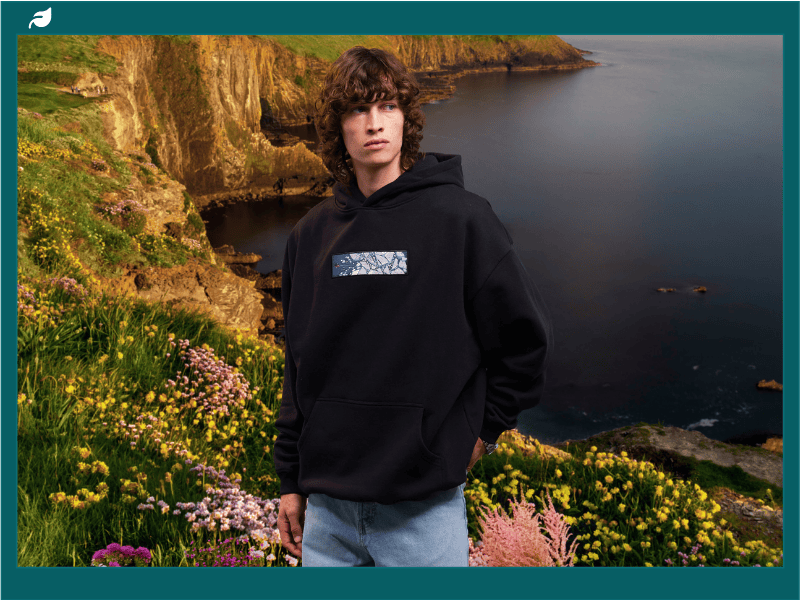
The brand’s latest Fall/Winter collection brings together independent artists and detailed garment techniques to translate environmental themes into wearable form. Rather than relying on labels or slogans, the collection uses illustration, embroidery, and print to explore how humans interact with fragile ecosystems.
When garments carry narrative
Each Semi Aquatics piece begins with a visual concept developed in collaboration with an artist. The aim, according to the brand, is to present environmental themes through imagery that invites reflection rather than instruction.
One of the featured garments, Between the Ice, depicts a lone kayaker navigating fractured glacial ice from a bird’s-eye view. The scene is rendered in embroidery, a process chosen for its slow and deliberate nature. The design reflects the idea of moving carefully through environments that are already under strain.
Another piece, Flight Experiment 047, takes a more playful approach. The garment shows penguins constructing slingshots and telescopes in an imagined attempt at flight. Printed using low-impact, water-based inks, the design frames environmental limits as a prompt for creativity rather than constraint.
The third piece, Watchflower, presents a flowering plant with eyes hidden inside its petals. Produced using dense stitch embroidery, the image suggests renewal alongside scrutiny. The garment implies that nature is not only observed by humans but is also bearing witness to human activity.
Each of these designs is part of the brand’s Fall collection, available through its direct-to-consumer channels.
A name rooted in transition
“Semi Aquatics” references the evolutionary period when life moved between water and land. The brand uses this concept to describe its position between progress and restraint, and between industrial systems and natural cycles.
Founded in response to the environmental and social impacts of fast fashion, the company frames its work around a central question: whether clothing can play a role in repairing damage linked to consumption. The brand’s approach emphasises reduced output, long-lasting construction, and traceable materials.
Materials and traceability
Semi Aquatics states that its supply chain is built around full cotton authentication, tracking fibre, yarn, fabric, and finished products through to retail. This level of traceability is intended to support clearer communication around origin and labour conditions.
The cotton used in its garments is grown using regenerative farming methods, which focus on soil health and land restoration. These practices aim to leave agricultural land in better condition than before cultivation, rather than simply limiting depletion.
Beyond fibre sourcing, the brand links product sales to marine restoration efforts. Each purchase contributes to ocean-focused initiatives, including kelp restoration projects along the Portuguese coast. Kelp forests are recognised for their role in carbon storage, biodiversity support, and coastal protection, yet have declined in many regions.
A slower production model
Semi Aquatics operates on a limited-release model, producing collections in small quantities and releasing them on selected dates. The company says this approach is intended to avoid overproduction and excess inventory, issues that continue to define much of the apparel sector.
Techniques such as embroidery and water-based screen printing are used not only for visual effect but also to support garment longevity. The brand frames durability as a core environmental consideration, arguing that garments worn for years have a lower overall footprint than those designed for short-term use.
An experiment in fashion economics
The company does not position its model as a complete solution to the fashion industry’s challenges. Instead, it describes Semi Aquatics as an ongoing experiment testing whether artist-led design, small-batch production, and regenerative partnerships can function within a viable business framework.
Commercial results to date suggest growing interest in this approach. Since its first release in December 2022, the brand reports a fivefold increase in sales. Its Fall 2025 drop generated more than $50,000 in revenue within the first five days.
These figures point to demand for apparel that connects design with environmental responsibility, without relying on trend cycles or volume-driven growth. Semi Aquatics frames this demand as evidence that some consumers are willing to trade speed and variety for intention and longevity.
Positioning beyond marketing claims
As environmental language becomes more common across the fashion sector, Semi Aquatics is seeking differentiation through process and design choices rather than promotional messaging. The brand embeds its values into material sourcing, production scale, and visual storytelling.
By combining artist collaborations with regenerative agriculture and ecosystem restoration projects, Semi Aquatics is testing whether fashion can function as both a commercial product and a platform for environmental reflection. The brand’s approach suggests a shift away from speed and scale, towards garments designed to be considered, worn, and kept.