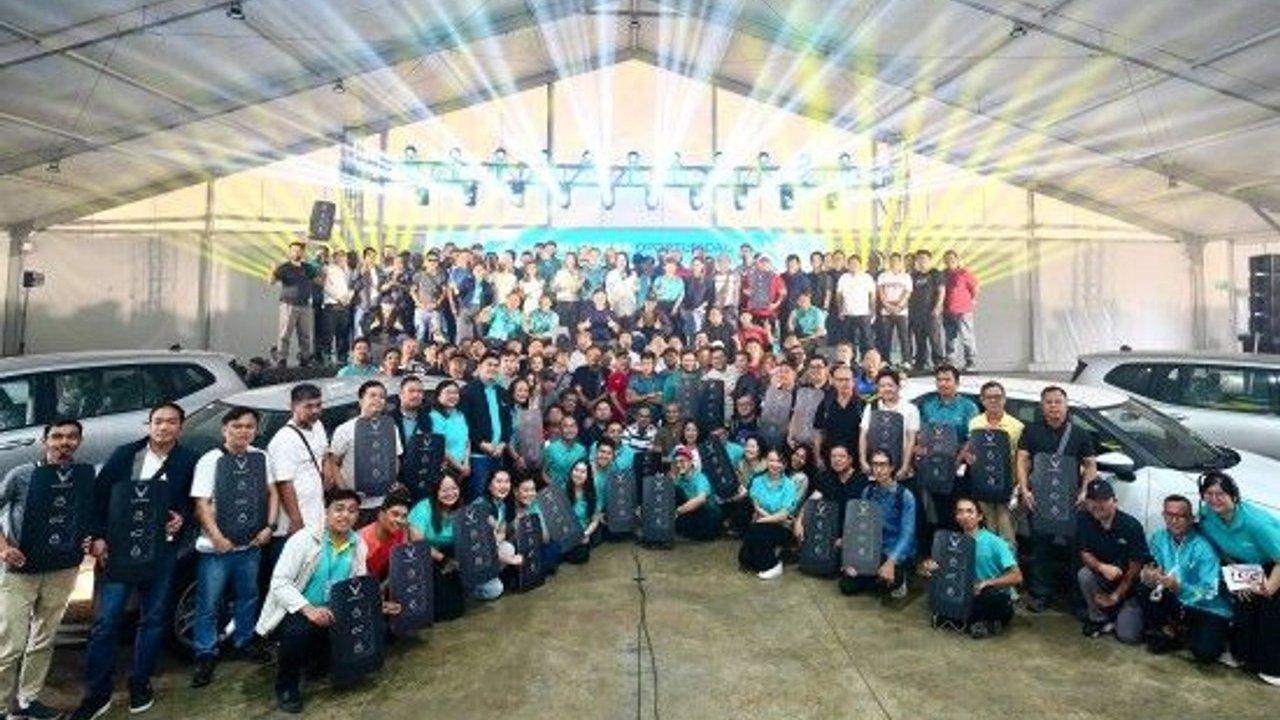
The Foreign, Commonwealth and Development Office convened the Ayrton-Oxford Academic Symposium at the University of Oxford, bringing academics, innovators, government representatives and investors together to strengthen international clean energy research partnerships. The event was supported by the Ayrton Fund, the Africa-Oxford Initiative, the Transforming Energy Access Learning Partnership and UK Research and Innovation. Ayrton-supported innovations have improved clean energy access for 46 million people across emerging economies, leveraged more than £3 billion in public and private finance, and supported more than 256,000 green jobs. Its wider network spans 100 countries, 78 universities and more than 840 innovators, academics and delivery partners.
Collaboration At Oxford
The symposium focused on the practical value of global learning partnerships in turning research into cleaner, more affordable and reliable energy services. Participants examined how universities, policymakers, investors and businesses in the UK and overseas can work together on energy access, climate resilience and sustainable economic development.
The gathering placed particular emphasis on combining UK research capacity with locally-led expertise and experience. This approach is central to the Ayrton Fund’s work in emerging economies, where technologies and business models must respond to local conditions while supporting wider clean energy transition goals.
Professor Sir John Edmunds, Chief Scientific Adviser at the FCDO, said:
“There are huge challenges associated with climate change and with clean energy transition but there are also massive opportunities for the same thing. The UK Government is investing a huge amount in this area for research, development and scaling so that’s what the Ayrton Fund is all about. No one organisation can possibly do all of that on its own, and that is why we need partnerships.
“The purpose of the Ayrton-Oxford Academic Symposium is to bring academic researchers and other innovators together to form collaborations across countries. By drawing upon expertise in the UK, Africa and elsewhere, we can accelerate the development of solutions to the major problems that all of us face.
“We hope to generate robust and equitable partnerships that will stand the test of time and be available to address the next set of questions.”
Networks For Energy Access
The Transforming Energy Access Learning Partnership is one part of the Ayrton portfolio strengthening research and teaching capability. It links more than 30 universities across Africa, Asia and the Pacific Islands, supporting master’s programmes, professional development and knowledge exchange for people working on sustainable energy access.
The TEA@SUNRISE network connects more than 400 members across 40 countries and 80 universities in the UK, Africa and Asia. Its collaborative research activity supports the development and deployment of innovative clean energy technologies, while the Faraday Institution is building energy-storage expertise through battery research programmes and a Battery Ambassadors network across seven African countries.
Elsewhere in the portfolio, Climate Compatible Growth has made open-source modelling tools, datasets and lecture materials available to more than 50 universities. Energy Catalyst and ZE-Gen connect researchers, clean energy innovators and industry partners around technologies with applications in healthcare, education, agriculture and transport.
Research Into Practical Solutions
The Ayrton network has generated 191 technology patent applications and contributed to more than 2,400 research papers. These outputs reflect an effort to move beyond research in isolation, connecting scientific work with organisations capable of testing, deploying and scaling solutions.
The Carbon Trust supports the FCDO-funded Transforming Energy Access programme, which works on early-stage testing and scale-up of technologies and business models for affordable, clean energy in sub-Saharan Africa, South Asia and the Indo-Pacific. The programme covers clean supply, super-efficient demand and smart delivery, including integrated approaches across those themes.
Angus Vantoch-Wood, Programme Manager at the Carbon Trust, for FCDO funded Transforming Energy Access (TEA), said:
“What stood out was the shared commitment to turning knowledge into action. Through the Carbon Trust’s work with the Ayrton Fund, we have seen how collaboration between UK and international researchers, innovators, businesses and policymakers can help transform ideas into solutions that improve lives, strengthen economies and expand access to clean energy. The challenge now is to build on these partnerships and accelerate the impact they can deliver in the years ahead.”
African Research Capacity
The Africa-Oxford Initiative provides a cross-university platform for collaboration between University of Oxford researchers and African universities. Its work includes postgraduate scholarships, research connections and innovation support intended to help innovators access tools, expertise and mentorship.
Its role at the symposium highlights the place of African researchers and institutions in designing energy access and green transition solutions. The emphasis on interdisciplinary work also recognises that research outcomes require routes to finance, innovation support and on-the-ground implementation.
Professor Kevin Marsh, Director of the Africa Oxford Initiative, said:
“African researchers will play a critical role in developing solutions which tackle global challenges such as energy access and green transitions. Translating this research into impact on the ground requires interdisciplinary collaboration between research, innovation and investment. This approach underpins the work the Africa Oxford Initiative has done over the past ten years supporting hundreds of outstanding African researchers, scholars and innovators.”
A Longer Term Platform
The first phase of the Ayrton Fund runs from 2021 to 2026 through 40 UK-funded programmes and more than 1,000 partners worldwide, including 330 UK organisations. Its second phase is under way and will run until 2030, extending the platform for international research, demonstration and delivery partnerships.
Transforming Energy Access has also received an £88m extension until 2031. Since 2016, TEA has supported more than 840 innovators, academics, entrepreneurs and civil society partners across 60 countries, alongside 78 universities expanding clean energy access research and teaching. The Oxford symposium offered a timely forum for these networks to build durable links around the evidence, skills and innovations needed for equitable energy transitions.