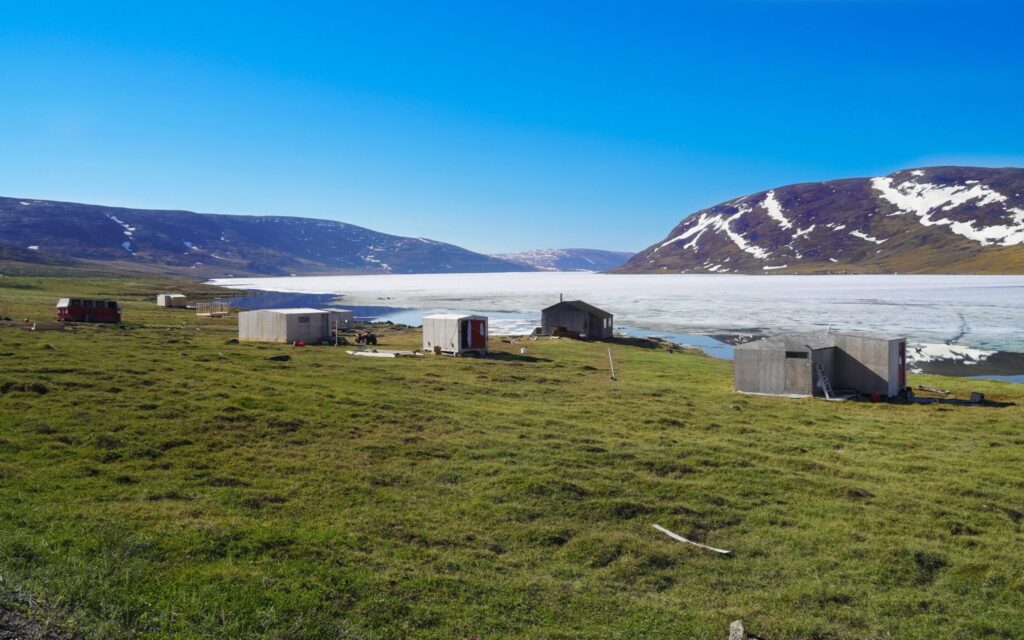
A new initiative supporting North American indigenous communities’ transition to clean sources of renewable energy has been launched from COP26.
The UN Climate Change Conference of the Parties (COP26), a landmark environmental summit currently underway in Glasgow, Scotland, has received criticism for a lack of diversity and accessibility.
Indigenous communities, often isolated and living in remote locations, have a long and complicated relationship with mainstream, metropolitan climate activism, a movement which is often dominated by the white middle- and upper-classes.
According to the international non-profit Global Witness, at least one third of environmental activists murdered since the signing of the Paris Agreement, just six years ago, were people from indigenous communities.
Yet, indigenous activists have pointed out that the change-makers of COP26, considered by many to be the last opportunity for world leaders to formalize an effective climate strategy, do not reflect the disproportionate sacrifices made by indigenous communities.
Critics argue COP26 has a distinct lack of representatives from poorer, less industrialized countries and those living in the developing world. While communities from such areas produce significantly less greenhouse gas emissions, they are more likely to experience extreme weather events and the effects of global warming.
Now, as part of the Environmental Cooperation Agreement, a trilateral initiative covering Canada, Mexico, and the United States has been launched to aid indigenous communities in their transition from diesel-based microgrids to clean, renewable sources of energy.
The initiative, which was launched during a COP26 event on renewable microgrids in indigenous communities, is partnering with the International Renewable Energy Association (IRENA) and will be delivered by the Commission for Environmental Cooperation (CEC). A founding investment of C$500,00 from the Government of Canada has been made to bolster the campaign.
“Remote and Indigenous communities are disproportionately impacted by energy challenges,” explains Richard A. Morgan, Executive Director for CEC.
“The CEC’s North American initiative will help lay the foundation for a global effort to support communities transition to renewable energy and provide benefits such as improving local air and water quality, enhancing energy security, and providing new sources of revenue and economic opportunity.”
As a recent study conducted by Oxfam shows, however, climate disaster can only be avoided if the wealthiest nations and institutions take action themselves: emissions from the richest 1% are 30 times higher than what is compatible with the 1.5C limit set by the Paris Agreement.
Further, the world’s richest 10% produce enough emissions to exceed the 1.5C limit on their own – regardless of what green initiatives are launched for the other 90% of humanity.
“The climate crisis has been driven by extreme inequality to this point,” the Oxfam report states. “It is time to use regulation and taxation to end extreme wealth altogether, to protect people and the planet.”
“The world’s richest, highest-emitting countries must finally commit to their fair share: leading the way in cutting emissions far faster by the end of this decade, and providing the substantial, new and additional finance needed by low- and middle-income countries to further limit their emissions too.”
“In view of the decades of delay in cutting emissions sufficiently, substantially scaled-up finance for adaptation and loss and damage are also vital.”
Alongside CEC’s initiative, the UK government revealed it would contribute at least $500bn over the next five years towards the attainment of net-zero in the developing world.
However, the British Prime Minister, Boris Johnson, was then criticised for flying from the Glasgow summit to London on a private jet to dine with a friend.
Johnson was not the only leader facing censure. Despite governing nations responsible for excessive emissions, Xi Jingping and Vladimir Putin eschewed COP26 entirely, eliciting widespread criticism.
The question remains: is investment in green initiatives for indigenous communities and those across the developing world enough, when wealthy nations are still not fully committed to ending climate change?
Indeed, the investments – which are undoubtedly necessary – are only necessary because of the damage inflicted upon indigenous communities and the developing world by the very nations funding their clean energy transition. This has led some critics to call for a large-scale reparations scheme to be drawn up.
As we enter the final few days of COP26, it falls upon the developed world to produce an effective and universal climate strategy that not only acknowledges its disproportionate impact upon the environment, but also upon the developing world for whom it has so readily sought to be the saviour.