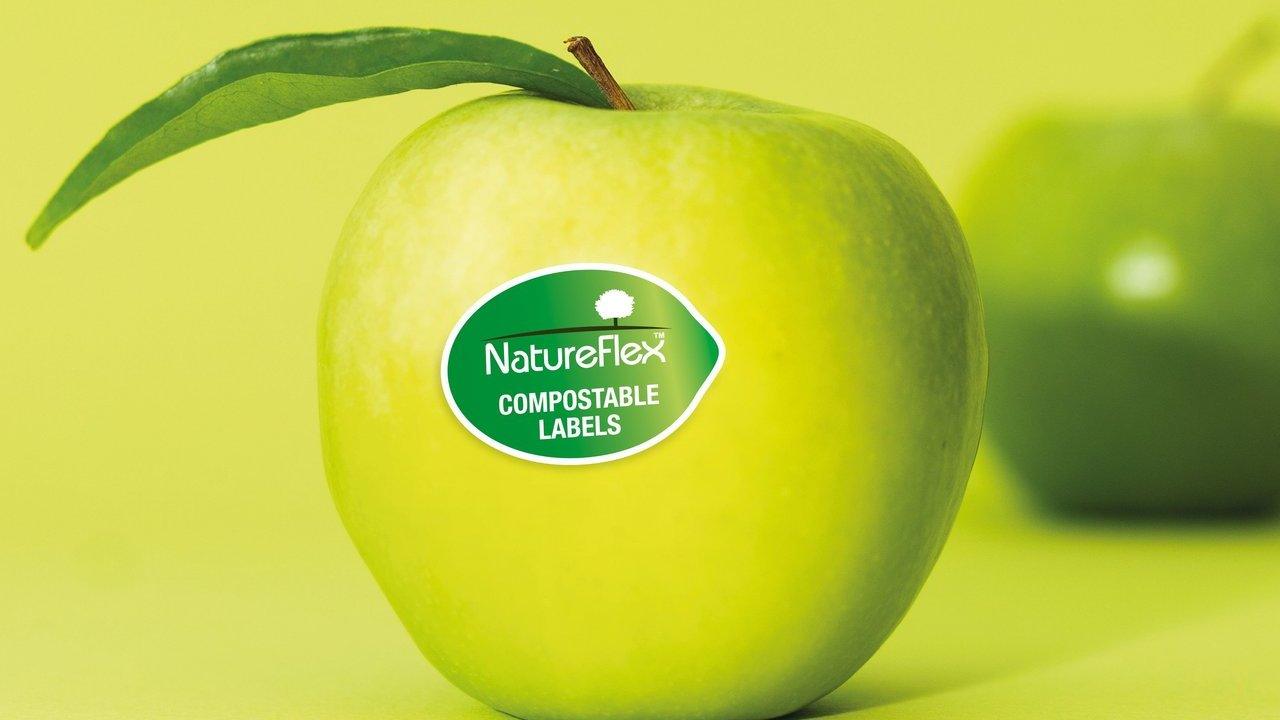
Futamura and Dutch labelstock producer Bio4life have introduced a certified home and industrial compostable pressure-sensitive adhesive label for fresh fruit and vegetables. The solution combines Futamura’s NatureFlex™ cellulose films with Bio4life’s certified home compostable adhesive technology, creating labels suited to apples, citrus fruits, avocados and kiwis. Renewable, food-safe and compatible with home composting, industrial composting and anaerobic digestion, the label arrives as the fresh produce sector prepares for Packaging and Packaging Waste Regulation requirements from 12 February 2028. The partnership gives retailers and packers a timely alternative to conventional plastic fruit stickers.
A Compostable Label System
Produce labels may be small, but their disposal presents a persistent materials issue. Consumers commonly discard stickers alongside fruit and vegetable skins, while traditional pressure-sensitive adhesive labels are often made with fossil-based plastics and non-compostable adhesives. Their size makes separation difficult, and materials that do not break down during anaerobic digestion can contaminate digestate.
The new label brings together the two components required for a home compostable format. NatureFlex™ provides the cellulose-based facestock, while Bio4life supplies its BioTAK® adhesive. The resulting product is designed to retain the functional requirements of a produce label while offering a route away from conventional plastic materials.
For organic waste systems, the distinction is especially relevant. Labels produced using NatureFlex™ films are suitable for anaerobic digestion and break down through the process, rather than remaining as contaminants. This supports cleaner handling of fruit and vegetable waste where labels are unlikely to be removed by households.
Gerard Benthem, Sales Manager at Futamura, said:
“compostable fruit and vegetable labels are a great innovation that supports a truly circular economy. Bio4life and Futamura have a shared vision for the future of labelling, and we hope to help brands and retailers’ transition away from conventional plastics to renewable and compostable label materials.”
Materials Designed For Conversion
NatureFlex™ films are derived from responsibly managed wood pulp and are available in clear, white and metallised variants. The range is intended to give converters and brands options for differing produce-label requirements, including decorative presentation and print performance.
The cellulose films are positioned for die-cutting and dispensing, two practical requirements in label conversion and application. Their stiffness allows thinner grammage than other bio-based and compostable alternatives while retaining machineability. Inherent anti-static properties are also intended to support the movement of film through conversion equipment.
Performance at the point of use remains central to adoption in fresh produce. NatureFlex™ offers a high barrier to oils and chemicals, helping prevent transfer through the label and preserve label quality over time. The films also provide printability and adhesive key, pairing with Bio4life’s adhesive system for a complete labelstock proposition.
Adhesive Compatibility
Bio4life’s contribution is its certified home and industrial compostable BioTAK® adhesive technology. Adhesives are a decisive part of compostable label design, since a compostable facestock alone cannot deliver an end product suitable for the intended disposal route.

The partnership is built around compatibility between the adhesive and the renewable cellulose substrate. It seeks to give label users a product that can meet performance, printability and application-efficiency expectations without relying on non-compostable adhesive components.
Marcel de Oude, Co-owner of Bio4life, stated:
“Our home compostable adhesive technology BioTAK® is designed to work hand-in-hand with renewable home compostable substrates like NatureFlex™. This partnership showcases how collaboration can accelerate the shift toward packaging that supports a circular economy. We’re proud to bring this innovation to market with Futamura.”
Preparing For PPWR
The announcement is closely tied to the timetable for the European Union’s Packaging and Packaging Waste Regulation. The stated implementation date of 12 February 2028 puts a defined deadline on the shift to mandated compostable produce labels, leaving the fresh produce industry with one remaining harvest cycle to complete trials and testing.
That schedule makes early material validation important for retailers, packers, label converters and produce suppliers. A label solution must work across printing, die-cutting, dispensing and application, while also meeting the disposal expectations associated with compostable labelling. The Futamura and Bio4life collaboration addresses these connected requirements through a combined facestock and adhesive offering.
For companies seeking to replace conventional produce stickers, the development presents a practical option based on renewable cellulose film and compostable adhesive technology. It also reflects the importance of aligning packaging design with the waste streams in which small-format materials are most likely to end up.
A Route Beyond Plastic Stickers
Futamura’s new collaboration with Bio4life demonstrates how material suppliers can address a narrowly defined but widespread packaging challenge. Fruit labels must remain functional from production line to retail shelf, yet their frequent disposal with organic waste means their end-of-life performance deserves equal attention.
By pairing NatureFlex™ cellulose films with BioTAK® adhesive, the companies have assembled a compostable solution for a broad selection of fresh produce. With PPWR implementation approaching, the label gives the sector an opportunity to begin trials with a system designed for both product presentation and more responsible organic-waste handling.