Thammasat University in Thailand has developed an innovative solution to a collection of problems involved in big-city living.
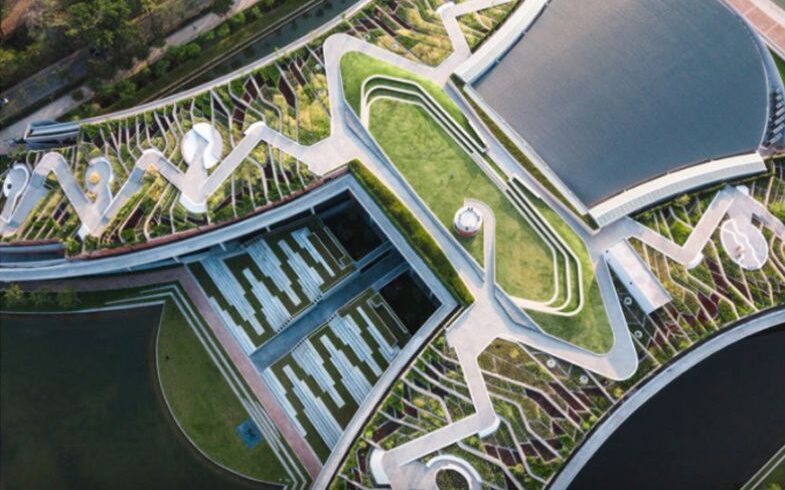
The 22,000 square meter “green roof” combines public green space, urban farm and water management, as well as serving as an outdoor classroom for the university.
The university has used landscape architectural principles to convert a plain, unused rooftop into a solution to the climate, food and pollution crisis. Rainwater and other runoff is filtered through layers of soil into a series of ponds, which can collect over 11,000 cubic meters of water for future use.
The mountain-shaped roof also provides clean solar energy to the university – offering an estimated 500,000 watts per hour of electrical power, or equivalent to about 25,000 electric light bulbs.
The green roof creates employment opportunities for both students and staff around the university campus, while giving them a chance to contribute to the community and to maintain the ecosystem through sustainable agricultural practices.
Using the green roof, students also have an opportunity for outdoor learning that would be much more difficult to arrange in an urban environment.
The aim is to help educate the community of the causes of and solutions to climate change, as well as water management and financial economy to give them information to make them aware of their personal carbon footprint, and to share this new knowledge with their social networks.
This expansive solution was inspired by the creativity from locals, carried on by several generations of farmers who learned from the land and water they lived with. Embedded in the concept and design of the green roof are these lessons for the younger generation to adapt and to take with them into the future.