Sustainable Business Magazine speaks with Josee Atkinson, founder and CEO of Blue Print Management, about sustainable design and construction in Barbados.
Blue Print Management offers clients a turnkey construction solution in Barbados. CEO Josee Atkinson established the firm more than 20 years ago having moved to the island from Canada. Since then, Blue Print has built an impressive portfolio of residential, commercial and private luxury projects in which it has taken on full responsibility for every stage of construction.
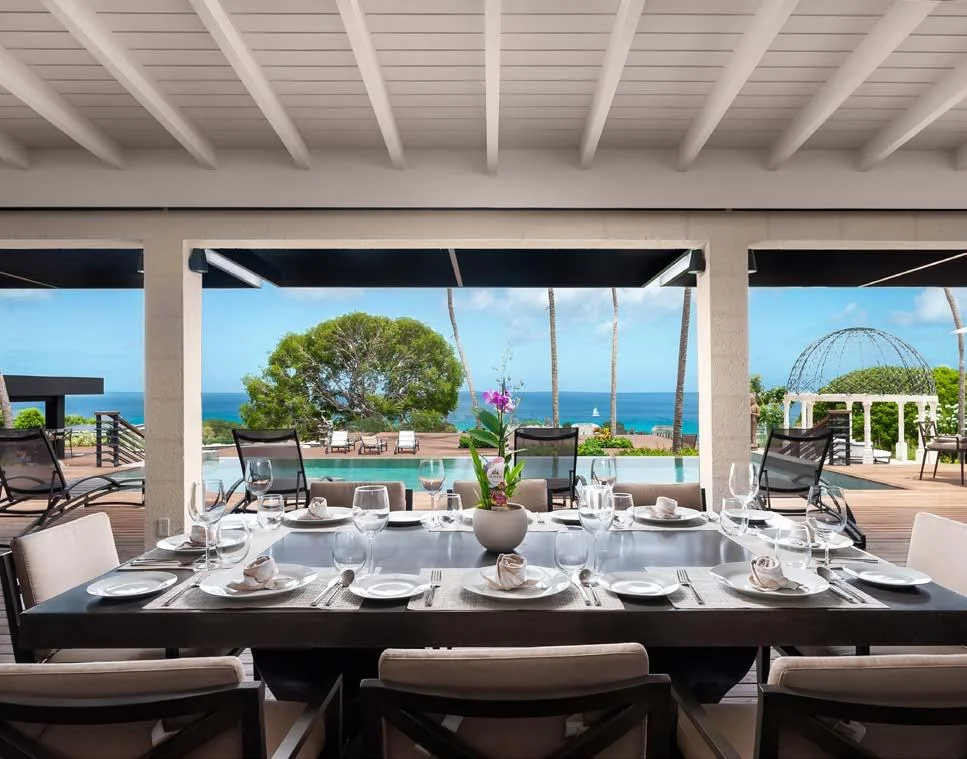
“We have an architectural design team that works with the construction team, which will then handle full construction from A to Z,” explains Ms. Atkinson. “Once they’ve finished, the team will hand over to our interior designers who choose everything from colours to towels. We offer a full turnkey solution.
“The advantage of a full turnkey operation is that we don’t have to piece together a team from lots of different people. Everybody is under one roof. That means people at every stage of the project are in communication with each other, making coordination much simpler. That’s very important for us because, although we have plenty of local clients, we also work with ex-pats and second homeowners. Those people aren’t always here in Barbados so it’s difficult for them to follow along with the project and ensure everything is going the way they want it to. A single project team prevents breakage in communication or delays in construction, so the client can feel confident knowing that everything is carried out the way they expect it to be.”
When Blue Print last talked with
Sustainable Business Magazine, Ms.
Atkinson discussed the opening of a new retail storefront. Today, that shop is called Blue Print Imports and is a thriving fixture of the company. Moreover, as the CEO
describes, it plays a crucial role in Blue Print’s turnkey service:
“Our Blue Print Import store enables clients to see samples firsthand. They can look at the tiles, light fixtures, faucets, and other finishings that we use in person to see what they look like in real life. That’s been a great advantage for us and the client in helping them get exactly what they want.”
Strong chains
Getting the full range of materials required for Blue Print’s turnkey service means a reliance on the supply chain, especially as an island country. That’s why the company has established a strong and long-term network:
“In the local chain, we sometimes need products from other suppliers here in Barbados that are offering services. Obviously, because many of our projects are large, we draw on a large pool of both people and suppliers. We always make sure they are all up to our standards. The best people and companies want to work with us, which is lucky because we offer our clients a broad spectrum of work.
“Many of our products are from overseas and we handle the importation process. Several items we use are from
the European market, although we also draw on the US market as well. Wherever we go, the goal is to find a good supplier with an excellent reputation and high-
quality products. An excellent warranty
is also important.”
Importing items to an island makes sustainability a challenge. That’s why Blue Print does what it can to make sure the goods themselves are as energy efficient as possible, thereby reducing the overall impact it has.
Building green
It also strives for energy efficiency in its own operations, as Ms. Atkinson explains:
“One of the things we do is use Building Information Modeling (BIM) software, which enables better product planning. It helps us avoid wasted time and materials. We use BIM for not only drawings but also integration with all the relevant teams such as electrical, mechanical and plumbing. Once we have all that information, we integrate that into the 3D model, we reduce clashes or cross-overs and wastage is definitely cut to a minimum.
“In terms of functionality for the finished building, we always make sure that everything has automated and remotely controlled switching. For example, smart air conditioning systems can detect the proximity of occupants through their phone so that it starts up when they’re nearby. That way the room or building can be at the correct temperature when the occupants arrive but it doesn’t require leaving the air conditioning switched on the whole time. Alternatively, this could be manually controlled through a phone. We also use LED lighting in our houses, which reduces energy consumption. Wherever possible we push our clients to include solar panels on their buildings or try to integrate them in every project that we do.”
Blue Print has faced some issues in this area, though. “In some places, our aim to get solar panels on our projects has faced pushback from homeowners associations,” Ms. Atkinson explains. “They don’t want to see solar panels on roofs. So now that is part of the discussions we have when setting out our work. We’re trying to show people that it’s not just an aesthetic choice, that solar panels are part of the equation for a better tomorrow. We’re hopeful that most if not all people will come around eventually.”
Nonetheless, what Blue Print is doing is clearly working out well for the company and their clients. In October 2023, both the company and Ms. Atkinson received awards at the International Property Awards for work carried out on the Porters Place luxury housing development. In particular, this project showed off Blue Print’s commitment to sustainability. Each of the villas at Porters Place included a solar water heater, photovoltaic electrical system, and rainwater collection tank for grey water. The International Property Awards recognised Blue Print for the architectural triumph of the development.
Community spirit
Sustainability doesn’t just mean technology to Blue Print. The company is also invested in social and community projects that aim to help the people of Barbados as a whole.
“There are two important things we’re working on at the moment,” says Ms. Atkinson. “The first is our partnership with schools for handicapped children and children from less favourable backgrounds. We sponsor those and try to raise money for them. Sometimes we’ll do something as simple but significant as purchase books and pencils for the children.
“While children are always in my heart, we more recently have undertaken a partnership with the Diabetes Centre. Again, we’re raising funds for them so they can conduct more research and provide help to more people. There are so many families in Barbados that don’t have access to certain levels of health care because it’s not covered by their medical insurance, so we help the centre in trying to assist them. Sometimes we’ll use our expertise to help. For example, we have been to some of the homes of people with diabetes in wheelchairs and modified their homes. We’ve carried out the work to modify them from a ‘walking’ house to one that is wheelchair accessible.”
Reduce, reuse, recycle
Looking towards the future, Ms. Atkinson wants to push Blue Print’s sustainability credentials even further by making its construction phase even more sustainable.
“I want to see our teams making even more of an effort to get recycled items out of their construction sites,” the CEO says. “If we go and dismantle a kitchen, for example, there’s always some components in there that are in a good, usable condition. We can re-home those. We try to do that by seeking out people who may not be able to afford a brand-new kitchen but can afford a second-hand kitchen. We give the items a coat of paint and they are perfect for the price. “We also want to encourage people
to start to re-use materials from the site. Before discarding something into a skip, we want them to ask themselves if they
can do something else with it. Or, if the answer is no, then could the item be recycled somewhere? Blue Print is trying to encourage a principle of sustainability and recycling throughout our construction teams, whether they are working on building
or demolition.”