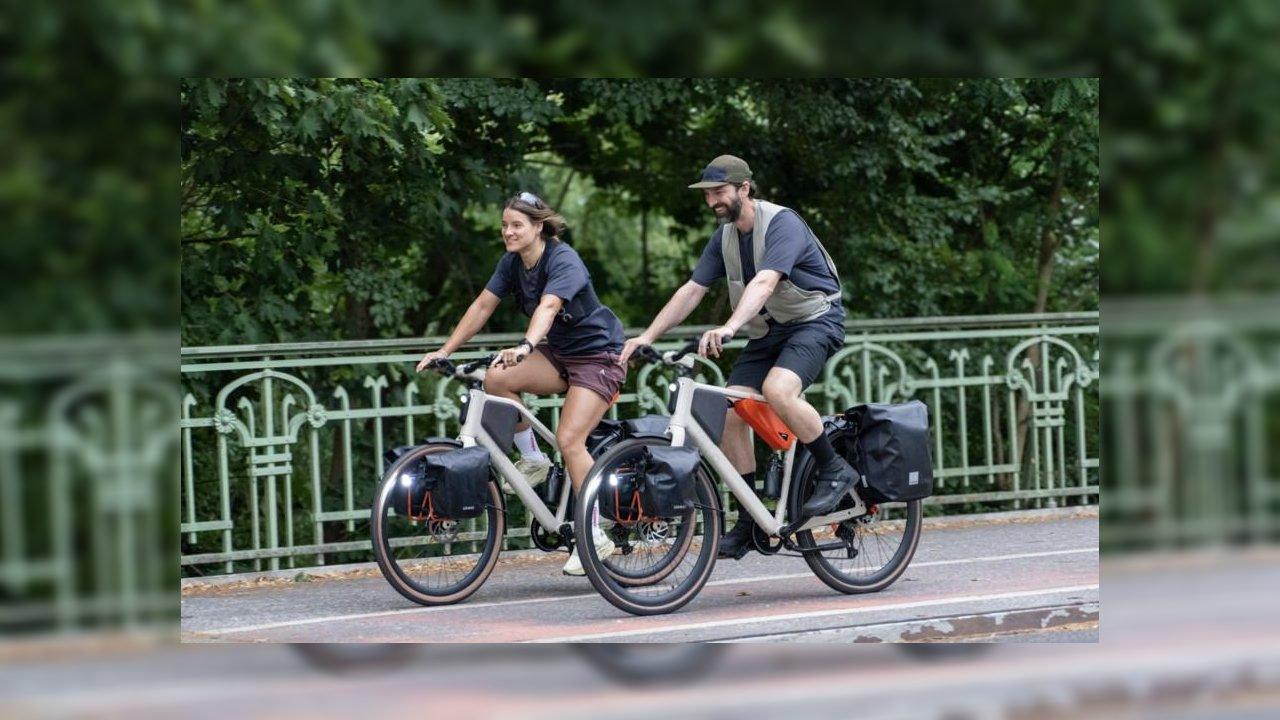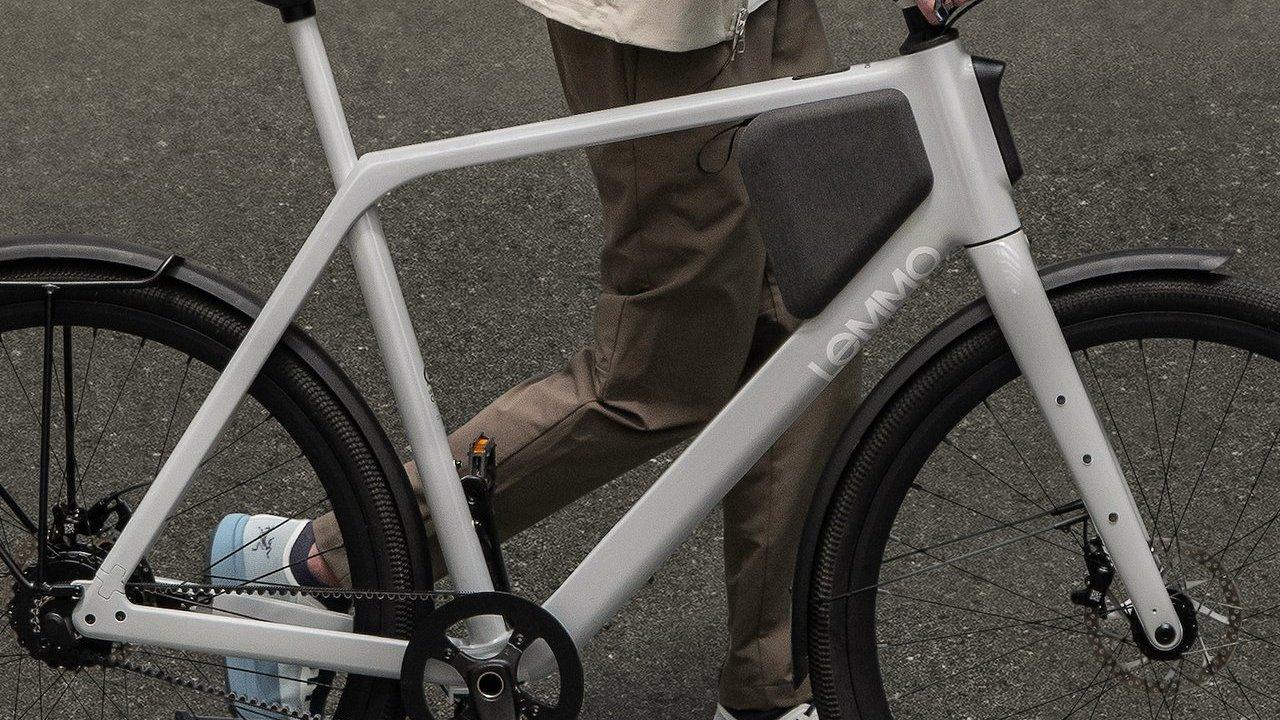
Berlin-based Lemmo is extending its connected micromobility range with vehicles designed for commuting, travel, family use and outdoor trips. The company’s portfolio now spans the Lemmo One dual-mode bicycle, the folding Lemmo Zero and the recently unveiled Lemmo 3 longtail e-bike. Its product strategy combines detachable electric modules, shared energy systems and connected software, with an early-stage four-wheeled platform also under consideration. Lemmo reports annual business growth of approximately 200% to 300% in recent years, with 2025 order sales approaching US$30 million.
Dual Mode Cycling
Lemmo One established the company’s Dual Mode Vehicle platform, allowing riders to switch between a conventional mechanical bicycle and electric assistance. The design centres on the detachable Smartpac electric module, which works with the company’s E Plus System and Dual Mode Hub.
With Smartpac attached, Lemmo One functions as a smart e-bike. When the module is removed, the vehicle becomes a low-resistance mechanical bicycle, giving riders a choice between assisted commuting and unassisted cycling without needing separate bikes.
The bicycle has an approximate mechanical weight of 15 kg, while the Smartpac weighs approximately 3 kg. Lemmo says the assisted range can reach around 100 km. The product has received Red Dot: Best of the Best, the iF Design Award, the Design Intelligence Award and the German Design Award.
Folding Travel Options
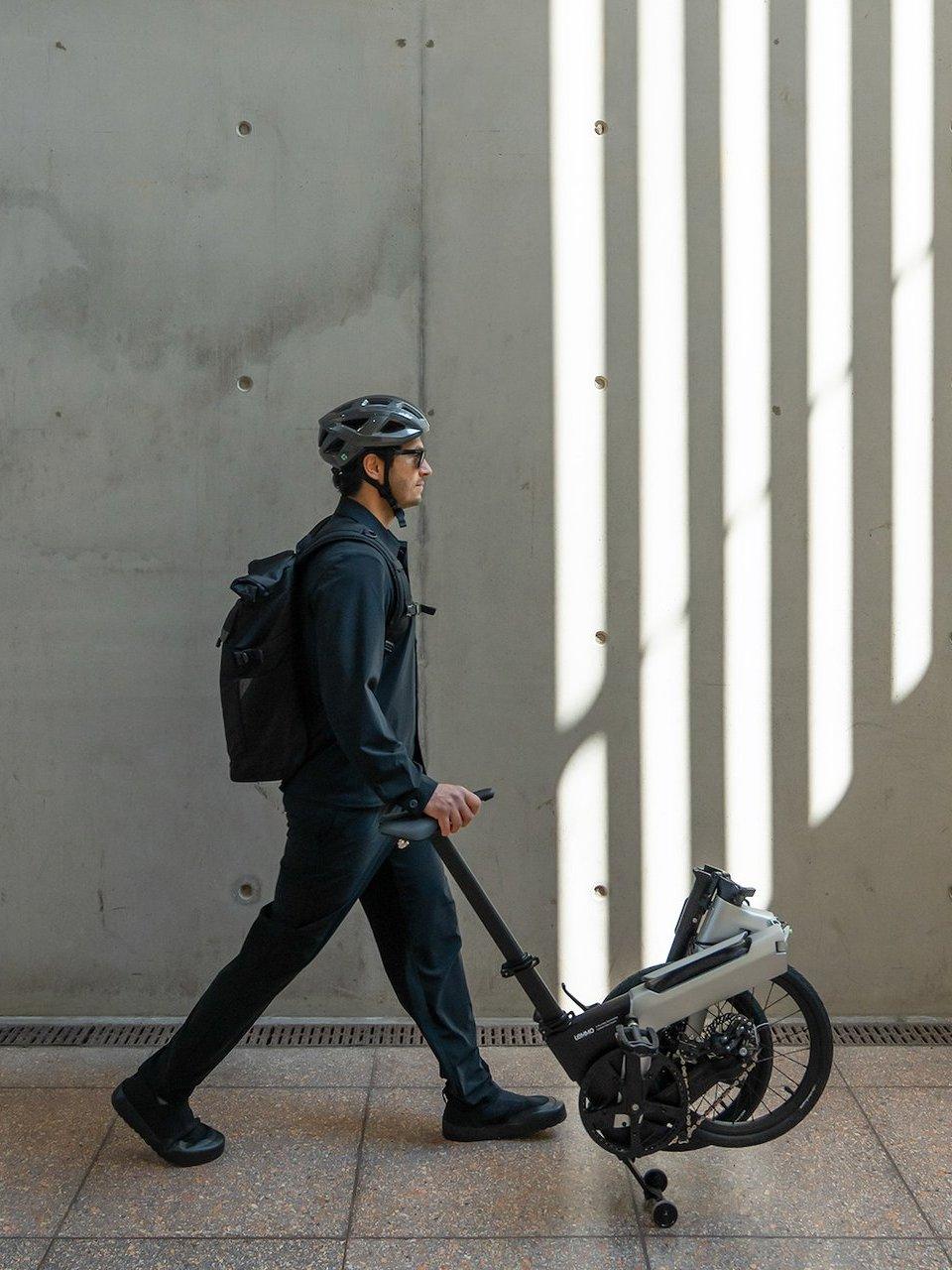
Lemmo Zero applies the same dual-mode concept to multimodal travel. The carbon-fibre folding bicycle has an approximate mechanical weight of 11 kg and uses a removable 2.3 kg, 159 Wh Smartpac Air.
The model was developed with car, rail and other transport connections in mind. Lemmo worked jointly with NIO on practical car-trunk storage, while the folded Zero can fit inside a standard 28-inch suitcase. This gives users a more compact option for journeys that combine cycling with other forms of transport.
The removable battery may also make the bicycle more practical for some travellers, although air travel remains subject to the relevant airline’s rules and approval. Lemmo Zero received the 2026 iF Design Award and has been involved in co-branded product and sales partnerships with NIO, XPeng and Volkswagen.

Family Mobility Capacity
Unveiled in September 2026, Lemmo 3 is the company’s first All Purpose Vehicle. The longtail SUV e-bike is intended to serve family transport, cargo carrying and outdoor use within one platform.
Its maximum total load is 200 kg, supporting configurations including one adult and two children. Modular accessories are planned for shopping, pets, camping and weekend trips, reflecting Lemmo’s effort to give a single vehicle broader everyday use.
Lemmo 3 includes the company’s 4D Suspension concept, with 80 mm of rear-wheel travel, an 80 mm suspension fork, a suspension seatpost and 2.6-inch high-volume tyres. A 960 Wh semi-solid-state battery, high-torque hub motor, combined braking, integrated indicators and brake lights are among the proposed specifications. Rear-approach radar is designed to detect objects up to 100 metres away.
Planned intelligent automatic shifting is also part of the package. Lemmo describes its full-suspension longtail approach as a category first, while positioning the model around weekday journeys and weekend recreation. The product marks a planned expansion into the US market, where the company reports more than 1,000 pre-orders before its formal crowdfunding campaign.
Shared Energy Systems
Smartpac is the second part of Lemmo’s wider platform. The company’s in-house modular energy and control system combines the battery, battery management, motor controller, connectivity and other electronics.
The intended model is to allow customers to reuse core technology across compatible future products instead of purchasing a complete electrical system with every new vehicle. Lemmo has developed or planned capacity classes of 159 Wh, 540 Wh and approximately 1,000 Wh for travel, urban cycling and higher-load family mobility.
Future compatible formats being considered include scooters, camping trailers and powered strollers. If developed, this shared system could reduce duplicate components as users add different vehicles to their mobility collection.
Connected Mobility Plans
Lemmo is also developing FEAVA, its Fully Electrified AI Centric Vehicle Architecture, to connect shifting, locking, lighting, sensors and electric drive functions. Its Collab.Ride AI system is intended to coordinate this vehicle hardware and simplify operation.
AI-powered automatic shifting has begun appearing on Lemmo One, with further development planned for Zero and Lemmo 3. Through SmartLink, the company is developing connected accessories including a smart helmet with voice communication and intercom features. A unified app and cloud-based AI agent are also planned to bring vehicles, accessories, navigation and services together.
Beyond two wheels, Lemmo plans to prioritise a Low Speed Vehicle platform during the next two years. The concept remains at the development stage, but could provide a lightweight four-wheeled alternative between two-wheelers and conventional microcars, with room for passengers and a folding bike for the final part of a journey.