As winter brings its snowy embrace, Tesla owners often ponder whether All-Wheel Drive (AWD) or Rear-Wheel Drive (RWD) offers superior performance. For those navigating icy terrains, understanding the distinctions between these drivetrain configurations is crucial. While RWD may provide adequate handling on dry roads, AWD asserts its advantage when it comes to maximizing traction in slippery conditions. This guide delves into the benefits of Tesla’s AWD system, revealing how it enhances driver confidence and vehicle stability in snow-covered environments, ensuring a safer and more controlled driving experience during even the most treacherous winter months.

Brief Overview
Tesla’s All-Wheel Drive (AWD) system offers significant advantages over Rear-Wheel Drive (RWD), particularly in snowy and icy conditions. By distributing power to all four wheels, AWD enhances traction and stability, ensuring safer and more controlled driving in harsh winter weather. This contrasts with RWD, which, while offering responsive handling on dry roads, poses traction challenges in snow and relies on additional measures like winter tires for stability. Tesla owners should weigh local climate conditions and personal driving preferences when choosing between AWD and RWD models, as each offers distinct benefits tailored to specific environments and driving experiences.
Key Highlights
- Tesla’s AWD enhances traction and stability, offering superior control on snow-covered and icy roads.
- AWD seamlessly distributes power to all wheels, adapting to real-time driving conditions and ensuring safety.
- RWD delivers a more engaging drive in moderate climates but faces traction challenges in snow.
- Winter tire usage is crucial for RWD models to improve grip and manage snowy conditions effectively.
- Choosing between AWD and RWD depends on climate, driving habits, and performance preferences.
Understanding Tesla AWD and RWD Systems
As a seasoned Tesla owner and journalist, it’s clear that understanding the nuances between Tesla’s All-Wheel Drive (AWD) and Rear-Wheel Drive (RWD) systems is crucial, especially when considering the challenging conditions of winter driving. Tesla’s AWD system offers significant advantages in snow, thanks to its ability to deliver power to all wheels, enhancing traction and control. Conversely, the RWD system, although providing certain performance benefits, presents its own set of challenges in snowy conditions. This section delves into the performance of these systems, exploring how AWD excels in winter and the particular considerations for RWD in snow.
The Role of Tesla AWD in Snowy Conditions
The Tesla AWD system is an engineering marvel designed to enhance traction and control in adverse weather conditions, particularly during winter. During snow-laden months, AWD becomes a crucial asset. By distributing torque between the front and rear wheels, the system optimizes grip, ensuring that each wheel receives the appropriate power needed to maintain stability. This distribution is not static; the AWD system continuously monitors driving conditions and adjusts the torque accordingly. For instance, if the front wheels encounter a slippery patch, the system can transfer more power to the rear wheels, allowing the vehicle to regain traction seamlessly. This adaptability is one reason why Tesla AWD is favored among drivers facing frequent snow conditions.
Moreover, the Tesla models equipped with AWD come with dual motors, each independently controlling the front and rear wheels. This dual-motor capability offers an added layer of reliability, as one motor can compensate for the other if necessary, ensuring consistent performance. Such features are especially beneficial during sudden weather changes common in winter, such as unexpected snowstorms. The dual-motor system not only aids in maintaining directional stability but also enhances acceleration ability on snowy roads, which can be a challenge for RWD models.
When it comes to safety, Tesla’s AWD provides a significant boost. Enhanced traction means better stopping power, crucial on icy roads. The precise torque management system ensures that when braking, the power to the appropriate wheel is reduced, allowing the vehicle to stop efficiently without skidding. Additionally, Tesla’s regenerative braking technology, which converts kinetic energy into stored energy during braking, is more effective in AWD models. This energy recuperation enhances battery efficiency, a critical factor since batteries lose efficacy in colder temperatures. Thus, the Tesla AWD system is more than just about driving effortlessly in winter; it’s a comprehensive package that combines power, safety, and energy efficiency to provide an unmatched driving experience on snow-covered roads.

Performance of Rear-Wheel Drive in Winter
When it comes to the performance of Tesla’s RWD system in winter, the dynamics differ significantly from those of AWD, requiring drivers to be more mindful of their driving habits and road conditions. RWD, known for its appeal in balancing and sporty performance, places an emphasis on the rear axle for propulsion. This configuration can present challenges in snow, where maintaining traction is critical. During winter, the primary issue with RWD is its tendency to lose traction more easily than AWD. The lower grip on snow-covered or icy roads can lead to wheel spin, making it vital for drivers to adopt more cautious driving practices.
In snowy conditions, Tesla’s RWD models may require additional aids such as winter tires, which are highly recommended to enhance grip and stability. Using winter tires with deeper treads can significantly improve traction and make RWD vehicles more manageable. While Tesla’s traction control system helps to minimize wheel spin by reducing engine power automatically when slip is detected, it cannot entirely negate the limitations of RWD in snow. Efficient use of traction control can help the vehicle maintain as much grip as possible, but it requires a keen understanding from the driver regarding the system’s limitations and capabilities.
Another aspect to consider with RWD is weight distribution. Tesla models benefit from a low center of gravity due to their battery placement, which aids stability but does not compensate for traction needs. Drivers might need to reconsider weight distribution, ensuring that additional weight is placed over the rear wheels to provide better road adherence. Some Tesla owners opt to place sandbags in the trunk to achieve this, thereby increasing rear traction and minimizing oversteering.
Ultimately, while Tesla RWD vehicles have unique characteristics and advantages, they require adaptive techniques and additional precautions in snowy conditions. Practiced handling, combined with the implementation of proper winter gear, can make navigating wintry roads in a rear-wheel drive Tesla a manageable task. The choice between RWD and AWD during winter months ultimately boils down to the driver’s preferences and local climate, balancing the sporty nature of RWD with the greater stability provided by AWD in challenging weather conditions.
Comparing Tesla Models: AWD vs. RWD
In the realm of electric vehicles, Tesla’s line-up distinguishes itself with options of All-Wheel Drive (AWD) and Rear-Wheel Drive (RWD) systems. These choices cater to various driving preferences and environmental conditions, offering distinct advantages tailored for unique scenarios. Delving into their key differences, this section will explore how each system operates under different climates, particularly with winter being a challenging yet compelling factor in the selection process. By discussing the technical nuances and performance capabilities, we aim to aid potential Tesla owners in making an informed decision about which drive system best suits their needs.
Key Differences in Tesla AWD and RWD Drives
Understanding the distinctions between Tesla’s AWD and RWD configurations unveils how each system influences driving dynamics, especially when it comes to performance and adaptability to different terrains and climates. Tesla’s AWD system is inherently designed to maximize grip and control, making it a compelling choice for those who frequently encounter challenging weather conditions. It employs a dual-motor setup, with each motor individually controlling a pair of wheels. This setup allows for torque vectoring, where torque can be split dynamically between the front and rear wheels based on real-time driving conditions. Such precision improves traction on slippery surfaces, ensuring the vehicle remains stable even during sudden maneuvers.
In contrast, Tesla’s RWD system centers its power on the rear wheels, which can provide a more spirited driving experience under optimal conditions. The rear-wheel propulsion ensures that steering is more responsive, often favored by enthusiasts and those who prioritize driving pleasure. However, in less favorable weather, such as snow or ice, the rear-wheel focus can lead to challenges in maintaining traction. Despite Tesla’s advanced traction control systems that mitigate wheel spin by modulating power delivery, the inherent nature of RWD requires drivers to adopt more cautious driving techniques.
Performance reviews of Tesla models often highlight the differences in acceleration and handling between AWD and RWD. AWD models are lauded for their enhanced traction, allowing for quicker launches and superior performance in adverse environments. For instance, AWD provides the ability to handle a track-like acceleration even in conditions where other vehicles might hesitate. On the other hand, RWD models, while potentially lagging in initial grip under slick conditions, can offer a balanced weight distribution due to the rear-wheel focus, which some drivers argue offers a more authentic driving experience.
Ultimately, the decision to opt for AWD or RWD boils down to user preference and specific driving needs. AWD provides peace of mind and enhanced stability in diverse conditions, whereas RWD appeals to those seeking a more traditional, linear driving experience. Understanding these dynamics is critical for potential Tesla owners deciding which drive system aligns best with their expectations and local driving conditions.

Choosing the Right Model for Your Climate
When selecting between Tesla’s AWD and RWD models, it’s imperative to consider the climate you’ll predominantly be driving in. The Tesla AWD system stands out for drivers residing in regions with harsh winter conditions. The key advantage of an AWD system, especially in snowy or icy climates, lies in its ability to distribute power to all four wheels seamlessly. This distribution enhances grip and stability, reducing the likelihood of losing control in treacherous weather. For those living in areas like the northern United States or Canada, where snow is a common occurrence, an AWD Tesla model can provide substantial peace of mind thanks to its adept handling of adverse conditions.
Conversely, in milder climates where snow and ice are less of a concern, the choice becomes less clear-cut. Tesla’s RWD models are particularly appealing for drivers who appreciate a driving dynamic that emphasizes responsive steering and acceleration. In these regions, the need for the enhanced traction control offered by AWD is reduced, allowing the more efficient and often lighter RWD systems to showcase their efficiencies and performance benefits. The energy consumption of RWD models can be lower compared to their AWD counterparts, as fewer components are involved in the energy distribution, potentially increasing efficiency in suitable environments.
Furthermore, the cost factor may play a role in decision-making. AWD systems generally carry a higher price tag due to their complexity and advanced engineering. Budget-conscious drivers in moderate climates might find that a well-equipped RWD model meets their needs without the additional expense. However, it’s crucial to factor in the potential cost savings of long-range winter performance from AWD models if moderate weather becomes unexpectedly extreme.
For Tesla buyers who reside in transitional climates with varying seasonal conditions, the decision leans towards a hybrid of preferences. Vehicles like the AWD Model Y and Model X not only combine rugged performance with luxury but also offer adaptability. These models can easily transition between urban driving and backcountry roads, providing flexibility for those whose geographic location demands versatility from their vehicle.
In conclusion, the choice between an AWD and RWD Tesla isn’t solely dictated by immediate weather conditions but also by long-term climate expectations. Reviewing your climate, driving habits, and vehicle expectations will guide you towards the model that best aligns with your lifestyle. As with any significant purchase, careful consideration of these elements ensures satisfaction and performance, allowing you to fully leverage the capabilities of Tesla’s innovative electric vehicles in your specific environmental context.
Safety and Handling on Snowy Roads
Driving a Tesla in snow demands a comprehensive understanding of how different drivetrain systems impact vehicle performance. The importance of safety and handling on snowy roads cannot be overstated, especially when distinguishing between the capabilities of All-Wheel Drive (AWD) and Rear-Wheel Drive (RWD) systems. In this segment, we’ll examine how AWD enhances traction and stability in challenging conditions and delve into the performance of RWD Tesla models when confronted with slick, icy roads. This analysis will offer insights into safety priorities, traction optimization, and vehicle handling under adverse weather conditions.
How AWD Enhances Traction and Stability
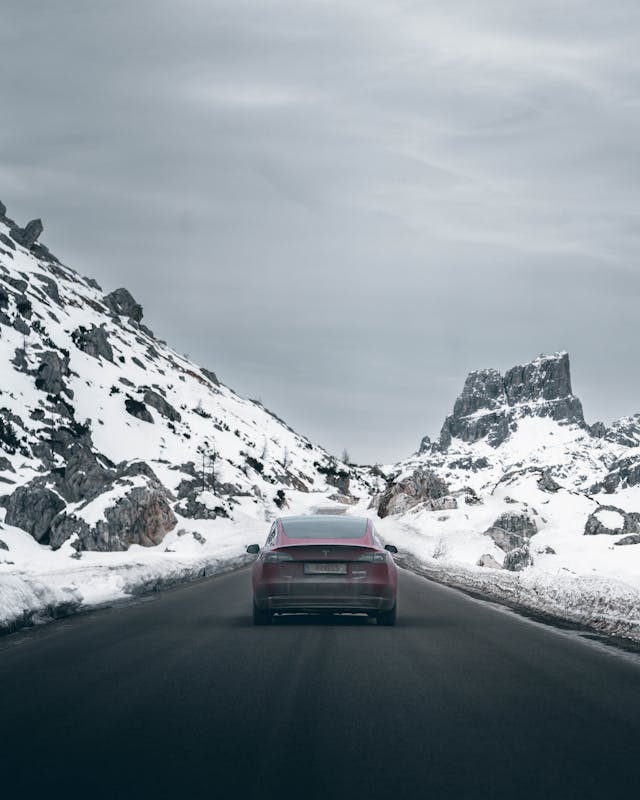
The allure of Tesla’s AWD system lies in its adept management of traction and stability, particularly in snow. By distributing torque independently between the front and rear wheels, Tesla AWD intuitively enhances grip where it’s needed most. This system is a feat of active engineering, continuously monitoring driving conditions to determine the optimal power distribution. On snow-covered roads, this adaptability ensures that the vehicle remains balanced and stable, even when navigating sharp turns or unexpected ice patches. The dual-motor setup, which is a hallmark of Tesla’s AWD cars, plays a significant role here. Each motor individually controls an axle, providing the precision necessary for maintaining stability across varying terrains.
Beyond simple power distribution, Tesla’s AWD system integrates with cutting-edge technologies to boost driving performance. Features like regenerative braking work more efficiently in AWD models, not only enhancing stability by converting kinetic energy back into stored energy but also optimizing energy consumption in cold weather—an important factor for maintaining long-range driving capabilities. Additionally, Tesla’s traction control system is hyper-responsive in AWD configurations, detecting wheel slippage within milliseconds and adjusting accordingly to prevent loss of control. This rapid response is particularly vital during adverse conditions, such as snow and ice, where the margin for error is slim. The superior traction translates to better acceleration, shorter stopping distances, and more effective avoidance of skidding, making winter driving far less daunting.
For Tesla drivers, safety on snowy roads is paramount. It’s not just about getting from one point to another but ensuring that every journey is as safe and smooth as possible. This is where the precision of the AWD system truly shines. Given that snowy conditions can drastically alter driving dynamics, the reassurance provided by AWD is invaluable. This system’s inherent stability allows it to outperform RWD in safety tests, especially on slippery roads. Whether it’s navigating steep inclines or winding through mountainous terrain, Tesla’s AWD offers a level of control and confidence unrivaled by simpler drivetrain setups. Hence, for drivers in snowy climates, Tesla’s AWD is more than a luxury—it’s an essential component of safe, efficient winter driving.

Testing RWD Models in Slick Conditions
While Tesla’s AWD offers numerous advantages, examining the performance of RWD models under snowy conditions reveals a different narrative. Rear-Wheel Drive systems allocate power exclusively to the rear axle, which can be appealing for those who appreciate the responsive, sporty handling this configuration provides. However, in snow-laden conditions, this setup can present notable challenges. Primarily, RWD vehicles tend to lose traction more easily compared to their AWD counterparts. The rear-wheel propulsion, combined with reduced grip on icy surfaces, often results in increased wheel spin. To counteract this, Tesla implements a sophisticated traction control system aimed at modulating power output, but even this advanced technology cannot completely neutralize the inherent limitations of RWD in slick, icy conditions.
Winter tires become indispensable for RWD Tesla models in snowy environments. The deeper treads of winter tires facilitate improved road adherence, making handling more predictable and traction more reliable. Additional weight over the rear axle—often achieved by placing sandbags or other heavy items in the trunk—can further enhance stability by optimizing weight distribution. Despite these measures, careful driving remains essential. Sudden accelerations or sharp turns should be avoided to maintain control. Customary RWD characteristics, while advantageous in dry conditions, require adaptation to ensure safe handling on snow. Enhanced attentiveness to road conditions and a gentle touch on both accelerator and steering are crucial for managing the unique demands of winter driving in an RWD Tesla.
Even with these precautions, it’s clear that RWD models face significant obstacles when navigating slick roads. There’s an appreciable learning curve for drivers accustomed to RWD dynamics, necessitating heightened vigilance and strategic driving decisions. Cornering and braking require more anticipation and moderation to prevent oversteer or skidding. While Tesla’s traction control adds a layer of safety, it complements rather than substitutes the driver’s skill. Therefore, for Tesla owners residing in regions prone to snowfall, an honest assessment of driving conditions and personal experience is necessary. Although RWD Teslas can indeed conquer snowy conditions, they do so with a trade-off in ease and security compared to AWD models. Wise preparation and adaptive driving techniques enable RWD enthusiasts to confidently traverse winter roads, albeit with a more attentive approach than their AWD counterparts.
Optimizing Your Tesla for Winter Driving
Winter driving demands a heightened sense of awareness and preparation, particularly for Tesla owners navigating varying weather conditions. With Tesla’s impressive All-Wheel Drive (AWD) and Rear-Wheel Drive (RWD) options, each system calls for unique strategies to ensure safe and effective travel during icy months. This section will cover essential tips to optimize your Tesla regardless of your drivetrain choice, focusing on tire selection, energy efficiency strategies, and leveraging Tesla’s own technological features for winter readiness. These considerations are vital for enhancing performance and safety on snow-covered roads.
Ultimately, the choice between Tesla’s AWD and RWD models hinges on individual needs and environments. While AWD offers superior traction and control in snowy conditions, enhancing safety and confidence for drivers in colder climates, RWD can be a viable option for those in milder regions, often delivering a more traditional driving feel and potentially slight efficiency gains. Prospective buyers should consider test driving both configurations to experience firsthand how each handles under different road conditions, ensuring they make an informed decision suited to their lifestyle and driving habits.