A University of Houston graduate student will soon begin an important mission to help explain one of the universe’s most puzzling particles: the neutrino.
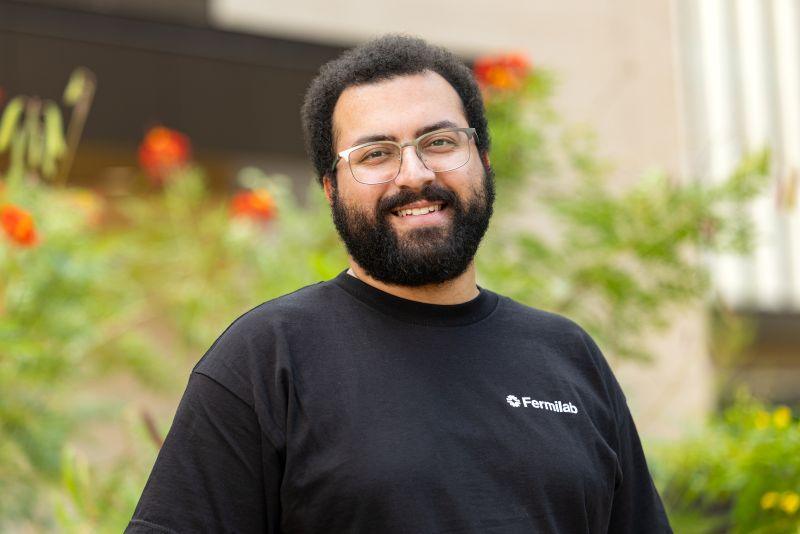
Karim Hassinin, pictured above, is a Ph.D candidate in physics at UH. He has been selected for the 2025 Science Policy and Advocacy for Research Competition, otherwise known as SPARC. This is a prestigious 10-week program hosted by the Universities Research Association, designed to equip scientists with essential communication skills to facilitate the effective translation of highly complex technical details to a lay audience.
“I’ve always been fascinated by how we extract information from reality — even when we can’t fully define what reality is,” Hassinin said. “Theory, at its core, is a kind of storytelling, and every model is just one way of seeing the world. Through this program, I hope to learn how to translate those complex layers of scientific reasoning into stories that anyone can understand — so people can see not just the data, but the wonder behind discovery.”

SPARC has been designed to increase awareness of the policy engagement process for early-career scientists. Through seminars, workshops and individual sessions with science policy experts, students develop skills in research and communication to help them build up their own science policy portfolio. The program culminates with a competition of SPARC champions attending the Science Policy Summit in Washington, D.C.
Hassinin has also spent this last summer at Fermi National Accelerator Laboratory as a URA Visiting Scholar, where he collaborated on research for the Short Baseline Neutrino ICARUS program, as well as contributing to the development of large-scale projects such as the Deep Underground Neutrino Experiment.
Hassinin already has plenty of experience with science communication. In his first year of graduate school, he taught an undergraduate physics lab and took note of a range of differing views, forcing him to rethink how he approaches explaining the material.
“The technical details will always be there, but it’s essential to show people the purpose of science and how it shapes our world,” Hassinin said. “Our daily lives depend on technology, and technology depends on science. Through SPARC, I’ve gained a new perspective on how vital it is to bridge the gap between complex research and public understanding — because science communication truly matters everywhere.”
The art of effective communication between technical experts and the public is paramount. Scientists need to develop the skills to be able to translate their work into stories about how new scientific developments benefit the public at large. The green transition is of especial importance here, with scientists needing to learn how to convey the urgency of climate change and what we need to do about it.