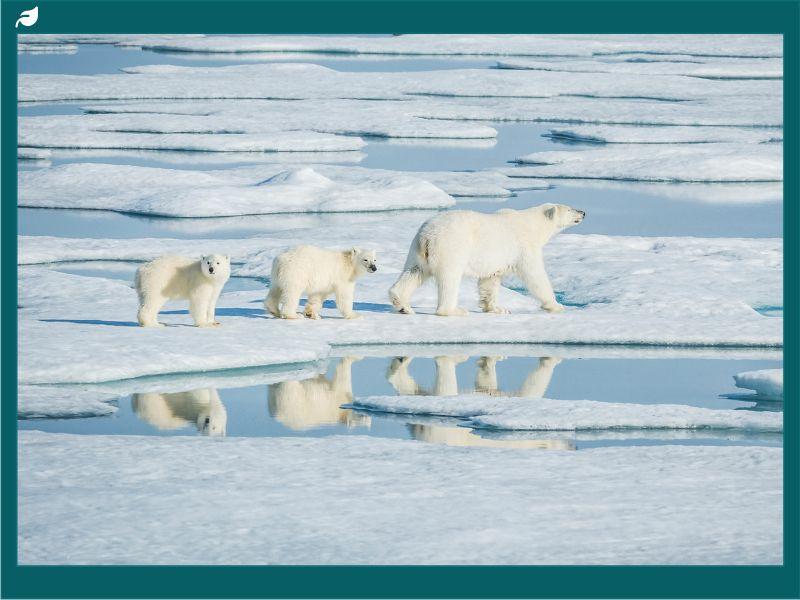
Wildlife Conservation Society and Cooper Island Arctic Research have documented a marked rise in polar bear predation at seabird colonies along Alaska’s Arctic coast, linking the change to shrinking summer sea ice. The study, published in Polar Research, records a polar bear destroying 89 per cent of nests in a common eider colony on Spy Island in less than one day during July 2024. At nearby Cooper Island, where seabirds have been monitored since 1975, black guillemots experienced complete reproductive failure from polar bear predation in 2024 and 2025. The findings offer a stark, well-documented account of changing predator-prey relationships in a rapidly warming Arctic.
Predation Reaches Seabird Colonies
Polar bears have historically relied on seals, but disappearing summer sea ice is reducing their access to this prey and keeping more animals on land for longer periods. The WCS-led research identifies seabird colonies as an increasingly available food source, particularly where birds congregate in large numbers on small Arctic islands.
The July 2024 event on Spy Island was the first predation incident of its scale recorded at an Alaskan seabird colony. A single bear spent nearly a day moving across the remote island, consuming eggs and destroying nests in the common eider colony. Such behaviour has been reported elsewhere in the Arctic, but had previously been almost unheard of in Alaska.
At Cooper Island, the researchers recorded a sharp rise in polar bear predation after the record sea-ice retreat of 2007. Bears also learned to overcome specially designed nest boxes intended to protect nesting birds, adding a new challenge for long-running conservation monitoring efforts.
Kayla Shively, Conservation Ecologist with WCS’s Arctic Beringia Program and lead author of the study, said:
“For decades these barrier islands served as places where seabirds could nest with relatively little pressure from large land predators. What we’re seeing now is that as polar bears spend more time on shore, those relationships are changing. It’s another reminder that climate change isn’t affecting one species at a time—it is reshaping the connections between species across the Arctic.”
Earlier Arrivals Raise Risks
The study found that polar bears are arriving at colonies earlier in the nesting season, a timing shift that increases exposure for eggs, chicks and breeding adults. The concentration of birds on relatively small islands leaves colonies vulnerable when a bear reaches land during the breeding period.
Black guillemots are already under pressure as warming seas reduce the availability of Arctic cod, their primary prey. Common eiders are also facing flooding and shoreline erosion. The documented increase in bear predation introduces another source of pressure for both species, illustrating how changes in sea ice can affect wildlife beyond the marine hunting grounds where polar bears typically feed.
The researchers describe these interactions as part of a wider ecological change, rather than an isolated response by individual bears. As summer ice disappears, the physical boundary that once separated marine predators from breeding seabird colonies is becoming less reliable.
Signals From A Changing Arctic
The research draws on one of the longest continuous records of Arctic seabird monitoring assembled on Cooper Island. That long-term perspective enabled scientists to identify a pattern that may otherwise have appeared to be a series of separate incidents.
Observations by Dr George Divoky at Cooper Island, alongside continued monitoring of Alaska’s barrier islands by WCS teams, provide the evidence base for assessing how the timing and intensity of predation have changed. The work shows the value of consistent field research in detecting ecological shifts that unfold over years rather than seasons.
Dr Martin Robards, Regional Director of WCS’s Arctic Beringia Program and a co-author of the study, said:
“When a top predator like the polar bear changes how and where it hunts, it’s telling us something fundamental about the ecosystem. These aren’t isolated events. They’re visible signs that one of the world’s most intact ecosystems is being destabalized by the loss of sea ice, with consequences that ripple through wildlife communities in ways we’re only beginning to understand.”
Conservation In The New Arctic
As Arctic warming continues, the researchers expect new interactions between predators and prey to become more common. The findings point to changes that extend beyond individual colonies, revealing how reduced sea ice can alter the relationships that connect species throughout the region.
For conservation organisations and policymakers, the study reinforces the need to pair emissions reductions with protection for intact habitats and sustained ecosystem-focused research. Long-term observation can help scientists understand the changing needs of Arctic species as they adapt to less ice and provide a basis for guiding conservation action.
The evidence from Cooper Island and Spy Island also gives a visible dimension to climate disruption. Polar bears remain closely associated with sea ice, but their growing presence at bird colonies shows that its decline is affecting wider wildlife communities, from the availability of prey in warming seas to the survival of birds nesting on Alaska’s barrier islands.
Research Supports Resilience
WCS argues that meaningful climate action can still strengthen the resilience of Arctic species and support their capacity to adapt. If the climate stabilises over future generations, the organisation says recovery remains possible, provided that conservation is supported by emissions-reduction targets, habitat protection and continuing research.
The study offers a timely example of why field evidence matters in climate and nature decision-making. By documenting the emerging pressure on black guillemots and common eiders, WCS and Cooper Island Arctic Research have added a valuable record of how the loss of summer sea ice is reshaping life across Alaska’s Arctic coast.