Agriculture faces a growing range of challenges, from unpredictable weather patterns and soil degradation to pest outbreaks and changing market demands.
The Food and Agriculture Organization (FAO) warns that feeding a projected 10 billion people by 2050 will require more sustainable practices. Global agriculture is expected to produce 50% more food, feed, and fiber than in 2012 while using 25% more freshwater. Expanding farmland is no longer a viable solution, especially since agricultural activities already account for more than 60% of human-induced land degradation.
Instead, FAO recommends improving crop yields, adopting resilient crop varieties, promoting conservation agriculture, diversifying crops, and improving soil moisture retention.
These pressures have increased the importance of agricultural practices that can withstand disruptions and support long-term productivity. Crop diversity offers a practical approach to addressing these challenges.
Understanding Crop Diversity in Modern Agriculture
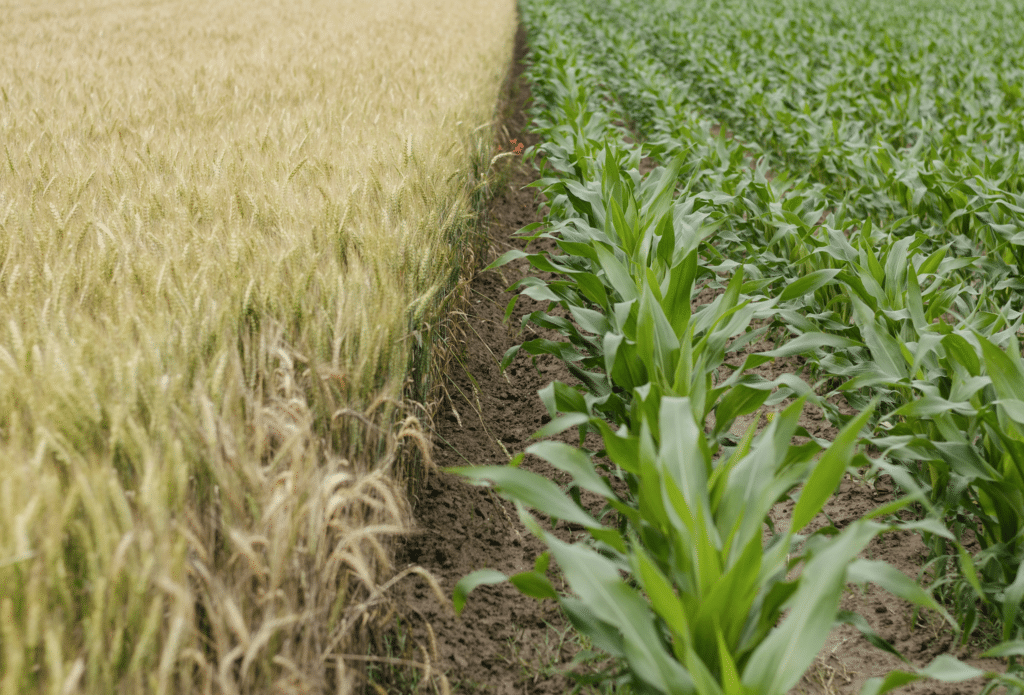
Crop diversity refers to cultivating different plant species and varieties within a farming system. It can involve growing multiple crops across separate fields, planting different species together, or more.
Traditional farming systems often incorporated a wider range of crops because farmers depended on locally available plants for food, livestock feed, and income. However, the expansion of intensive agriculture has encouraged specialization in many regions.
According to a Wiley Online Library study, the global food system depends heavily on a small number of crops. Around 75% of the world’s food supply comes from just 12 crops and five animal species. This makes food production vulnerable to pests, diseases, extreme weather, and economic disruptions.
The authors argue that moving away from monoculture farming and incorporating indigenous, underutilized, and locally adapted crop species can improve:
- Soil health
- Preserve biodiversity
- Reduce environmental impacts
- Provide farmers with greater protection against crop failures
Large areas are now dedicated to a limited number of commercially valuable crops, making production systems more dependent on specific environmental conditions and market demands.
Reducing the Risks Associated With Crop Failure
One of the primary advantages of crop diversification is its ability to reduce the financial and agricultural risks associated with crop failure.
Diversified crop rotations can reduce or even offset yield losses caused by unusually high temperatures, prolonged warm and dry periods, and excessive or insufficient rainfall. Introducing even one additional crop species or functional group into monoculture farming systems helped counteract climate-related yield losses. Similarly, adding three crop species increased maize yields by up to 553 kg per hectare under unfavorable climatic conditions.
Variety selection also plays an important role in this approach. For example, strawberry growers can consider different cultivars based on fruiting characteristics, growing requirements, and suitability for local conditions. Albion strawberry plants offer one example of a day-neutral cultivar that can produce fruit over an extended growing season when temperatures are favorable.
As Innovative Organic Nursery LLC notes, they are large, conical, and sweet. Moreover, they also have a disease-resistance profile. Such varieties give growers another option for planning production schedules rather than relying exclusively on a single concentrated harvest period.
Supporting Natural Pest and Disease Management
Agricultural systems with limited crop diversity can create favorable conditions for certain pests and diseases. When large areas contain the same host plant, pests may find a consistent food source and spread more easily between crops. The repeated cultivation of susceptible varieties can also increase the likelihood of disease-related losses.
Diversified planting systems can help disrupt these patterns. Crop rotation reduces the continuous availability of suitable host plants for certain soil-borne pests and pathogens. Intercropping. This involves growing two or more crops together. It can also create a more varied environment that makes it harder for some pests to locate their preferred plants.
However, they may not grow the same everywhere.
“For the first time, we have been able to demonstrate on a global scale that plant diversity does not operate according to the same rules everywhere,” says Prof. Dr. Christoph Scherber, Head of the Center for Biodiversity Monitoring at the LIB and senior author of the study.
Improving Soil Health Through Diverse Planting Systems
Soil health is another important factor in agricultural resilience. Continuous cultivation of the same crop can gradually affect soil nutrient availability, microbial activity, and overall soil structure. Different plants interact with the soil in different ways, making crop diversity a useful tool for maintaining its productive capacity.
Crop rotation is one of the most established ways to achieve this benefit. It involves growing different crops in a planned sequence so that the same plant family does not occupy a field season after season.
An MDPI study notes that continuous monoculture can:
- Increase the spread of pests and plant diseases
- Deplete soil nutrients
- Reduce crop yields
- Increase farmers’ dependence on chemical fertilizers and pesticides
In contrast, rotating different crops across growing seasons can improve soil structure, increase organic matter, enhance nutrient cycling, and support healthier soil ecosystems.
Cover crops also protect soil. Intensive agricultural practices and the conversion of natural grasslands into croplands have reduced soil organic carbon and weakened soils’ ability to support essential ecosystem services. Cover crops and green manures can help address these challenges by improving nutrient cycling, increasing soil fertility, and suppressing weeds.
Strengthening Adaptation to Climate Change
Climate change has added uncertainty to agricultural planning. Shifts in rainfall, rising temperatures, prolonged dry periods, and extreme weather events can affect planting schedules and crop yields. Farming systems that depend heavily on a narrow selection of crops may struggle more to adapt to these changes.
Crop diversity can improve adaptability because different species and varieties have different environmental tolerances. Some crops perform better in warmer conditions, while others suit cooler growing seasons. Some varieties can tolerate temporary water shortages, while others may perform better in areas with higher rainfall.
Diversification can also involve combining annual crops with perennial plants, trees, and shrubs through agroforestry systems.
Drawing on nine research studies, a Frontiers review highlights how agroforestry systems can:
- Reduce habitat fragmentation
- Increase carbon sequestration
- Improve soil fertility
- Provide farmers with diversified income sources through timber, fruits, and other forest products
It also explains that agroforestry can help agricultural systems withstand climate-related challenges such as droughts, floods, and heatwaves.
Frequently Asked Questions
How can farmers measure the success of crop diversification?
Farmers can evaluate crop diversification through several indicators, including total farm revenue, production costs, yield consistency, and resource efficiency. Tracking these figures over multiple growing seasons helps identify which combinations deliver the best results. Farmers can also monitor changes in soil quality, market demand, and input requirements to assess the long-term performance of their diversification plans.
What challenges do farmers face when transitioning to diversified agriculture?
Transitioning to diversified agriculture can require changes in equipment, labor arrangements, storage facilities, and marketing strategies. Farmers accustomed to producing a single commodity may also lack experience with unfamiliar crops. Finding reliable buyers for new products can present another challenge.
How does crop diversity contribute to food security at the community level?
A wider selection of locally produced crops can improve the availability of different food groups throughout the year. Communities that depend on a limited number of agricultural products may face supply disruptions when production declines. Diverse local food systems can provide alternative sources of fruits, vegetables, grains, and proteins, reducing dependence on a narrow range of food commodities.
Key Statistics and Facts About Crop Diversity and Agricultural Resilience
| Expected increase in agricultural production | 50% more food, feed, and fiber than in 2012 |
| Agriculture’s contribution to human-induced land degradation | More than 60% |
| Global food supply dependence | 75% comes from just 12 crops and five animal species |
| Yield improvement from adding three crop species | Up to 553 kg per hectare for maize under unfavorable climatic conditions |
| Crop diversification benefits | Reduced climate-related yield losses |
Crop diversity offers agricultural businesses a practical way to improve production stability, manage environmental risks, and support long-term soil health. Its benefits extend beyond the farm, contributing to biodiversity conservation, more balanced ecosystems, and greater flexibility across food supply chains.
As climate conditions and market demands continue to change, dependence on a narrow range of crops can expose farmers to unnecessary risks. Diversified planting systems provide more options for managing these uncertainties while supporting economic opportunities and responsible resource use.