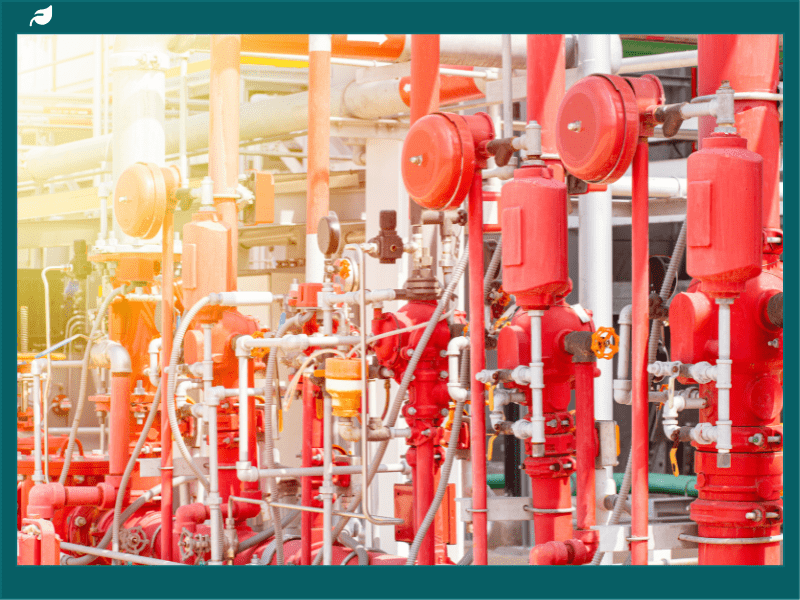
Protecting mission critical technology environments from heat-related events and downtime is key to safeguarding today’s business assets. Deploying a specialized data center fire suppression system provides continuous, automated protection for server racks, telecommunication switches, and enterprise cloud hardware. Standard water sprinkler configurations pose catastrophic risks to live electrical infrastructure. Water discharge causes short circuits, irreversible hardware corrosion, and widespread data loss. Gaseous fire suppression systems are capable of detecting thermal anomalies at an early stage and suppressing fires quickly, thus safeguarding valuable hardware assets and ensuring uninterrupted operational availability across enterprise networks.
Regional Enterprises Managed Cylinder Service
Clean agent fire suppression readiness, scheduled technical servicing, mass verification, and certified gas replenishment are required after discharges or routine maintenance checks. Utilizing certified clean agent cylinder refilling in Edmonton provides Western Canadian enterprises, colocation facilities, and industrial data centers with direct access to specialized off-site maintenance platforms. Any pressurized vessel that goes through a certified service channel is subjected to a complete inspection of the valve, replacement of all seals and an accurately controlled filling of the agent in a strictly controlled laboratory environment. Streamlined logistics ensure that empty or discharged cylinders are serviced, certified and quickly returned, keeping enterprise facilities protected and fully in compliance with safety regulations.
Residue-Free Extinction for Delicate Electronic Hardware
Data centers need fire suppression systems that extinguish fires without leaving conductive residue or exposing sensitive electronics to catastrophic thermal shock. Clean agents such as FK-5-1-12, Novec 1230 and FM-200 absorb heat at the molecular scale to extinguish fires within seconds of activation. These non-conductive gas agents evaporate completely leaving no solid deposits, which allows IT management teams to avoid costly clean-up operations after an incident. Clean agent technology is employed to maintain critical server rooms running to protect financial databases, customer records, and enterprise IT operations.
Hydrostatic Safety Certification and Regulatory Compliance
Commercial fire suppression systems are governed by stringent safety requirements from the National Fire Protection Association and Transport Canada. Pressurized suppression vessels must be periodically weighed, mechanically evaluated and hydrostatically tested (typically every 5 or 12 years) to verify the cylinder’s structural integrity. Certified service providers conduct rigorous water-jacket pressure testing to confirm that canisters can safely withstand internal storage pressures. Facility directors receive audit-ready proof of system safety in the form of full computerized compliance reports and official agency stamps from municipal inspectors and corporate underwriters.
Safeguarding Commercial Assets with Expert Systems Management
A sound fire protection strategy in the corporate world requires a combination of sophisticated gaseous suppression technology combined with working technical supervision and routine maintenance of the equipment. Business leaders can be totally confident in their emergency protection infrastructure when partnered with experienced fire safety specialists. Server halls, battery storage rooms and electrical distribution centers are made free of operational vulnerabilities by means of constant technical evaluations, certified cylinder refilling and systematic safety audits. The focus of Certified System Care is to protect the physical infrastructure, preserve irreplaceable digital resources, and ensure uninterrupted business continuity of growing enterprise organizations.