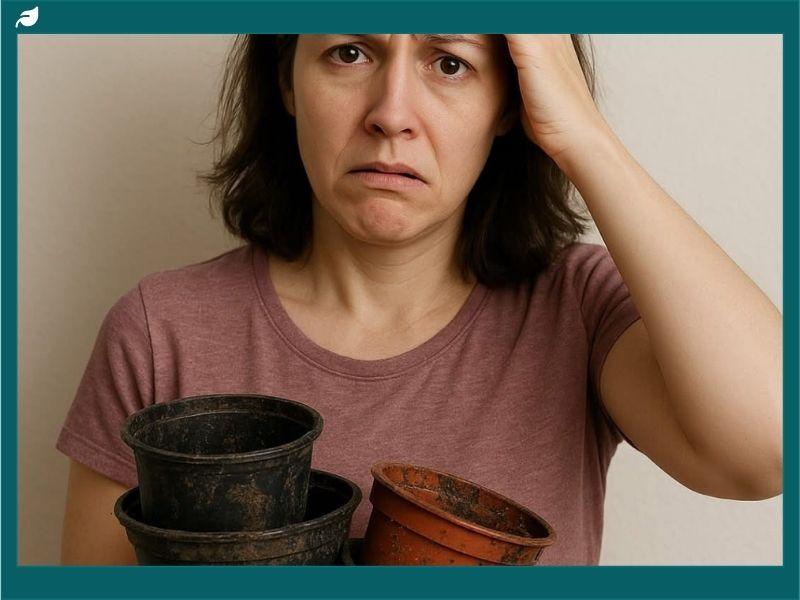
Back in 2019, Samantha Seah, a PhD student at the European Molecular Biology Laboratory, tried a small experiment that had nothing to do with her research. For one working day she kept every bit of plastic and nitrile she used. Tips, tubes, gloves, the lot. It came to 230 g. She did the maths and figured that’s around 60 kg a year. Roughly the weight of a small adult, in plastic, from one person.
You’d hope she was an outlier. She wasn’t. Green Labs Austria later weighed a week’s worth of plastic waste from seven life science labs and landed on an average of 116 kg per researcher per year. The lightest labs (mostly standard molecular work) sat around 32 kg. Cell and tissue culture labs hit 237 kg.
A lot of that traces back to something most scientists do without thinking: pipetting. That’s why we think liquid handling instruments deserve a bigger place in the lab sustainability conversation than they usually get. Not because they’re a cure-all, but because they go after plastic, reagents and failed runs at the same time.
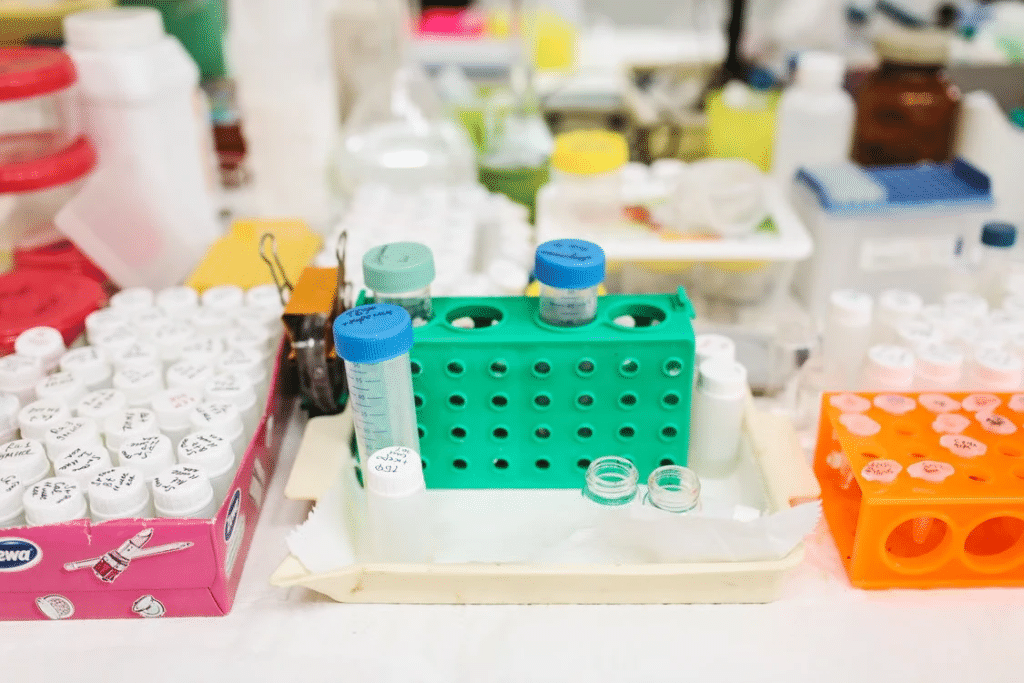
So what’s in the bin?
If you’ve read anything on lab plastic, you’ve probably seen the 5.5 million tonne figure. It comes from a 2015 University of Exeter letter, and it did a great job of getting people talking. It was also a back-of-the-envelope estimate scaled up from one biosciences department, and per scientist it’s about nine times higher than what Green Labs Austria measured. Worth knowing before you quote it in a board paper.
The Austrian numbers are more useful anyway, because they show what’s in there. Ten ordinary items made up 86.6% of the plastic by weight. Serological pipettes led at 16.1%. Tip boxes were next at 15.0%, then multi-well plates (12.2%), and the tips themselves added 8.5%.
Put the boxes and tips together and you’re looking at almost a quarter of the bin. It’s hard to think of another single habit in the lab that accounts for that much.
Recycling helps. It just can’t carry the load
Most lab plastic is polypropylene or polystyrene, and in theory both can be recycled. In practice? Once something has touched a sample, it’s usually autoclaved and then burnt or sent to landfill. Plenty of recycling contractors won’t take lab material at all. At the University of Edinburgh, 75% of scientists surveyed said they recycled some plastic, but many also said they weren’t allowed to recycle anything that came out of the lab.
That’s slowly changing. Green Labs Austria found most plastic from Biosafety Level 1 labs can be recycled safely if it’s sorted and decontaminated properly, and supplier take-back schemes for tip boxes and packaging keep popping up.
Still, ask the people who do this for a living and you’ll hear the same thing. Martin Farley, sustainable labs adviser at University College London, puts the biggest gains in cutting how much plastic labs use to begin with. Recycling cleans up after the fact. Using less means there’s less to clean up.
The waste nobody weighs
You can put tips on a scale. Reagents are trickier, because the waste is buried inside experiments that didn’t work.
Hand pipetting is a skill, and like any skill it wobbles. Accuracy (how close you get to the volume you meant) and precision (how consistently you get there) both shift with tiredness, deadlines, the angle you hold the pipette, how deep the tip goes and how fast you press the plunger.
The pipettes need looking after too: cleaning, recalibrating, checking seals. One practical guide recommends weekly checks on O-rings and pistons for pipettes used with solvents, acids or alkalis. Training makes a difference, no argument there. But it can’t make two people pipette identically, and it can’t make your fifteenth plate of the day as tidy as your first.
The Babraham Institute reckons scientists can spend around two hours a day pipetting. So think about what happens when a qPCR plate or a library prep fails. You lose the afternoon, sure. You also go through another round of master mix, enzymes and sample (sometimes sample you can’t get back), plus fresh tips and a new plate. One rerun can double the footprint of that experiment.
Where liquid handling instruments make a difference
Automation tends to get pitched on speed. The waste side gets less airtime, which is a shame, because that’s where a lot of the practical value sits.
Smaller volumes. If your liquid handling instruments can dispense 1 µL accurately, time after time, a lot of assays can be shrunk. Less reagent per sample, often smaller plates.
One manufacturer’s application data claims up to 80% less plastic in NGS reagent dispensing workflows using low-volume dispensing. We’d treat a vendor number like that as the best case, not what you’ll see on day one. The direction holds up, though.
Fewer tips and plates. Liquid handling instruments run a protocol the same way every time, so you can see exactly where consumables go and trim from there. Green Labs Austria mentions an EMBL group that asked a blunt question about one sequencing workflow: do we really need this many tip boxes? They reworked it and cut waste, time and cost. Reproducibility improved as well.
Fewer repeats. This one’s simple. A liquid handler doesn’t get tired at 4 pm or drift on the 90th well. Fewer failed runs means fewer duplicate reagents and plastics. You won’t spot that saving in a waste audit, but you’ll see it in the consumables budget.
Choosing a liquid handler with waste in mind
It might sound odd in a piece about equipment, but bigger isn’t better here. A large robotic workstation that sits idle four days a week isn’t saving anything. Not all liquid handling instruments suit every lab, so size the system to the work you do.
A few questions are worth asking before you sign anything. How accurate and precise is it at the bottom of your volume range, not just the top? Can the supplier walk you through tip and plate use for one of your real protocols? Does it take standard SBS-format plates and racks, so you can keep your current consumables and refill tip systems? Will it fit inside the biosafety cabinet you already own, or are you buying an enclosure too? And how often does it need servicing or recalibrating? Every bit of downtime and drift costs you runs.
For a lot of molecular biology and diagnostics labs, the answer ends up being something compact. A benchtop liquid handler that pipettes from 1 µL to 50 µL (with 0.5% CV precision at the top end), fits inside most class II biosafety cabinets and only needs its positions calibrated once can handle qPCR set-up and NGS bead clean-ups without taking over the bench.
Don’t skip the easy wins
Automation works best next to the boring stuff, and the boring stuff works. Two institutes at the Vienna BioCenter now refill filter tip boxes from central stores instead of buying new boxes every time. Corning says its HybridRack refill system uses 70% less plastic than a standard tip rack.
There’s more that costs very little. Pool orders across labs to cut packaging and delivery runs, and try not to lean on last-minute express freight. Share leftovers; the University of Michigan’s ChEM Reuse Program passes spare chemicals and equipment between labs for free. Keep clean wrappers and boxes out of hazardous waste so they have a chance of being recycled. And if grant applications are on your radar, funders such as Wellcome and Cancer Research UK now ask for certification like LEAF or My Green Lab.
Start with one protocol
You don’t need to overhaul the whole lab. Pick the pipetting workflow you run most and spend a week counting: tips, plates, reagent per sample, reruns. Then change one thing. Maybe a smaller reaction volume, maybe refill tips, maybe automating the dispensing step. Count again.
That before-and-after number is more useful than it used to be. The EU’s Corporate
Sustainability Reporting Directive is starting to reach some research institutions, and funders want evidence rather than good intentions. One well-measured protocol won’t fix lab waste. It does give you something real to report, and a reason to do the next one.