Industrial businesses rely on drums, totes, and other containers to store, transport, and manage materials safely. But once these containers reach the end of their initial use, businesses face an important sustainability question: what happens next? Sending usable containers to landfills can waste valuable materials and increase the environmental footprint of industrial operations. Sustainable drum recycling offers a practical alternative by keeping containers and their materials in circulation for longer.
For companies looking to strengthen their environmental practices, Sustainable Drum Recycling and Eco Practices can help create a more responsible approach to industrial container management. Reconditioning, recycling, and responsible disposal can reduce waste while supporting the principles of a circular economy.
Why Drum Reconditioning Matters
Reusing an existing container can require fewer resources than manufacturing a completely new one. Reconditioning allows suitable steel, plastic, and fiber drums to be inspected, cleaned, repaired, and prepared for another useful life.
This approach is particularly relevant for manufacturers and other industrial businesses that manage large numbers of containers. Instead of treating every used drum as waste, companies can determine whether it can be safely returned to service. Containers that cannot be reused can then be directed toward appropriate recycling or destruction processes.
Patrick J. Kelly Drums, commonly known as Kelly Drums, has built its sustainability approach around this principle. The company provides industrial container pickup, recycling, reconditioning, and destruction services for steel, poly, and fiber drums, as well as IBC totes and Gaylord boxes.
Turning Used Containers Into Valuable Resources
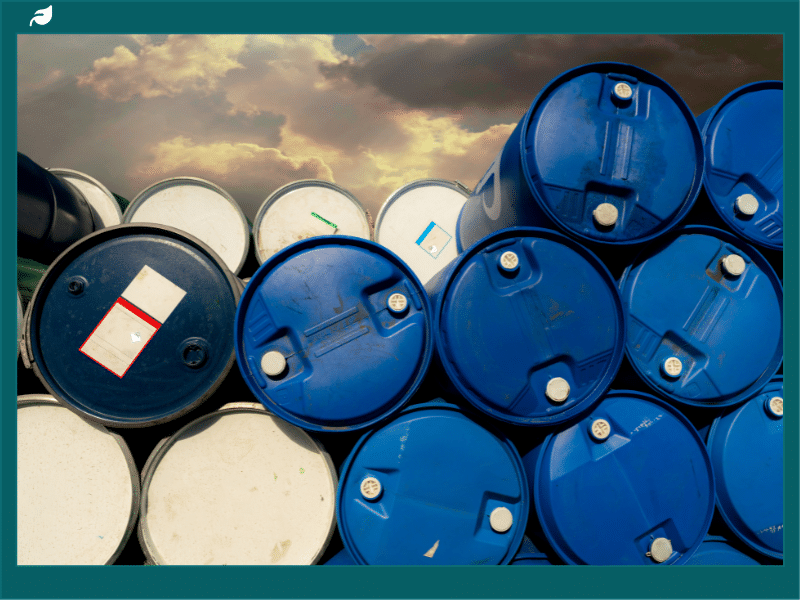
Different container materials require different recycling strategies. Steel drums that are no longer suitable for reuse can be crushed and directed toward scrap recovery. Plastic drums and IBC tote inner tanks can be shredded and processed for use in other manufacturing applications, while tote cages can also be recycled through appropriate partners.
Kelly Drums reports that its operations recondition or recycle approximately 10 million pounds of steel each year, while more than 6 million pounds of plastic are reconditioned annually. The company also reported selling more than 5 million pounds of recycled plastic in 2022.
These practices demonstrate how industrial packaging can support a more circular material economy. Instead of extracting new resources for every container, businesses can extend the useful life of materials already in circulation.
Responsible Handling and Environmental Compliance
Sustainability in industrial container management involves more than simply recycling materials. Containers may previously have held oils, solvents, chemicals, or other substances, making proper handling essential.
Containers intended for standard recycling may need to meet applicable requirements, including RCRA-empty criteria where relevant. Proper cleaning, inspection, transportation, storage, and residue management help reduce environmental risks throughout the process.
Kelly Drums works with industrial customers on pickup and processing while maintaining environmental and safety procedures. For containers that cannot be reused, destruction services can render drums and totes permanently unusable before their materials are directed toward appropriate recycling streams.
Supporting ESG and Circular Economy Goals
Industrial sustainability increasingly involves measuring what happens to materials after they leave a facility. Recycling and reconditioning programs can provide businesses with useful information for environmental reporting, audits, and internal sustainability programs.
Kelly Drums provides recycling reporting and administrative data collection to help customers document their container management activities. Such documentation can contribute to greater transparency when companies are evaluating waste reduction and ESG-related objectives.
For organizations in the Mid-Atlantic region, including New Jersey, Pennsylvania, Delaware, Maryland, and New York, working with an experienced industrial container service provider can also simplify the logistics involved in sustainable waste management.
A Practical Path Toward More Sustainable Packaging
Sustainable industrial packaging does not necessarily require businesses to replace their entire container systems. In many cases, a more practical starting point is to improve how existing containers are collected, evaluated, reused, recycled, or responsibly destroyed.
By prioritizing reuse before material recycling, businesses can extend container lifecycles, conserve resources, reduce landfill contributions, and support circular economy principles. Services such as Sustainable Drum Recycling and Eco Practices demonstrate how responsible container management can become part of a broader environmental strategy.
As manufacturers and industrial organizations continue looking for measurable ways to reduce waste, sustainable drum recycling provides a practical connection between operational efficiency and environmental responsibility.