A phone case is a small purchase with an outsized effect on how long a device stays in use. Roughly 80 percent of a smartphone’s lifetime carbon footprint is created before the phone is ever switched on, during mining, chip fabrication, battery production and assembly. Preventing one shattered screen, or one upgrade you did not plan to make, saves more emissions than years of careful charging habits.
That is the short answer to a question people ask fairly often: does a protective case actually matter environmentally, or is it just another accessory. It matters, because it sits earlier in the chain than repair or recycling, at the point where the largest savings are still available.
The timing gives the question some weight. Apple’s newest phones reached shops on 18 September 2026 at prices that make accidental damage more costly than it has ever been. What follows looks at where a phone’s environmental cost is concentrated, what protective standards actually measure, how different case materials hold up over several years, and where the durability argument runs out.
Why a cracked screen is an environmental problem
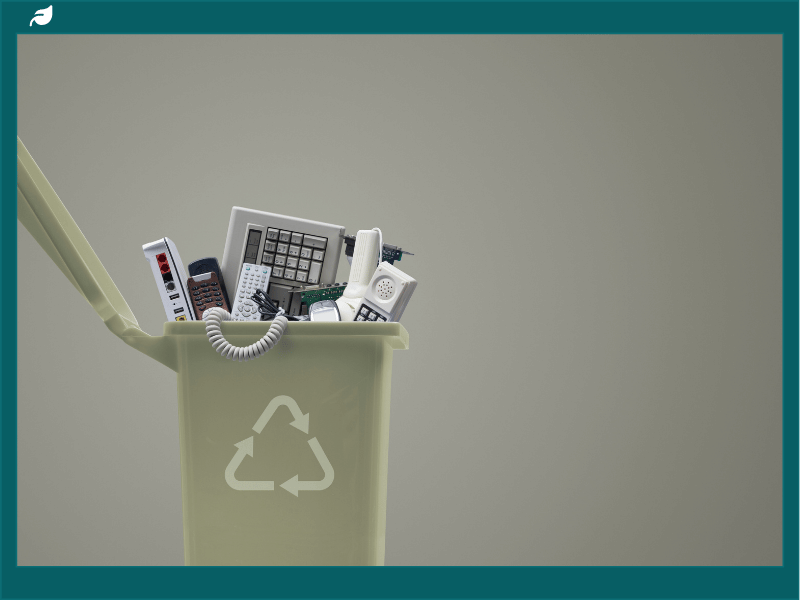
The numbers behind discarded electronics are not subtle. The UN’s fourth Global E-waste Monitor recorded 62 million tonnes of electronic waste generated worldwide in 2022, with only 22.3 percent documented as formally collected and recycled. On current trends the figure reaches 82 million tonnes by 2030.
Damage is a direct feeder into that stream. An Asurion survey found 78 million Americans damaged a smartphone in a single year. Of those, 38 percent replaced the device outright rather than repairing it, and the average cost of repair or replacement came to $302.
Meanwhile the average global replacement cycle has stretched to around 3.5 years, up from about 2.4 years a decade ago. People are holding on to phones longer, which is good news, but a broken screen is still one of the most common reasons an otherwise healthy device gets retired early.
Where a phone’s carbon actually sits
Apple’s product environmental reports break the total down fairly consistently. Production, covering materials, chip fabrication, the battery and assembly, accounts for roughly 80 percent of lifetime emissions. Charging the phone across three or four years adds about 18 percent. Transport to distribution and retail contributes around 2 percent, and end of life collection and recycling under 1 percent.
An individual iPhone’s lifetime total sits somewhere between 56 and 74 kilograms of CO2 equivalent, depending on storage capacity.
Those proportions carry an obvious implication. Nothing an owner does during the use phase comes close to the emissions already locked in at the factory. Keeping the phone working is the lever with the most force behind it.
What “drop resistant” means on a spec sheet
Almost every protective case carries a military grade badge. In nearly all cases it refers to one specific test: MIL-STD-810G, Method 516.6, Procedure IV, known as the transit drop test. The device sits in its case and is dropped 26 times from 48 inches onto two inch plywood laid over concrete, covering every face, edge and corner, with a function check after each drop.
That is a real test with real value. It is also widely misunderstood, so three caveats are worth knowing before you pay a premium for the badge.
- Nobody certifies it. The manufacturer runs the test and makes the claim. There is no independent body checking consumer phone cases.
- The standard permits up to five sample devices across the 26 drops. A single case might only absorb five or six impacts, so cumulative fatigue is never measured.
- Plywood is softer than the surfaces phones actually meet. Pavements, tiled bathroom floors and stone worktops are all harsher.
Some brands publish multiples of the standard, such as 4x (104 consecutive drops) or 10x (260 drops). Those figures are more informative because they test the same case repeatedly, which is closer to how cases fail in real life. They are still self reported.
The features that do the actual work
Badges aside, protection comes from a handful of design details anyone can check by eye and by hand. They apply across the price range, from generic shells to the iPhone 18 Pro ShockProof Cases cut for this year’s models.
- A raised front lip. Around one millimetre of case standing proud of the screen keeps the glass off flat surfaces when the phone lands face down. This is the single most valuable feature on a case and the first thing slim designs sacrifice.
- A raised camera bezel. The lens array now sits higher than the body on most phones and scratches easily. The case should clear it.
- Corner air pockets. Small hollow chambers at the corners compress on impact and spread the shock. Corners take the first hit in roughly two thirds of drops.
- Two layers, not one. A soft inner shell that absorbs energy, bonded to a rigid outer shell that spreads it, outperforms either material on its own.
- Grip texture. A case that does not slide off a car seat or a sofa arm prevents more damage than any amount of shock absorption. Glossy backs look good and slip.
- Covered buttons and ports. Full coverage keeps dust and grit out of the charging port, which is a quiet cause of premature failure.
Case materials compared
Material choice decides both how well a case protects and how long it stays fit for purpose. TPU is thermoplastic polyurethane, a flexible plastic. Polycarbonate is the hard, clear plastic used in safety glasses.
- TPU. Good cushioning that absorbs impact energy well. Usually holds up for twelve to twenty four months. Rarely accepted in kerbside recycling.
- Polycarbonate. A hard shell that spreads force but cushions very little on its own. Three years or more of service. Technically recyclable, seldom collected.
- TPU and polycarbonate hybrid. The strongest all round performer against drops, typically lasting two to four years. The bonded layers are difficult to separate at end of life.
- Silicone. Soft but thin, so protection is moderate. One to two years before the cutouts start to tear. Not recyclable with household plastics.
- Aramid fibre. Very strong, though far too thin to cushion an impact. Four years or more of use. Not recyclable.
- Plant based bioplastic. Protection varies widely depending on the formulation. One to three years. Composts only in industrial facilities.
- Wood or cork over a plastic frame. Performance depends entirely on the frame underneath. Two to three years. Partly renewable, still a mixed material.
The honest conclusion there is uncomfortable for a lot of marketing copy. The greenest case is rarely the one sold as green. A compostable case that splits after fourteen months and lets a phone crack has caused more damage than a hybrid case that survives four years and never goes anywhere near a composter.
Compostable also carries a condition most people miss. Industrial composting means high heat and controlled conditions, not a garden heap and not a council green bin in most areas. Check what your local facility actually accepts before treating it as a selling point.
How cases fail, and what that tells you
Cases rarely break. They degrade, and a degraded case protects less than the owner assumes.
- Yellowing. Clear TPU reacts to ultraviolet light and body oils. Discolouration usually shows between six and eighteen months and is cosmetic, but it is a reliable sign the polymer is ageing.
- Corner stretch. Repeated removal loosens the corners until the case sits proud of the phone. A loose case can be shaken off in a drop, which is the worst possible outcome.
- Torn cutouts. Silicone and thin TPU split around button and port openings first. Once torn, the case stops holding the phone securely.
- Peeling prints. UV printed patterns and soft touch coatings flake with wear. Purely cosmetic, though it is the most common reason people buy a replacement.
- Corner cracking. Ultra slim rigid cases can crack on a first serious drop. They do their job once and then need replacing.
Ageing patterns follow the material. Plain finishes in darker colours tend to hold their appearance longer than clear ones, and slightly thicker profiles tolerate more abuse than minimal designs, which matters because most cases are discarded for cosmetic reasons rather than functional ones.
The accessory has a waste problem of its own
There is a hidden problem with phone cases that nobody advertises. They are cut for one specific model, so the case retires when the phone does, even if it still has years left in it. Camera cutouts change shape every generation, which rules out most reuse.
A few things help. Modular systems with a fixed inner shell and swappable backs allow the look to change without a whole new case. Some manufacturers run take back schemes that grind old shells into new ones. A case still in good condition is worth passing on to someone with the same model rather than binning it.
The same reasoning extends to everything else in the bag. Charging cables are replaced more often than almost any other accessory, usually because the wire frays where it meets the connector. A retractable phone charger keeps the cable coiled and supported rather than folded into a pocket, which removes the most common cause of failure.
The replacement rate is the part that gets overlooked. A case that needs changing every twelve months produces four pieces of mixed plastic waste across a typical four year ownership, while a case that survives the full period produces one. Since most cases are not accepted in household recycling, that difference lands in general waste either way.
Signs of a case built to last
- Raised lip at the screen and at the camera, checked by running a finger over it
- Reinforced or air cushioned corners rather than uniform thickness
- Two bonded materials rather than a single soft shell
- A textured or matte back you can actually grip
- A drop claim that states a height and a number of drops, not just the word “military”
- A warranty of a year or more, which tells you what the maker expects the case to survive
- Darker or opaque colours if you want it to still look acceptable in year three
What a case will not fix
A case handles impact. It does nothing for the other reasons phones get retired, and it is worth being clear about that.
Battery capacity is the big one. Most lithium ion phone batteries drop noticeably after two to three years of daily charging, and a replacement costs far less than a new handset. Software support is the second. Apple’s iOS 27 runs on the iPhone 11 and later, which means a phone from 2019 is still receiving the current operating system.
Water damage sits outside most cases too, unless the case is specifically rated for it. And a case does not protect the screen from keys and grit in a pocket, which is what a screen protector is for. The combination of a decent case, a glass screen protector and one battery replacement at around the three year mark is what actually keeps a phone in service for five or six years.
Conclusion
The environmental argument for protective cases is narrow but solid. Most of a phone’s impact is spent before it reaches the owner, so the useful measure is how many years of service that spend returns. Accidental damage is among the most common reasons that period is cut short, which puts impact protection in an unusual position for an accessory: it affects the footprint of a far more significant object.
The claims made around these products deserve more scrutiny than they usually get. Drop test badges are self certified and measured under favourable conditions. Compostable and plant based materials often depend on disposal infrastructure most people cannot reach, and sometimes trade away the protection that justified the purchase in the first place.
None of this displaces the larger questions about repairability, software support and end of life collection. It sits alongside them, at the cheapest end of the problem. With 62 million tonnes of electronic waste generated annually and less than a quarter of it formally recycled, keeping working devices in service remains the most effective step available to an individual owner.