Businesses can lose more than time when they wait 30 or 60 days for customers to pay. Outstanding invoices tie up cash that could otherwise support daily operations, while the administrative work required to issue, track, and follow up on payments can consume additional resources. When these processes still rely on paper, printing, postage, and physical storage, the cost extends beyond the balance sheet.
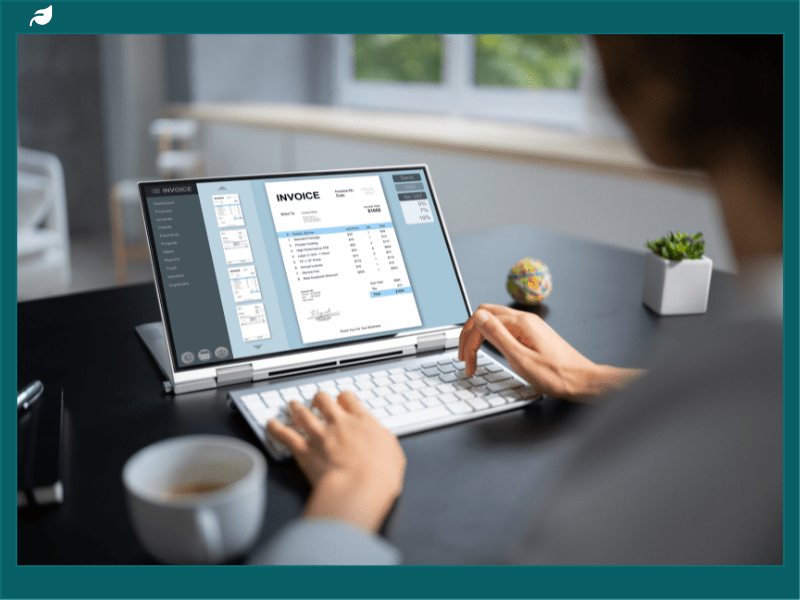
Digital invoicing offers a way to address both sides of the problem. By replacing paper-heavy billing processes with digital workflows, businesses can reduce material waste and the staff time spent managing invoices, while making it easier to monitor receivables and keep payments moving. The result is a more efficient billing process that supports healthier cash flow while reducing an often-overlooked part of a company’s operational footprint.
Tracking the Lifecycle of a Physical Invoice
Every physical transaction initiates a resource-heavy supply chain of its own, requiring continuous energy inputs from its initial creation to final settlement.
- Initial Production: Producing physical transaction documents (such as invoices, remittance advices, etc.) requires massive amounts of industrial energy to make the raw paper and chemical inks used to print them. In terms of waste, paper and paperboard products are a major contributor, accounting for approximately 23% of the municipal solid waste stream managed by local governments in the United States, according to the Environmental Protection Agency (EPA).
- Physical Transit Emissions: Bills you send travel by land, air, and even sea. While postal routes carry mixed freight, the carbon dioxide emissions associated with transporting these physical documents add an easily avoidable burden to existing logistics networks.
- Physical Archiving: This type of waste is created when documents are stored for long periods of time due to regulatory requirements. In addition to the resources needed to maintain the space and the real estate itself (heating, cooling, etc.), physical archiving also requires additional resources.
Accelerating Cash Flow to Eliminate Scope 3 Emissions
When measuring sustainability in a small business office, it is important to look beyond the most visible sources of emissions and consider the wider environmental impact of day-to-day operations. Scope 3 emissions, for example, encompass indirect emissions across a company’s value chain, including waste generated through business activities. Reducing unnecessary administrative waste can therefore complement broader efforts to improve a company’s environmental footprint.
One practical way to reduce this administrative footprint is to automate billing through accounting software like waveapps.com. Digital payment options can also make it easier for customers to settle invoices promptly, shortening the invoice lifecycle and reducing the resources required to manage each payment.
Connecting financial processes with sustainability goals allows businesses to find efficiencies that benefit both the bottom line and the environment.
Comparing Infrastructure Efficiency
This framework is used to better understand the “green” benefits of a financial zero-waste stack. A single, unified digital accounting platform is much better than separate software applications.
| Operational Metric | Traditional On-Premise Invoicing | Cloud-Based Digital Invoicing |
| Primary Resource Consumed | Paper, ink, local server electricity, fossil fuels | Shared cloud data center energy |
| Payment Cycle Speed | 15 to 45 days due to manual processing | Instant to 3 days via integrated payment links |
| Emissions Source | Postal transport and physical hardware maintenance | Data center processing |
| Document Archiving | Physical filing cabinets requiring office floor space | Encrypted and paperless cloud storage |
Quantifiable Steps to Digitize Small Business Bookkeeping
Going digital with your accounting activities is more than just finding the right software. You need to reorganize your daily activities to create a zero-waste bookkeeping system for small businesses.
Steps to Digitize Small Business Bookkeeping to a Sustainable Financial Model:
- Step 1: Conduct a Resource Audit – Gather the financial resources your business spends every month on items like paper, toner, and even postage for your accounts receivable processes. This will help establish your business’s carbon footprint.
- Step 2: Implement a Unified Platform: Select a cloud-based tool that allows you to manage all of your financial functions, including invoicing, payments, and bookkeeping within a single, integrated platform.
- Step 3: Automate Payment Reminders: Set up automatic payment reminders for late invoices to avoid sending secondary notices in physical form, reducing unnecessary human interaction and resources.
- Step 4: Align with ESG Standards: Make sure your financial advisors support your new bookkeeping practices and quantify the carbon savings from your digital transition for inclusion in your annual environmental reporting.
Accounting for environmental responsibility over the long-term. Implementing digital invoicing as part of a business’s cash flow management systems can form the bedrock of a sustainable business model, both economically and environmentally.