The Visionary Behind Ocean Exploration: Gabe Newell’s Commitment to Marine Science
Most billionaires park their money in real estate or sports teams. Gabe Newell bought a research vessel and pointed it at the deep ocean.
The guy who built Steam into the dominant PC gaming platform has quietly become one of the more serious private funders of marine science. That might sound like an odd pivot, but spend five minutes thinking about it and it makes sense. Newell has always been drawn to complex systems nobody fully understands. The ocean qualifies.
It covers more than 70 percent of the planet’s surface, and scientists still know more about the surface of Mars than about the deepest ocean trenches. For someone wired to solve hard problems, that kind of knowledge gap is basically an open invitation.
So he leaned in. Newell built partnerships with working marine scientists, not as a vanity exercise, but as a genuine attempt to fund research that would otherwise struggle to find support. The result is Inkfish, his marine research initiative, which has grown from a loose affiliation of collaborators into an organisation with its own vessels, its own data, and a growing track record of findings that matter. Inkfish is not a side hobby.
It is a structured, long-term commitment to understanding what is happening beneath the surface of the world’s oceans before it is too late to do anything about it.
The Inspiration for Marine Science Initiatives
Here is the thing about passion projects at this scale: they rarely come from a single moment. Newell’s interest in the ocean built slowly, fed by the same curiosity that made him obsessive about game design and software architecture. The ocean is a system. It has feedback loops, emergent behaviour, variables that interact in ways nobody has fully modelled.
That is catnip for an engineer’s brain.
But there is also urgency underneath the intellectual interest. Ocean health has declined sharply over the past half-century. Coral systems are bleaching at rates that were unthinkable in 1980. Deep-sea ecosystems face pressure from warming, acidification, and trawling in zones that barely appear on most maps.
Newell watched that news accumulate and decided that writing a cheque to an existing conservation fund was not enough. He wanted to build something that could actually generate new knowledge, not just publicise existing alarm.
Inkfish became that vehicle. The initiative puts researchers aboard purpose-equipped vessels, gives them the tools to collect hard data from remote marine environments, and then makes sure the findings reach the broader scientific community. It is Newell’s way of compressing the gap between “we know something is wrong” and “we know exactly what to do about it.”
Collaboration with the Scientific Community
Newell is not a marine biologist. He knows that, and so he built Inkfish around people who are. The collaboration model he chose treats scientists as genuine partners rather than hired consultants. That distinction matters more than it sounds.
When researchers have real authority over a project, they pursue the questions that are actually interesting, not the questions that look good in a press release.
The partnerships Inkfish has assembled connect Newell’s resources and logistical muscle with deep scientific expertise from institutions working at the frontier of ocean research. Those alliances have expanded what is possible. Better equipment gets designed. More ambitious dive profiles get approved.
Data-sharing agreements open access to datasets that individual institutions could never have compiled on their own. The knowledge flows both ways, which is exactly how productive scientific partnerships are supposed to work.
History of Gabe Newell’s Ocean Research Fleet
A research fleet does not appear overnight. Newell’s has grown incrementally, shaped by what each expedition revealed about what the next one would need. Understanding where it started makes the scale of what is coming in 2026 genuinely impressive.
The Evolution of the Fleet
The early vessels were practical rather than spectacular. Newell needed platforms that could handle real ocean conditions, carry scientific equipment without compromise, and support extended deployments far from convenient ports. That meant acquiring research vessels built for durability rather than comfort, ships that could take a Southern Ocean swell without losing a day of work.
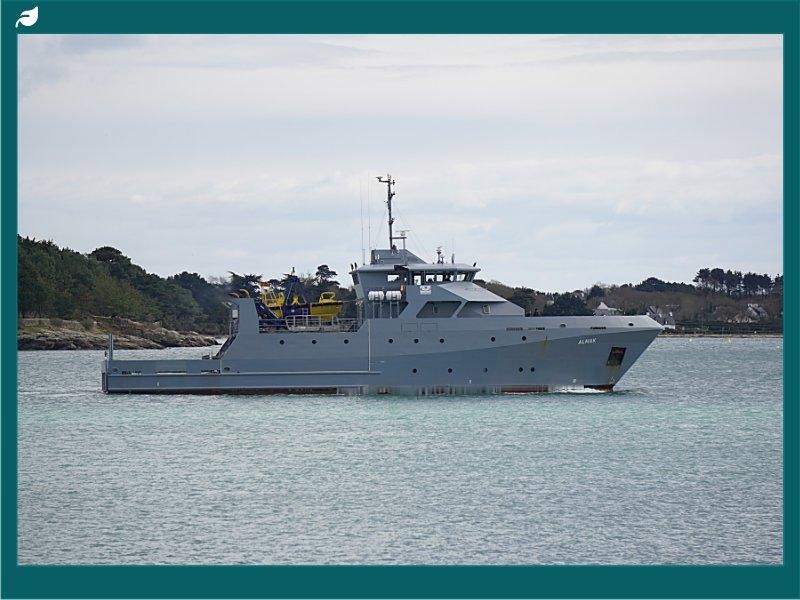
As the data needs grew more sophisticated, so did the fleet. Sensors improved. Data management systems got more capable. The kind of deep-sea research Inkfish wanted to conduct demanded not just surface ships but the ability to send equipment and eventually submersibles into environments that surface vessels can only observe indirectly.
Each upgrade built on what the previous generation of vessels had made possible, and each new capability opened research questions that the older equipment simply could not have addressed. The fleet became a living system, iterating toward something more powerful with each season.
The broader world of explorer yachts and research-capable superyacht builds has taken notice too. When Inkfish commissions a vessel, people who track serious oceangoing design pay attention, because the specifications push well beyond what most private programmes attempt. A superyacht can carry a wealthy owner in comfort. What Newell’s programme demands is something altogether harder: a yacht-class hull combined with the operational resilience and scientific infrastructure of a professional research ship.
Milestones Leading to 2026
The road to 2026 is marked by concrete achievements that rarely get enough attention in the broader news cycle. Inkfish research partnerships have produced published findings on deep-sea ecosystem behaviour. Sustainable operational practices developed for the fleet have set benchmarks that other research organisations have started to adopt. Technological integrations that were experimental a few years ago are now standard across the fleet’s operations.
And now the biggest step yet is coming. The delivery of a new flagship vessel, designed by Vard, one of the most respected names in specialised shipbuilding, will significantly expand what Inkfish can do. The anticipation around 2026 is not hype for its own sake. It reflects a genuine step change in research capacity that the existing fleet, impressive as it is, simply cannot match.
Key Vessels and Technological Innovations
The ships are the hardware. And just like in computing, the hardware determines what the software can accomplish.
The RV6000: A Cutting-edge Research Ship
The RV6000 is one of the largest and most capable vessels in Newell’s fleet. Designed by Vard, it was built from the ground up around the demands of serious scientific fieldwork rather than retrofitted from a commercial platform. That matters enormously in practice. A vessel designed for research from the keel up has better sensor integration, more stable working platforms, smarter lab configurations, and an overall operational profile that does not constantly fight against its own original purpose. According to Boat International, the RV6000 will be equipped with a Seaonics smart crane system capable of deploying robots to depths of approximately 16,000 meters, twice the height of Everest, with construction beginning in June 2026 and delivery scheduled for Q2 2028.
The RV6000 can house multiple research teams simultaneously, which means different disciplines can run parallel programmes during a single deployment. That is efficient in terms of ship time, which is one of the most expensive and logistically complicated resources in marine science. It is also intellectually productive: biologists, oceanographers, and geologists working side by side on the same patch of ocean tend to ask better questions than they would working in isolation. The vessel’s design keeps environmental impact low, consistent with Newell’s view that a research ship working to understand the ocean should not be degrading it in the process.
Integration of Submersibles: Enhancing Exploration
Surface vessels show you the ocean. Submersibles show you what is actually in it.
The integration of submersibles into the Inkfish fleet changed the nature of what the research programme can accomplish. The RV11000, the largest vessel in the fleet, is designed to deploy submersibles efficiently, which is a harder engineering problem than it sounds. Getting a submersible safely into the water from a moving ship in open ocean conditions requires careful design of both the submersible handling systems and the vessel itself. Vard’s engineering on this is a significant part of what makes the RV11000 so valuable as a research platform.
Once deployed, submersibles let scientists observe deep-sea ecosystems in their actual environment rather than inferring what is happening from samples dragged to the surface. The data quality difference is substantial. Behaviour, habitat structure, species interactions: these things look completely different when you observe them in situ rather than reconstructing them from fragments collected by a trawl. That improved data quality flows directly into better science and, ultimately, into better-informed conservation strategies.
Collaborations and Major Findings
The ships and the technology would be pointless without the science. Here is where Inkfish has started to build a real record.
Breakthroughs from Scientific Partnerships
By connecting Newell’s logistical and financial resources with researchers who have spent careers studying marine biology, the Inkfish programme has produced findings on deep-sea ecosystem dynamics that would have been difficult to achieve through conventional academic funding channels. Detailed behavioural data on species that live below the reach of conventional scuba diving. New information about how deep-water communities respond to disturbance. Insights into the physical conditions that sustain biodiversity at depth.
These are not flashy discoveries in the way that a new species headline might be. But they are the kind of foundational knowledge that conservation policy actually needs. You cannot protect what you do not understand, and the deep ocean has been grotesquely under-studied relative to its importance to the planet’s overall ecological function. Inkfish is working to close that gap systematically, partnership by partnership, expedition by expedition.
Impact on Recovery of Marine Ecosystems
The research is already feeding into conservation practice. Findings from Inkfish expeditions have helped identify which habitats are most vulnerable and which intervention strategies are most likely to support genuine ecosystem recovery. That is not a minor contribution. Marine conservation has historically suffered from a shortage of precise, site-specific data.
Broad estimates and general principles are useful up to a point, but effective protection requires knowing what is actually happening in specific places.
Newell’s programme generates that granular information. The focus on sustainable operational practices during expeditions also means the research itself models what responsible ocean use can look like. Every voyage is a proof of concept for the idea that serious scientific work and environmental care are not competing values.
Roaming the Seas: Media Coverage and Public Interest
Word has gotten out. The Gabe Newell ocean research ship project has drawn attention well beyond the specialist marine science community, partly because of who Newell is and partly because the vessels themselves are genuinely remarkable. A superyacht-class hull repurposed for serious scientific work makes for a compelling story. Enthusiasts who follow luxury yachts and researchers who follow marine biology are both paying attention, which is an unusual combination.
The coverage has done something useful: it has introduced a wider audience to the actual content of the research, not just the personality behind it. People who would never read a marine biology journal have encountered news about deep-sea ecosystem findings because the Inkfish story is interesting enough to break through the noise. And because Inkfish operates at a scale closer to a serious superyacht programme than a typical academic charter, the design and engineering communities that follow ambitious vessel builds have found plenty to engage with as well.
Highlights from the Robb Report
The Robb Report gave the programme substantial coverage, focusing on the design and technical sophistication of the vessels. For a publication that covers superyacht culture in depth, the Inkfish fleet represents an interesting case study: ships that carry the engineering ambition of the finest explorer yachts but redirect it entirely toward scientific purpose rather than private leisure. The coverage highlighted the eco-conscious engineering Vard brought to the build, the advanced research capabilities packed into the hull, and Newell’s broader vision for what private funding can contribute to ocean science when it is deployed with genuine seriousness.
For readers used to thinking about a yacht in terms of amenities and interior design, the idea of a vessel whose primary luxury is the quality of its science equipment makes for a genuinely fresh angle. The Robb Report framed it well: this is what happens when the resources that typically go into a prestige superyacht get pointed at a problem that actually matters. And the privacy Newell maintains around the programme’s personal dimensions keeps the focus exactly where it belongs: on the ocean, and on what the research is finding there.