Modern residential projects are no longer just about providing shelter; they are about creating ecosystems — both natural and social — that thrive together. As cities expand and populations rise, sustainable urban planning has become central to balancing human needs with ecological preservation.
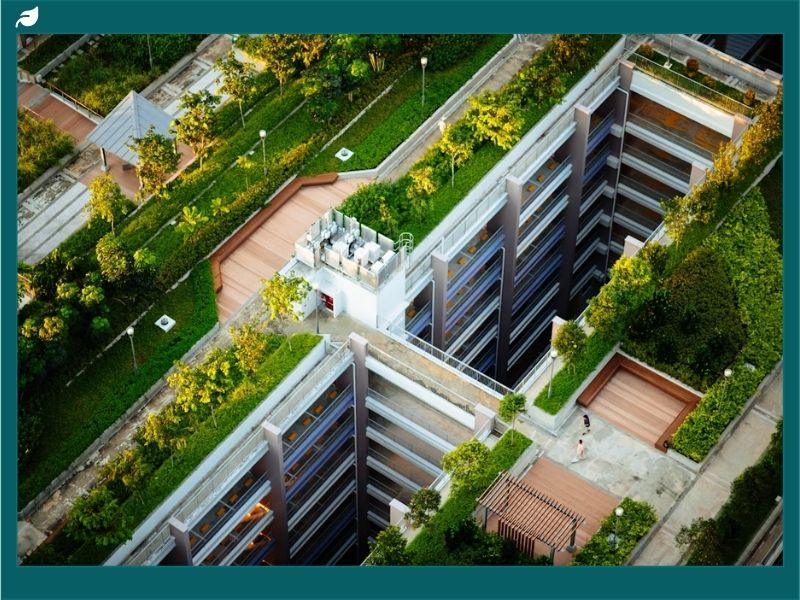
Developers, local authorities, and communities are increasingly recognizing that every new housing project can be a force for environmental restoration and social progress when guided by thoughtful design and ethical intent. From mountain towns like Steamboat Springs to urban eco-villages and biodiversity-led suburbs, the examples below reveal how residential developments can generate measurable benefits for both people and planet.
Steamboat Springs, Colorado: Mountain Living Rooted In Sustainability
Located in the heart of Colorado’s Yampa Valley, Steamboat Springs new developments offer a compelling model for how new housing developments can embrace ecological awareness without sacrificing local character. The area’s growing real estate scene—outlined on SteamboatSprings-RealEstate.com
—shows that sustainable mountain living is achievable when guided by conservation and community principles.
Steamboat’s new residential projects are planned within a framework that emphasizes balanced growth, protection of wildlife corridors, and social inclusivity. The city’s Mountain Area Master Plan prioritizes economic vitality, public mobility, and environmental resilience. Developers are encouraged to integrate renewable materials, green roofs, and low-impact drainage systems that preserve the alpine watershed.
Beyond environmental design, these developments cultivate social value through community-driven planning. Public spaces, walkable routes, and affordable housing units ensure inclusivity, while initiatives like neighborhood greenways and native landscaping reconnect residents with nature. The result is a built environment that supports biodiversity and community cohesion—a hallmark of sustainable mountain living.
In essence, Steamboat Springs demonstrates that development and conservation need not conflict. When local ecology and human well-being are viewed as interdependent, the result is a town that grows sustainably while enriching both its environment and its people.
Bedzed, London: The Original Blueprint For Eco-Living
The Beddington Zero Energy Development (BedZED) in south London remains one of the most studied examples of sustainable community living. Conceived by Bioregional and the Peabody Trust, it was designed to achieve near-zero carbon emissions while enhancing social well-being—a vision that has influenced countless urban projects worldwide.
At BedZED, architectural innovation meets human-centered design. Homes are south-facing to maximize solar gain, built with reclaimed materials, and insulated to minimize energy waste. Shared gardens, car-sharing schemes, and pedestrian-only lanes encourage residents to adopt eco-conscious lifestyles. The project’s infrastructure includes on-site water recycling and renewable power generation, reducing resource consumption by more than half compared to the UK average.
Yet BedZED’s most enduring success lies in its social architecture. Community centers, co-working spaces, and local shops foster social connection, proving that sustainability is as much about relationships as it is about technology. Residents report higher satisfaction, stronger neighborhood ties, and reduced living costs—outcomes that show how thoughtful design can build both environmental and human capital.
For future developers, BedZED illustrates the power of integrated planning—where social inclusion, renewable energy, and ecological restoration are not optional extras but structural foundations of the project itself.
Kidbrooke Village, London: Biodiversity At The Heart Of Urban Renewal
Another London success story, Kidbrooke Village, exemplifies how regeneration projects can simultaneously enhance biodiversity and social value. Developed by Berkeley Group, it transformed the former Ferrier Estate—a concrete-dominated housing area—into a thriving green neighborhood where people and wildlife coexist.
The development’s signature feature, Cator Park, was designed with biodiversity as its guiding principle. Collaborating with the London Wildlife Trust, Berkeley introduced native plant species, wetland habitats, and bird-friendly landscaping that earned the park the Sir David Attenborough Award for Enhancing Biodiversity. These interventions restored ecological functions lost to decades of urban sprawl.
Social value was embedded in equal measure. Kidbrooke’s new town center integrates schools, retail, leisure spaces, and public transport, ensuring accessibility and diversity of use. The inclusion of affordable housing, pedestrian pathways, and cycle networks fosters inclusivity and active mobility. Residents benefit from cleaner air, mental wellness through access to nature, and a renewed sense of belonging.
Kidbrooke Village underscores that ecological and social outcomes can align: urban nature is not ornamental—it’s essential. When biodiversity becomes a central design parameter, neighborhoods evolve into living systems that regenerate rather than deplete.
Edmonton’s Blatchford Project, Canada: Carbon-Neutral Urbanism In Action
Crossing the Atlantic, Blatchford in Edmonton, Alberta, is redefining sustainable urban living on a large scale. Built on a former airport site, this 536-acre master-planned community aims to house 30,000 residents while operating as a carbon-neutral district.
The Blatchford vision centers on renewable energy integration, stormwater reuse, and walkable neighborhoods. A geothermal district energy system replaces traditional heating, reducing emissions by over 80%. Greenways, community gardens, and restored wetlands provide ecological connectivity across the site.
Social value is pursued through public engagement—residents were invited to co-design amenities, resulting in vibrant communal courtyards, playgrounds, and local businesses. Blatchford’s development framework insists that every new phase deliver measurable environmental and social returns.
The Canadian example highlights that climate-positive design must scale beyond boutique developments. It shows how data-driven infrastructure can coexist with community-led governance, aligning public trust with ecological accountability.
Freiburg-Vauban, Germany: From Eco-Experiment To Model Community
In southern Germany, the Vauban district of Freiburg stands as one of the most mature examples of holistic sustainability. Built on a former military base, the neighborhood embodies Germany’s green urbanism ethos—where ecological performance and civic participation intertwine.
From its inception, residents had a direct role in shaping Vauban’s master plan, which prioritized low-energy housing, public transport access, and zero-car streets. Solar panels blanket rooftops, and microgrids allow households to share energy surpluses. Rainwater collection, native vegetation, and green corridors reinforce ecological balance.
Equally transformative is Vauban’s social innovation. Cooperatives and co-housing projects promote affordability and shared responsibility, while community centers host cultural and educational programs. The district’s design reduces social isolation, promotes sustainable consumption, and nurtures civic pride.
Vauban’s lesson is simple yet profound: environmental sustainability thrives where citizens are empowered. When residents become stewards rather than consumers of their environment, ecosystems gain resilient guardians and neighborhoods evolve into enduring communities.
Wrapping Up
In the end, the most forward-thinking residential developments prove that luxury and sustainability can coexist. Whether in the mountains of Colorado, the eco-districts of London, or the community-led neighborhoods of Germany and Canada, the pattern is clear: when design honors both nature and people, social value and ecological health reinforce one another.
New homes become more than buildings—they become living systems that regenerate the land, empower residents, and redefine what progress means for modern cities.