Greene Tweed has expanded its in-house validation infrastructure with new cryogenic leak and supercritical CO₂ rapid gas decompression testing capabilities. The additions support material and sealing development for semiconductor, aerospace, energy, hydrogen and carbon capture, utilisation and storage applications. Its cryogenic system tests sealing performance at temperatures down to 4 Kelvin, while the supercritical CO₂ process can assess materials at up to 350°C and 5,000 PSI. The investment gives customers earlier access to application-relevant performance data as they qualify components for demanding operating environments.
Testing For Extreme Conditions
For industrial equipment operating at either very low temperatures or high-pressure carbon dioxide conditions, the performance of seals and engineered components can be central to reliability. Greene Tweed’s expanded portfolio brings two specialised capabilities into its own testing environment, enabling the company to support validation work earlier in customers’ development cycles.
The cryogenic leak testing system combines a high-vacuum chamber, specialised thermal shielding and helium leak detection technology. It can measure helium flow down to 5E-12 atm*cc/s while maintaining a temperature tolerance of +/-0.08 Kelvin. Such precision is relevant to systems where small changes in material behaviour can affect performance.
Magen Buterbaugh, President and CEO at Greene Tweed, said:
“Expanding our in-house testing and validation capabilities marks a significant milestone in growing Greene Tweed’s technical leadership, and reflects where our customers and markets are heading. These strategic investments strengthen our ability to tackle complex, high-stakes challenges alongside our customers, while accelerating the journey from development to deployment.”
Cryogenic Validation Capacity
The new cryogenic system extends Greene Tweed’s internal testing range to conditions found in cryogenic semiconductor etch processes, aerospace and space systems, as well as emerging liquid hydrogen applications. These sectors require components that retain sealing performance in ultra-low-temperature environments, placing rigorous demands on both material selection and component design.
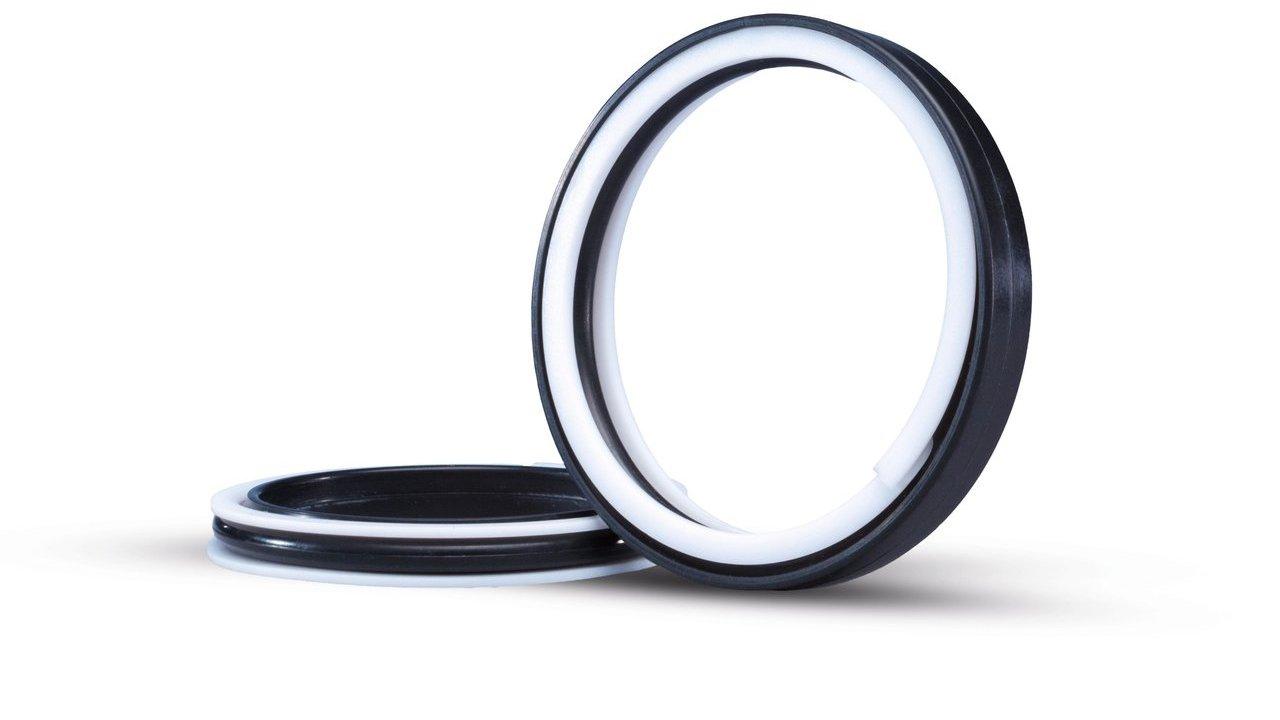
By generating test data before products enter service, the company can provide customers with a clearer basis for assessing seal behaviour under representative conditions. Greene Tweed identifies Avalon® 40 and Avalon® 56 among the solutions that can be evaluated through this capability.
The addition is particularly timely for projects where design teams need to establish confidence in components before deployment. In-house testing can shorten the feedback loop between engineering, validation and material refinement, while allowing programmes to respond to increasingly exacting operating requirements.
Support For CCUS Infrastructure
Greene Tweed has also added supercritical CO₂ rapid gas decompression testing, aimed at the materials requirements of carbon capture, utilisation and storage infrastructure. The testing process evaluates sealing solutions under harsh supercritical CO₂ conditions, following standards such as ISO 23936-2 or custom application conditions.
The capability can test at temperatures of up to 350°C and pressures of up to 5,000 PSI. It is intended to generate performance data for applications including valves, pipelines, compressors and storage vessels, where pressure changes and carbon dioxide exposure can place substantial demands on materials.

For organisations developing CCUS infrastructure, qualification data can be a practical part of selecting components for long-life service. Greene Tweed’s investment is designed to accelerate those qualification timelines for existing and next-generation materials, while retaining the testing process within its own engineering and validation operation.
Materials Science In Focus
The combined investment reflects the overlap between advanced manufacturing, aerospace, hydrogen and carbon management technologies. While their operating conditions differ, each field depends on engineered materials that can remain reliable where failure is not an option.
Greene Tweed’s wider product range includes high-performance thermoplastics, composites, seals and engineered components used in sectors spanning semiconductor, oil and gas, aerospace, defence, chemical processing and pharmaceutical processing. The company has served these markets for 160 years, positioning its new testing resources as an extension of long-standing materials expertise.
Cory Massey, Senior Manager of Product Engineering and Simulation at Greene Tweed, said:
“The next generation of semiconductor, aerospace, hydrogen, and CCUS technologies are pushing the boundaries of material science. Greene Tweed is investing in our testing capabilities now, to provide the future cutting-edge material applications demanded by our customers’ most extreme, can’t-fail operating conditions.”
Earlier Evidence For Design Teams
As critical systems are developed for low-temperature hydrogen handling and carbon dioxide storage, component validation is becoming an increasingly practical consideration. Greene Tweed’s new facilities provide a focused route for assessing seal and material performance under the conditions those systems are expected to encounter.
By pairing cryogenic leak measurement with supercritical CO₂ rapid gas decompression testing, the company has strengthened its capacity to support technical decisions across two important areas of industrial decarbonisation. The result is a well-targeted testing platform that can help customers build evidence into their qualification programmes from the earliest stages of development.