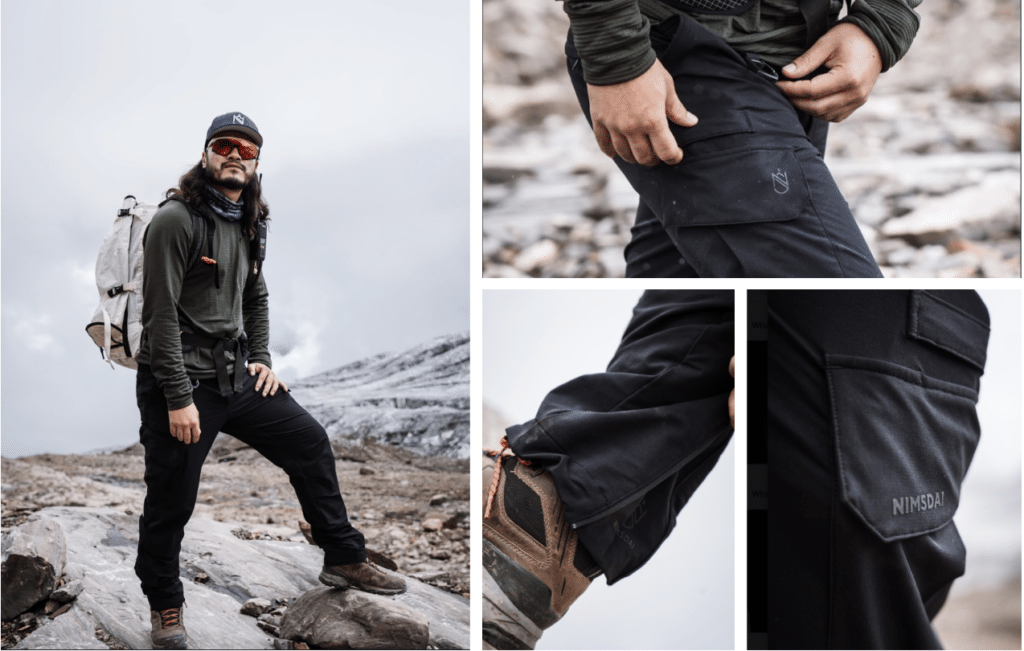
PFAS just met its toughest test yet, and it’s losing. The “forever chemicals” long used to waterproof, stain-guard, and oil-proof fabric are the test case for a bigger compliance question: can state law alone force reformulation across an entire product category, not just a compliant few SKUs? Independent testing from 2025 says yes, and the clearest proof sits in the segment where the technical bar is highest: performance apparel.
The numbers, first. Of the 46 rainwear, athletic wear, swimwear, and footwear products NRDC sampled in California and New York in 2025, 38 tested under 10 ppm PFAS, and only 2 exceeded the state’s 100 ppm compliance line. Across the full 115-product sample, 79% cleared that threshold. Twenty of the 24 products that failed still carried “waterproof” or “stain resistant” language, a reminder that label review alone won’t satisfy a compliance audit. Five states have now codified textile PFAS rules, with more expected.
State Regulations Driving the Shift
- California: Banned intentionally added PFAS across leggings, athletic wear, swimwear, footwear, uniforms, and general apparel from January 1, 2025. Threshold: 100 ppm total organic fluorine, dropping to 50 ppm in 2027.
- New York: From January 1, 2025, banned intentionally added PFAS in shirts, pants, dresses, skirts, leggings, leisurewear, and undergarments.
- Colorado: Began a phased textile PFAS ban on January 1, 2026.
- Maine: From January 1, 2026, banned textile PFAS; exempted severe-wet-condition apparel must disclose “Made with PFAS chemicals,” a rule California shares.
- Washington: Adopted new rules in November 2025; reporting requirements for extreme-use apparel began January 1, 2026, with broader restrictions landing in 2027.
The EPA is moving in the same direction. Its proposed 2026 stormwater permit would fold textile mills and apparel manufacturers into a program that currently exempts them from PFAS discharge monitoring altogether.
None of this stays regional for long. A 2025 study of 32 business leaders found 78% had reformulated products in response to California’s Proposition 65, and 63% extended that reformulation to products sold nationwide. Compliance teams should read that as a signal: a California spec tends to become the national spec.
What the Test Results Found
NRDC’s testing, conducted in California and New York between March and June 2025, targeted the categories most likely to carry PFAS: rainwear, athletic wear, swimwear, footwear, children’s uniforms, gloves, bags, reusable diapers, and household textiles. Performance categories posted the cleanest numbers by a wide margin:
- Rain jackets from the same brands measured 97-99.99% lower than in earlier test rounds, though the comparison used different garments tested at different times
- 70% of the full sample tested under 10 ppm; 60% under 5 ppm
- Compliance gaps concentrated outside performance wear: every tablecloth sampled exceeded 100 ppm, as did most pet accessories and reusable diapers
“When we’re sourcing a water-resistant fabric today, we’re not just asking whether it performs. We’re asking whether it’ll still be sellable in five states two years from now,” said Jaylin, founder of the activewear brand Sodalemon. “That calculation didn’t exist a decade ago. Chemical compliance used to sit with legal, buried until a problem surfaced. Now it’s a sourcing decision made upfront, and the brands treating it that way are the ones that won’t be scrambling every time another state passes a law.”
The Gap Between Labels and Lab Results
Apparel labeling law requires disclosure of fiber content, country of origin and care instructions. PFAS isn’t on that list, which means the two claims performance brands lean on hardest, “waterproof” and “stain resistant,” carry no chemical-content guarantee.
- Products that passed testing used the same marketing language as the ones that failed
- The disclosure gap isn’t limited to activewear: a 2025 scorecard of 10 children’s fashion brands averaged 35.3 out of 100 on chemical safety
- 9 of 10 brands had a restricted-substances list on paper; none enforced it across their full catalog
How Brands Are Responding to the Shift
Compliance has a cost, and Patagonia’s transition puts a number on it. Every new style since Spring 2025 ships without intentionally added PFAS, after roughly 15 years of reworking membranes and finishes. The tradeoff shows up in care instructions: PFAS-free waterproof jackets need rewashing every 7 to 10 wears to maintain performance, versus roughly 30 wears for a PFAS-treated equivalent.
Further upstream, the exposure is structural rather than product-specific. A 2025 Duke University study traced a major PFAS contamination event in North Carolina to one textile-finishing plant, where wastewater measured roughly 3 million times the EPA’s drinking-water limit. The chemicals went undetected for years, present as solid nanoparticles rather than the dissolved compounds standard testing screens for. Investigators traced the source to a water- and stain-repellent finish, the same chemistry used to treat rain jackets and athletic wear. Once the plant altered its process, downstream PFAS levels measurably dropped. Most U.S. textile mills currently face no requirement to monitor PFAS in wastewater at all.
What Comes Next for Apparel Compliance
One year in, the compliance data supports a clear conclusion: shifting the burden to manufacturers moves faster than relying on consumer demand, and performance apparel is where that’s most visible so far. The unresolved exposure sits upstream, in mills without discharge monitoring, and in landfills; the EPA itself won’t yet guarantee that they can contain PFAS. For brands, the open question isn’t whether more states will legislate. It’s whether reformulation reaches the rest of the product line, tablecloths, accessories, and household categories included, before it does.