Pioneering Green Tech Draws Government Spotlight

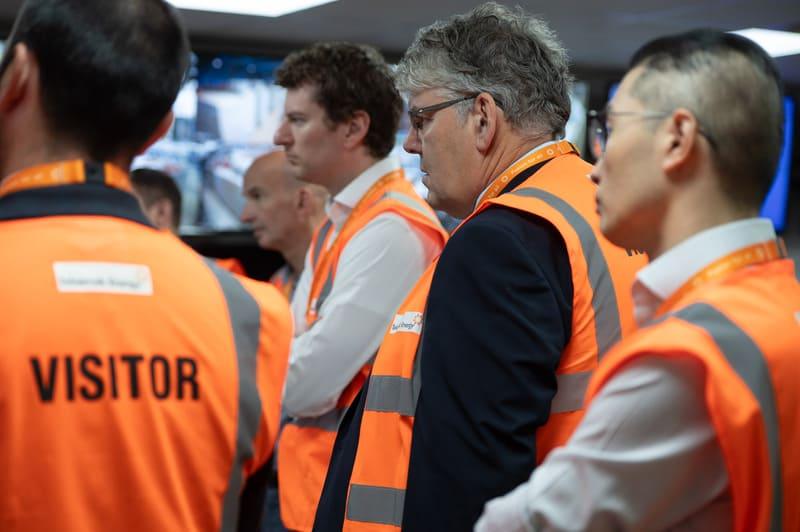
Milton Park, one of the UK’s largest science and innovation hubs, recently hosted Professor Paul Monks CB, Chief Scientific Adviser at the Department for Energy Security and Net Zero (DESNZ), for a showcase of the cutting-edge clean technologies taking root across its 700-acre campus.
Home to over 270 companies and 9,000 employees, Milton Park is rapidly becoming a central player in the UK’s drive to become a global clean energy leader. The visit by DESNZ officials placed the spotlight on some of the nation’s most forward-thinking enterprises tackling challenges from climate change to energy resilience.
Breakthroughs From Fusion to Fertiliser
The tour began with a demonstration by Tokamak Energy, whose ST40 tokamak is pushing the limits of fusion energy research. With plasma temperatures surpassing 100 million°C, the company is developing high-temperature superconducting (HTS) magnets through its spinout TE Magnetics. These magnets are not only key to enabling commercial fusion but are also set to power future electric propulsion systems and zero-loss energy transmission.
Dr David Kingham, Co-Founder of Tokamak Energy, emphasised the value of the visit: “It was a pleasure to show our technology to Paul Monks and his DESNZ colleagues who are well-placed to appreciate the crucial value of our work. Our high temperature superconductor technology has many applications, including loss-less transmission, efficient propulsion systems and wind energy generators – as well as being the key enabler for commercial fusion energy.”
At the other end of the temperature spectrum, quantum computing startup TreQ unveiled its open-architecture platform operating just above absolute zero. The company is working to address energy-intensive computational problems across sectors such as logistics, materials science and energy. One of their aims is to help reduce energy consumption in data centres, a growing concern as digital infrastructure scales.
Meanwhile, Earthshot Prize nominee Nium demonstrated its decentralised, nanotechnology-enabled ammonia production system. The technology offers a sustainable alternative to the carbon-heavy Haber-Bosch process, potentially transforming fertiliser production. The company’s new nanocatalyst facility, the largest of its kind, will boost capacity for green ammonia and other industrial chemical applications.
Another standout was Nexeon, a battery technology firm developing a silicon-based alternative to traditional graphite anodes in lithium-ion batteries. With growing demand from global EV manufacturers and energy storage developers, Nexeon is scaling production from its South Korean facility while anchoring its R&D in Oxfordshire.
A Platform for Innovation and Growth
The tour culminated in a roundtable discussion at Bee House, drawing participants from DESNZ, Advanced Oxford, the Oxford Growth Commission, and several Milton Park-based companies including Electrogenos and Nuvia. The session delved into the key enablers and roadblocks to scaling green innovation in the UK.
Recurring challenges included access to scale-up funding, high energy costs, and delays in infrastructure delivery. There was a consensus that while the UK offers strong early-stage R&D support, the pathway to commercialisation and manufacturing remains underdeveloped.
Professor Monks addressed how the government’s Clean Energy Superpower mission aims to address these gaps, with new investments planned through Great British Energy and Great British Nuclear, alongside efforts to support fusion, hydrogen, carbon capture and small modular reactor (SMR) deployment.
“It was fascinating to see innovation happening at scale at Milton Park,” said Monks. “This is clearly one of the places to be in the UK if you want to contribute to clean growth. Meeting the breadth of innovators on the visit made me feel very positive about the future of UK science and innovation. It was a fitting reminder that, as a country, we shouldn’t shy away from promoting ourselves as global leaders and a science and innovation superpower.”
The Role of Place in Scaling Green Industry
Industry participants highlighted the importance of environments that foster collaboration, talent retention, and infrastructure agility. Milton Park’s Local Development Order (LDO), a UK-first planning framework, was held up as a model for sustainable growth. The LDO allows pre-approved development consent within ten days, enabling companies to expand rapidly while maintaining environmental design standards.
Philip Campbell, Commercial Director at Milton Park, said: “Our focus at Milton Park isn’t just on providing businesses with the space they need today. Ultimately, we strive to create an environment with the right conditions for sustainable future growth allowing occupiers to innovate and scale up.“
Underpinned by our single ownership model, Milton Park’s flexible ten-day planning LDO, superb transport connections, our investment in power infrastructure and placemaking initiatives such as our new Signal Yard amenity offering, we’re focused on creating conditions where our occupiers can grow faster with fewer barriers, giving them the ability to focus on innovation.
“We were proud to host so many amazing occupiers across a breadth of innovation taking place at Milton Park and it was a privilege to showcase the groundbreaking activities of Tokamak Energy, Nium, TreQ and Nexeon to the government. I would also like to extend a personal note of thanks to all involved.”
From Vision to Implementation
The meeting revealed not only technical ingenuity but also a pragmatic outlook. Attendees discussed the need for smarter procurement strategies to strengthen domestic battery supply chains and unlock potential in battery storage markets beyond automotive.
Further topics included the impact of superconductors and quantum computing on energy system efficiency, grid flexibility through digital solutions, and how policy could incentivise energy conservation.
As Professor Monks noted during the discussion, “the greenest electron is the one that is never produced.”
The Milton Park visit underscored a broader theme: the UK’s net zero ambitions are inseparable from its industrial future. Achieving both will depend on aligning investment, infrastructure and regulatory frameworks with the pace of innovation. Places like Milton Park, where advanced science meets real-world application, will be central to this transition.
www.miltonpark.com
For more information.