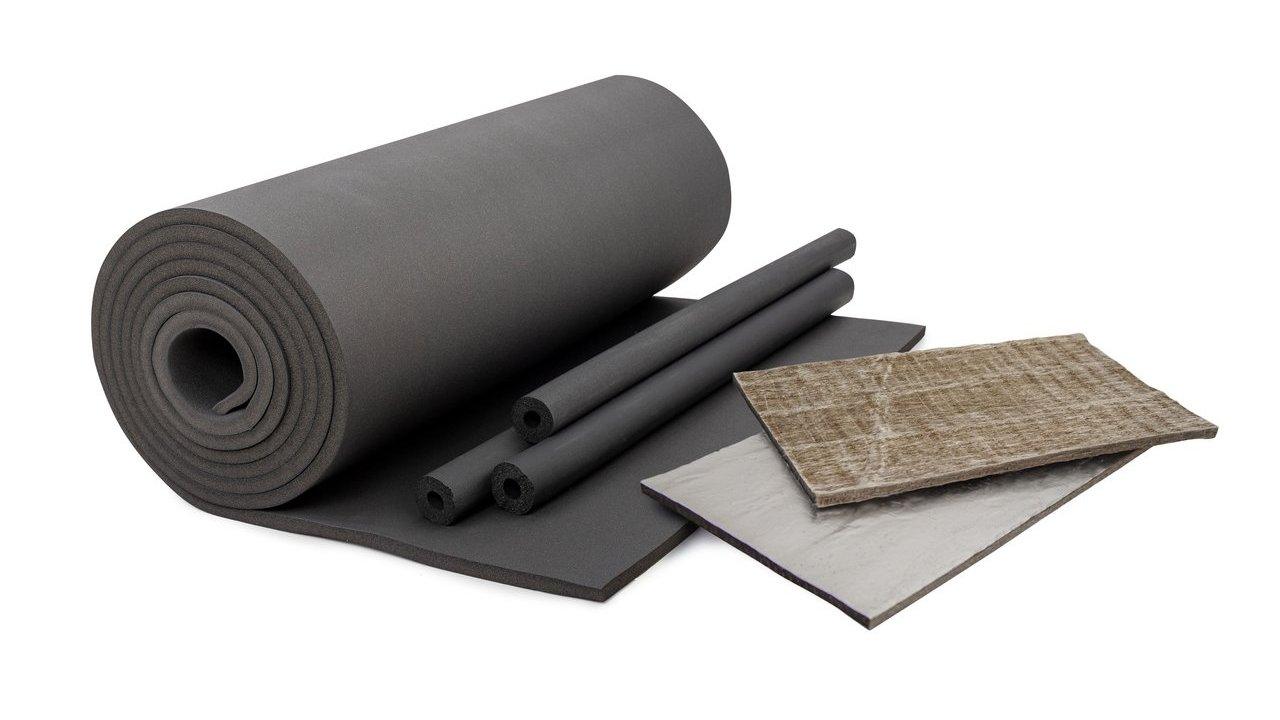
Armacell has quantified the avoided emissions associated with its ArmaFlex and ArmaGel insulation products through an independent study covering commercial, residential and industrial applications. Based on 2025 net sales, ArmaFlex products used in commercial and residential settings were estimated to avoid 2.7 tCO2e per m3, while ArmaGel products for industrial applications were estimated at 114.5 tCO2e per m3. The work gives the insulation manufacturer a dedicated calculation model for assessing long-term climate benefits over products’ assumed service lives. It also provides customers with data intended to support decisions during their climate transition journeys.
Measuring Product Lifetime Benefits
The study examines emissions linked to heat loss from heating pipework, alongside heat gain in cooling and industrial pipework where Armacell insulation is installed. Its calculations take a forward-looking view across the assumed operating life of the products, rather than measuring only manufacturing-stage emissions.
This distinction matters for technical insulation, where material performance can influence the energy needed to operate heating, cooling and industrial systems over many years. Armacell’s calculation model focuses on avoided use-phase emissions, offering a way to express the potential climate benefit associated with reduced energy loss or gain.
The company’s findings place its flexible foam and aerogel insulation products within a wider discussion about the contribution that equipment insulation can make to energy efficiency and decarbonisation. The approach is designed to provide a transparent basis for comparing insulation performance in representative operating conditions.
Comparing Insulation Scenarios
Armacell calculated avoided emissions by comparing estimated use-phase emissions from its products with an equivalent reference scenario using mineral wool. Mineral wool is one of the dominant insulation materials globally and represents a major share of the building insulation market.
The assessment considered product-specific thermal conductivity, insulation thickness, lifetime assumptions, representative pipe dimensions, operating temperatures, heating and cooling days, operating hours, and relevant emission factors. These variables can materially affect the amount of energy lost from or gained by pipework during normal operation.
For ArmaFlex, the estimate applies to commercial and residential applications. The substantially higher estimate for ArmaGel applies to industrial applications, where the operating context, pipework and thermal requirements can differ from those in buildings.
Scope Four Reporting
The company reports avoided emissions separately from its Scope 1-3 greenhouse gas inventory. They are not netted against, offset against or presented as a ratio of the Group’s inventory emissions, maintaining a clear separation between operational emissions reporting and product-use estimates.
Laurent Musy, President and CEO at Armacell, says:
“In 2025, we further advanced our understanding of our environmental impact by quantifying Scope 4 emissions. The emissions avoided by one cubic metre of ArmaGel, for example, are estimated to be equivalent to what 25 medium-sized passenger cars would emit in a whole year”
The methodology is aligned with the World Business Council for Sustainable Development’s Guidance on Avoided Emissions. This framework supports the separate reporting of emissions avoided through products or solutions, rather than treating them as reductions in a company’s own inventory.
Supporting Customer Decisions
Armacell develops thermal and mechanical insulation solutions for technical equipment, alongside engineered foams for acoustic and lightweight applications, recycled PET products, aerogel technology and passive fire protection systems. Its two main businesses are Advanced Insulation and Engineered Foams.
With more than 3,100 employees and 26 production plants in 20 countries, the company operates across markets where insulation performance can influence energy consumption in buildings and industrial equipment. The new estimates give Armacell a quantified account of how selected products may contribute to lower use-phase emissions.
For customers assessing energy efficiency measures, the results provide product-level figures that can sit alongside wider operational and carbon reporting. The study also makes clear that avoided emissions estimates depend on defined assumptions and reference scenarios, including the performance characteristics of the insulation material being compared.
A Clearer Insulation Contribution
Armacell’s analysis brings greater detail to the climate case for technical insulation by putting figures against its expected use-phase benefits. The 2.7 tCO2e per m3 estimate for ArmaFlex and 114.5 tCO2e per m3 estimate for ArmaGel show how product application and operating conditions shape the outcome.
By keeping these avoided emissions separate from its Scope 1-3 inventory, the company presents the calculations as an additional measure of product value rather than a substitute for reducing emissions across its own operations and value chain. The approach gives customers a clearer data point when considering insulation as part of energy efficiency and decarbonisation work.