Croda has published a white paper with customers and partners examining artificial intelligence applications across agricultural research, development and commercialisation. Drawing on expertise from its Crop Protection business, Croda Agriculture, and seed enhancement business, Incotec, the report considers how AI can support more productive, resilient and sustainable solutions for growers worldwide. Contributors include BASF, Rijk Zwaan, Dotmatics and the University of Amsterdam Business School. The publication places collaboration, trusted data and scientific expertise at the centre of effective AI adoption across the agricultural value chain.
A Cross Sector AI Assessment
The white paper, How Artificial Intelligence is Transforming Agricultural Innovation, brings together perspectives from agriculture, life sciences, academia and artificial intelligence. Its focus is on the practical role of AI in helping researchers make fuller use of data, identify promising opportunities faster and improve decisions throughout the innovation process.
For agricultural businesses, that emphasis extends beyond the use of individual tools. The report considers the organisational capabilities needed to translate technical potential into business and industry outcomes, including robust data foundations, new skills and different ways of working.
Thomas Riermeier, President, Life Sciences at Croda, said:
“The question is no longer whether artificial intelligence will influence agricultural innovation. It is already transforming the way our industry discovers, develops and delivers solutions to some of agriculture’s biggest challenges. Unlocking its full potential will require more than algorithms and technology.
Thomas Riermeier, President, Life Sciences at Croda, said:
“Success depends on bringing together scientific expertise, trusted data and strong partnerships across the agricultural ecosystem. By gathering perspectives from industry, academia and technology, this white paper provides practical insight into how organisations can build the capabilities needed to unlock AI’s potential and accelerate innovation for growers worldwide.”
Data In Seed Enhancement
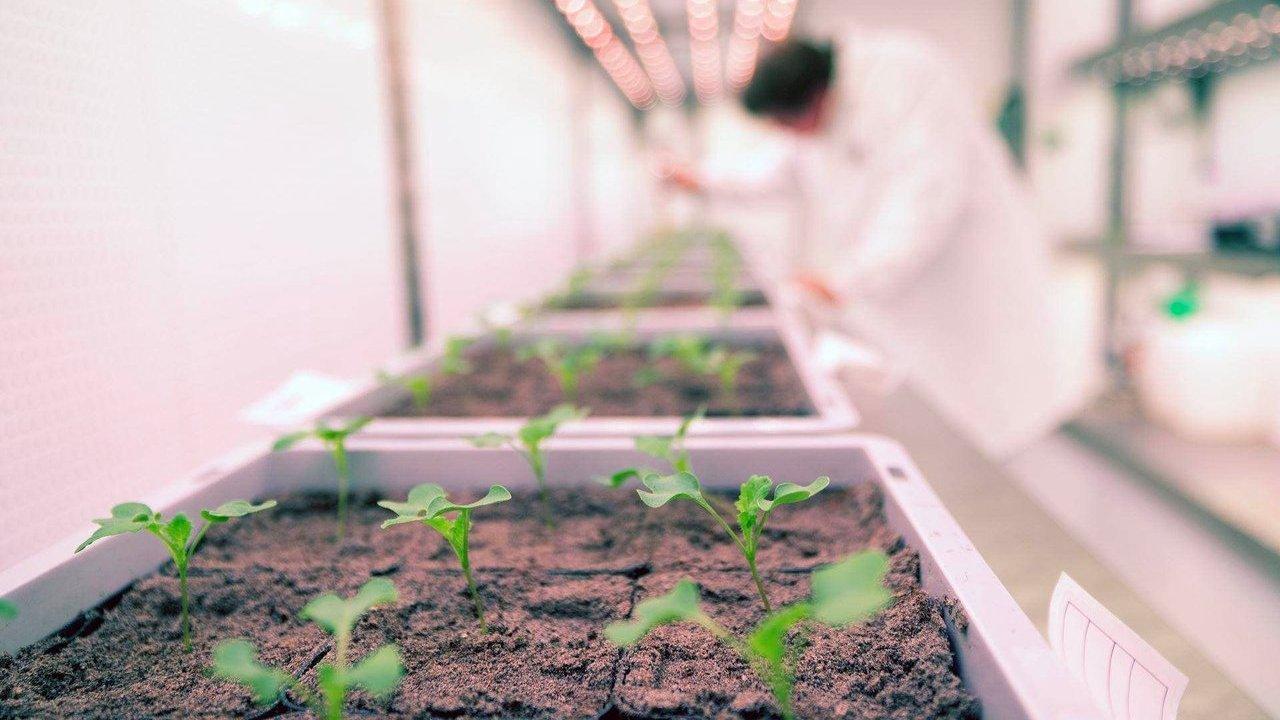
One of the report’s practical examples comes from Incotec’s tomato seed quality assessment work. The business is using AI alongside X-ray imaging to support analysis of seed quality, combining imaging technology with historical germination data to identify patterns linked to seed performance.
The approach is intended to help researchers make more informed choices around treatment and quality selection. It illustrates the report’s wider contention that historical scientific datasets can hold useful insight when paired with AI methods and specialist interpretation.
Seed enhancement is a significant point of intervention for agricultural productivity, as choices made before planting can influence the consistency and performance of crops. The white paper positions the combination of imaging, data and scientific knowledge as one route to improving research and development activity for growers.
Collaboration Across The Value Chain
Collaboration is a central theme throughout the publication. The report argues that advances in agricultural innovation will increasingly depend on trusted partnerships connecting expertise, data and insight from researchers and suppliers through to manufacturers, customers and growers.
This framing recognises that AI systems alone cannot determine whether an agricultural solution is useful in practice. Their value rests on the quality and relevance of data, as well as the scientific, commercial and operational knowledge brought to their application.
Finn Bauer, Vice President of R&D, Life Sciences at Croda, added:
“AI is already helping researchers uncover insights from complex scientific data and identify promising opportunities more quickly. The greatest impact will come when we combine these emerging capabilities with deep scientific expertise and closer collaboration across the agricultural value chain.”
Building Capability For Growers
Croda’s report concludes that AI offers considerable opportunity for agricultural innovation, while making clear that successful implementation depends on more than technological progress. Organisations will need to establish dependable data foundations, develop relevant skills and support collaboration across the agricultural innovation ecosystem.
That conclusion offers a constructive message for the sector. AI can assist scientists in finding patterns in complex data and assessing opportunities more efficiently, but its contribution is strongest when it is applied alongside deep subject expertise and trusted partnerships.
By convening voices from industry, academia and technology, Croda and its businesses have produced a timely resource for organisations assessing AI’s place in agricultural research and development. The white paper gives particular attention to the conditions required for credible adoption, with the shared objective of accelerating sustainable innovation for growers worldwide.