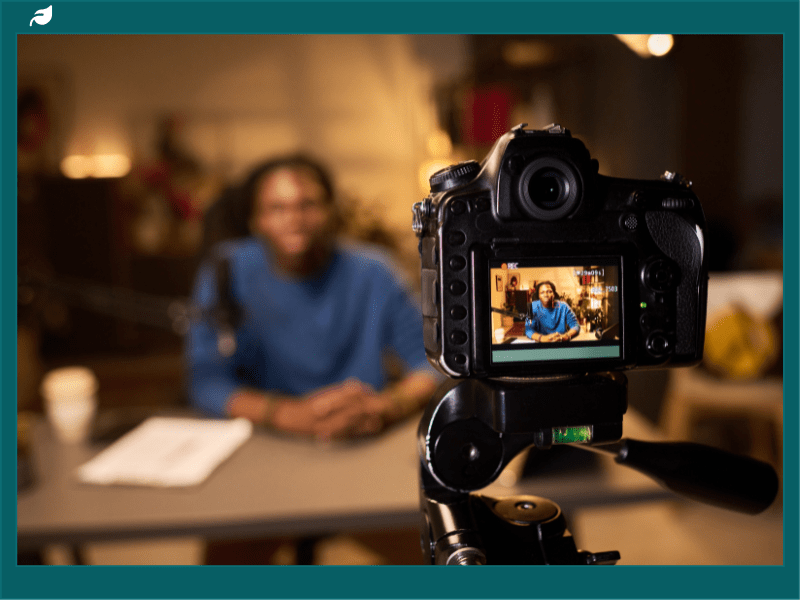
Creating a music video used to be a major project.
For an independent musician or a small creative team, even a relatively simple video could mean finding locations, hiring a crew, arranging equipment, organizing a shoot, editing hours of footage, and trying to fit everything into a limited budget. If something went wrong during production, there was often little choice but to spend more time and money fixing it.
That model is changing.
AI-powered creative tools are making it possible to approach music video production in a completely different way. Instead of treating every video as a large physical production, artists can create visual content digitally, experiment with different concepts, and produce material for multiple platforms without repeating the entire production process.
This doesn’t mean traditional filmmaking is going away. There will always be a place for professional crews, physical locations, cinematography, and human creativity. But for artists who need to produce content regularly, AI can provide another option.
The Growing Pressure to Create More Content
Artists today are expected to be more than musicians.
They are also content creators, marketers, community managers, and sometimes their own production teams. A new song might need a cover image, teaser clips, lyric videos, short-form social content, behind-the-scenes material, and a full music video.
The problem is that producing all of this content can quickly become expensive.
An independent artist may have a great song but not have the budget to organize a traditional video shoot every time they release new music. This creates an awkward gap between the amount of content audiences expect and the resources an artist actually has.
AI video tools can help close that gap.
Rather than starting with cameras, locations, and a production crew, artists can begin with the music itself and build a visual concept around it.
From Audio to Visual Storytelling
One of the most interesting developments in AI video technology is the ability to connect music with visual storytelling.
Music already contains emotion, rhythm, atmosphere, and structure. A visual experience can build on those characteristics without necessarily requiring a conventional narrative.
For example, a slow electronic track might inspire abstract landscapes, moving textures, or atmospheric visuals. A high-energy song could be represented through faster transitions, bold movement, and constantly changing scenes.
The important point is that the technology does not have to decide what the artist’s identity should look like.
It can simply give the artist more ways to explore an idea.
Tools such as a Renderforest ai music video generator can make this type of experimentation more accessible to musicians and creators who don’t have access to a full production team.
That accessibility matters because creativity shouldn’t depend entirely on the size of someone’s production budget.
Digital Production Can Reduce Physical Resources
There is also a sustainability argument for digital-first video production, although it needs to be approached carefully.
Traditional productions can involve travel, transportation, physical sets, lighting equipment, catering, costumes, printed materials, and other resources. None of these things are automatically wasteful, and many professional productions manage their environmental impact responsibly.
But for smaller projects, digital production can eliminate some of those requirements altogether.
An artist doesn’t necessarily need to fly to another city to find a particular visual environment. They don’t have to build a physical set that will only be used once. They may not need to transport a large amount of equipment for a short promotional video.
Instead, much of the creative process can happen digitally.
That can make production more flexible while potentially reducing some of the physical resources associated with traditional shoots.
Of course, AI itself isn’t impact-free. Generative systems require computing power, and video generation can be particularly resource-intensive. Sustainable content creation therefore isn’t simply a matter of replacing cameras with AI and declaring the process green.
The smarter question is how the technology is being used.
The Value of Creating Less Waste
One of the biggest opportunities may not be generating more content. It may be getting more value from the content that already exists.
Consider an artist who records one song.
Instead of creating one piece of visual content and moving on, that song could become a series of assets: a full music video, short social clips, a visualizer, promotional snippets, and content for different platforms.
The same creative idea can have a much longer life.
This is important for both financial and environmental reasons. When a production can be adapted into multiple useful formats, the resources invested in the original concept are not being used for a single moment.
The idea is similar to other areas of sustainable business: use resources thoughtfully, reduce unnecessary repetition, and look for ways to extend the useful life of what has already been created.
AI Doesn’t Replace the Artist
There is a natural concern that AI-generated content could make creative work feel generic.
That concern is legitimate.
If every artist uses the same prompts, templates, and visual styles, audiences may eventually see a lot of content that looks strangely similar. Technology can make production easier, but it doesn’t automatically make the result meaningful.
The human element remains essential.
An artist still needs to decide what a song means, what story they want to tell, what visual identity fits their music, and how they want audiences to feel when they see the finished video.
AI can help turn those ideas into visual experiments, but the creative direction still needs to come from somewhere.
In that sense, the best use of AI may not be to replace creative decisions. It may be to make experimentation cheaper.
An artist can try three visual concepts instead of committing everything to one. If the first doesn’t work, they can explore another direction without having to restart an entire physical production.
Making Music Promotion More Accessible
The benefits extend beyond established artists.
For someone releasing their first few songs, professional music video production can feel completely out of reach. A digital workflow can provide an opportunity to create something visually engaging without requiring a large upfront investment.
This can be especially valuable for niche genres and independent musicians.
An artist doesn’t necessarily need millions of monthly listeners to justify creating a visual identity. They can start small, test ideas, see what resonates with their audience, and develop their style over time.
That makes the creative process more iterative.
Instead of waiting until there is enough money for a “perfect” video, artists can begin experimenting now.
Sustainability Requires More Than Technology
It is important not to confuse digital production with automatically sustainable production.
AI models run on data centers, and generating video requires significant computational resources. As the use of generative video grows, questions around energy consumption, infrastructure, data sourcing, and transparency will become increasingly important.
Businesses and creators should therefore avoid the idea that AI is inherently green.
A better approach is to use the technology deliberately.
Generate what is actually needed. Reuse useful assets. Avoid endless rendering simply because experimentation is inexpensive. Choose efficient workflows where possible. And think about the full lifecycle of digital content rather than only looking at the production stage.
Sustainability is ultimately about decisions, not labels.
A New Creative Workflow
The most promising future for AI music video production probably isn’t a world where every traditional production disappears.
Instead, we’re likely to see hybrid workflows.
An artist might record a live performance traditionally, create additional scenes digitally, use AI to explore visual concepts, and then combine everything during editing. Another musician might create an entirely digital video for a small release while saving a larger physical production for a major album launch.
Both approaches can coexist.
What matters is having more options.
For independent musicians, that flexibility can be the difference between having an idea and actually being able to bring it to life.
Creativity With Fewer Barriers
Music has always evolved alongside technology.
The tools change, but the underlying goal remains the same: connect an idea with an audience.
AI music video technology is simply another step in that evolution. Used thoughtfully, it can help artists experiment more freely, produce content with fewer physical constraints, and make professional-looking visual storytelling more accessible.
The sustainability conversation will continue as the technology develops. AI video should not be presented as a perfect environmental solution, because it isn’t one. But when creators use digital tools to reduce unnecessary physical production, reuse content, and make more deliberate decisions about what they produce, there is a meaningful opportunity to build a more efficient creative workflow.
The future of music video production may not be entirely physical or entirely artificial.
It may simply be more flexible, more accessible, and more intentional about how creative resources are used.