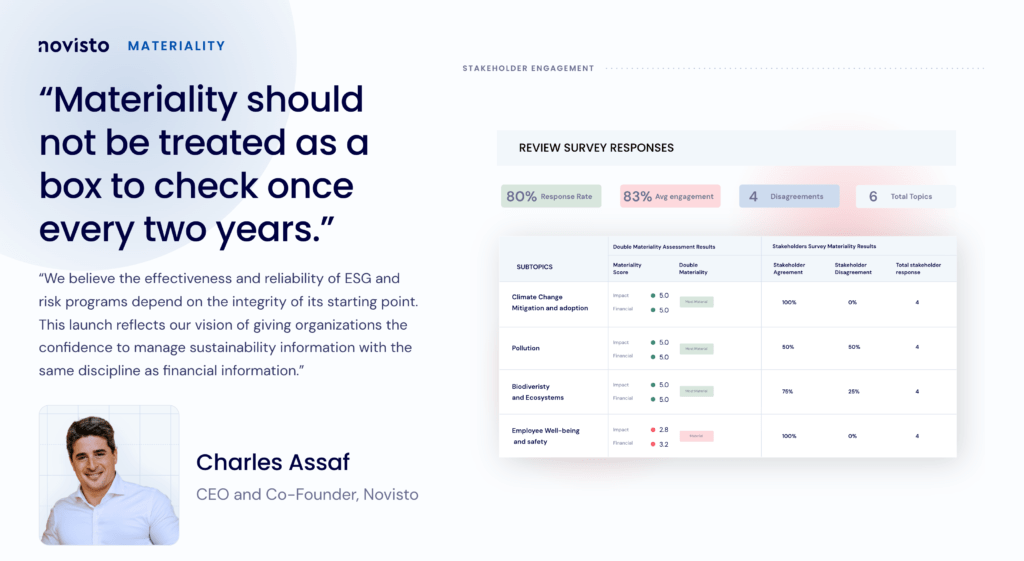
Sustainability teams working toward compliance with the Corporate Sustainability Reporting Directive (CSRD) have long treated materiality assessments as a once-a-year exercise, completed, filed, and largely forgotten until the next reporting cycle. Novisto has announced the launch of Novisto Materiality, a solution built to turn that static exercise into a continuous, traceable process. The tool digitizes double materiality assessments, giving sustainability teams a structured way to collect inputs, engage stakeholders, and document how materiality decisions are reached over time. It is powered by GIST Impact’s science-backed methodology and designed to connect directly into Novisto’s broader sustainability reporting platform. The launch responds to a widely shared pain point among companies aligning with CSRD alongside frameworks such as the International Sustainability Standards Board (ISSB) and the Global Reporting Initiative (GRI).
From Static Reports To Continuous Process
Traditional materiality assessments can take months of stakeholder engagement, data collection, and analysis to complete. Once the final report lands, however, the underlying inputs, decisions, and rationale typically end up scattered across disconnected files. That leaves sustainability teams with limited ability to revisit or update the assessment when reporting requirements, stakeholder expectations, or business priorities shift, effectively freezing a process that regulators and stakeholders increasingly expect to be dynamic.
Novisto Materiality is positioned as a direct answer to that gap, moving the assessment out of static documents and into a living workflow that sustainability teams can revisit as circumstances change.
A Structured Workflow For Materiality
The new solution gives teams a defined process for assessing impacts, risks and opportunities under a double materiality lens, while maintaining a clear record of how those decisions were made. That record-keeping function matters as much as the assessment itself: for many organisations, the bigger challenge is not producing a materiality assessment once, but making the resulting decisions traceable and defensible well after the initial report is delivered.
By building that documentation into the workflow itself, Novisto Materiality aims to reduce the reliance on disparate spreadsheets and slide decks that companies have historically used to capture the reasoning behind their material topics.
Built On GIST Impact Methodology
The methodology underpinning the tool comes from GIST Impact, described as science-backed, and is intended to give sustainability teams confidence that the impacts, risks and opportunities they surface are grounded in a consistent, defensible framework rather than ad hoc judgement calls. Full detail on the launch, including how the solution is being positioned in the market, is set out in a release describing it as the industry’s first on-demand materiality solution fully integrated into its core sustainability platform.
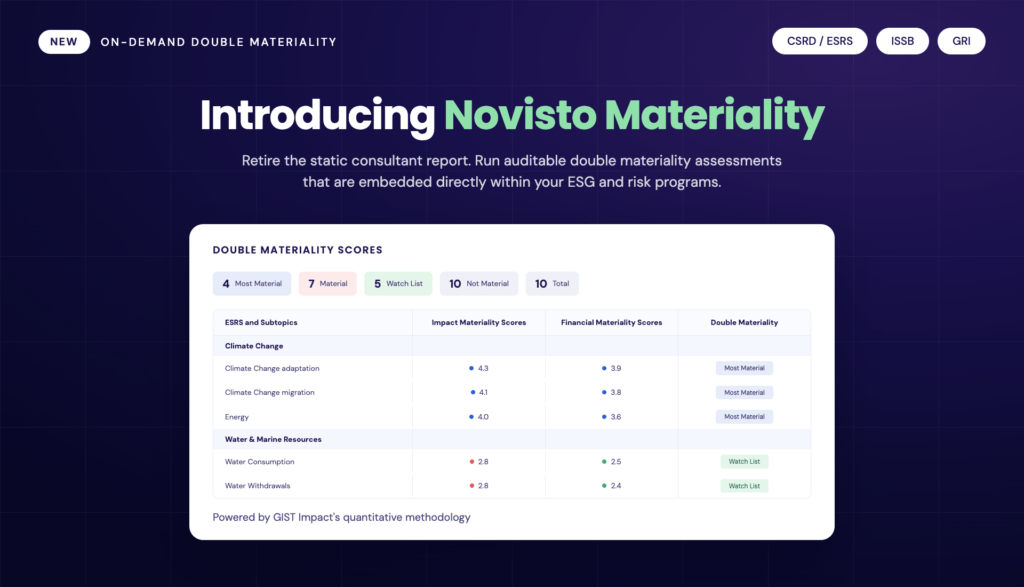
Linking Materiality To Reporting And Governance
For organisations already using Novisto’s wider platform, the outputs generated through Novisto Materiality can feed directly into sustainability reporting, governance, and performance management workflows. That integration is designed to close the loop between identifying material topics and acting on them, rather than leaving the assessment as a standalone document disconnected from day-to-day reporting and decision-making.
Materiality As An Ongoing Discipline
The launch reflects a broader shift in how companies are being asked to treat materiality: not as a periodic compliance task, but as an ongoing input into long-term sustainability strategy. As CSRD requirements evolve and stakeholder expectations continue to move, tools that keep the underlying rationale current, and connected to reporting infrastructure, are likely to become a bigger part of how sustainability teams justify and adapt their priorities.