Understanding Hydropower: A Renewable Energy Source
Here’s a number worth sitting with: hydropower is the single largest source of renewable energy on the planet. Not solar. Not wind. Water, moving downhill, turning turbines.
That’s the whole trick, and it’s been working for over a century, quietly, without much fanfare, while flashier technologies grabbed the headlines and the venture capital and the magazine covers. International Hydropower Association reports that global hydropower capacity grew by 16.2 GW for conventional hydropower and 8.4 GW for pumped storage hydropower in 2024, totaling 24.6 GW of new capacity, a sign of just how much momentum the sector still has.
You don’t need to squint to see why it matters now. As the world scrambles to shift away from fossil fuels, hydropower is already doing the heavy lifting that other renewables are still catching up to. It runs on the kinetic energy of moving water, nothing more exotic than that, which makes it clean, dependable, and endlessly renewable as long as the water cycle keeps doing its thing. There’s no fuel to mine, no combustion to manage, no supply chain snaking across oceans and border checkpoints.
Just water, gravity, and a turbine built to catch the motion. Below, we’ll walk through how hydropower actually gets used inside modern power grids, what it means for global electricity generation, and why its footprint on the environment and on communities is bigger and more complicated than the clean-energy headlines usually let on.
It helps to remember that this isn’t a new idea dressed up in new language. People have harnessed flowing water for centuries, first with simple water mills grinding grain by the riverside, later with more ambitious engineering that turned rivers into industrial workhorses powering entire towns. Those old mills weren’t just quaint precursors either; they were the proof of concept, the first demonstration that a river could do work a human back never could. Hydropower, in a sense, is the original renewable energy, the one every other clean technology gets measured against, whether that comparison is fair or not.
What’s changed is the scale and the sophistication, not the underlying physics. Water still falls. Gravity still pulls. The rest is just better engineering wrapped around the same old idea.
How Hydropower is Utilized in Modern Energy Systems
Strip away the jargon and hydropower’s job is simple: keep the lights on without burning anything. That’s what makes it a cornerstone of modern electricity generation. It diversifies the energy mix, props up energy security, and does so by exploiting a force that’s been around since before humans figured out how to use it, water tumbling from high ground to low, patient and relentless, indifferent to markets and politics alike.
And here’s the thing about sustainability claims: hydropower actually earns them. It uses the natural water cycle without draining it. Compare that to fossil fuels, which chew through finite reserves every single day, and the contrast gets stark fast. The mechanics are refreshingly straightforward.
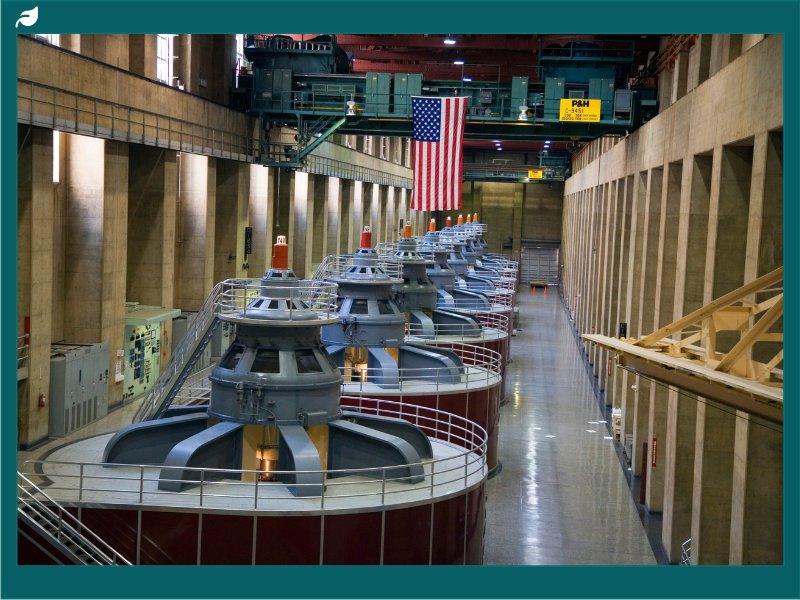
Water gets channelled through turbines wired to generators. That’s hydroelectric power generation in a nutshell: water falls, turbines spin, kinetic energy becomes mechanical energy, mechanical energy becomes electricity. No combustion, no smoke, no fuel truck idling in a car park. It’s about as elegant as energy generation gets, and that elegance is precisely why engineers still marvel at how little has fundamentally changed about the core process in well over a hundred years.
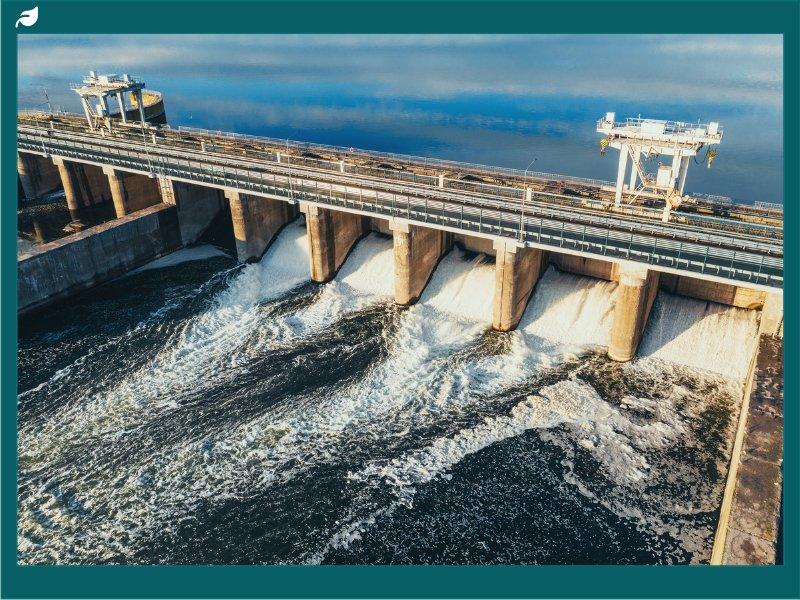
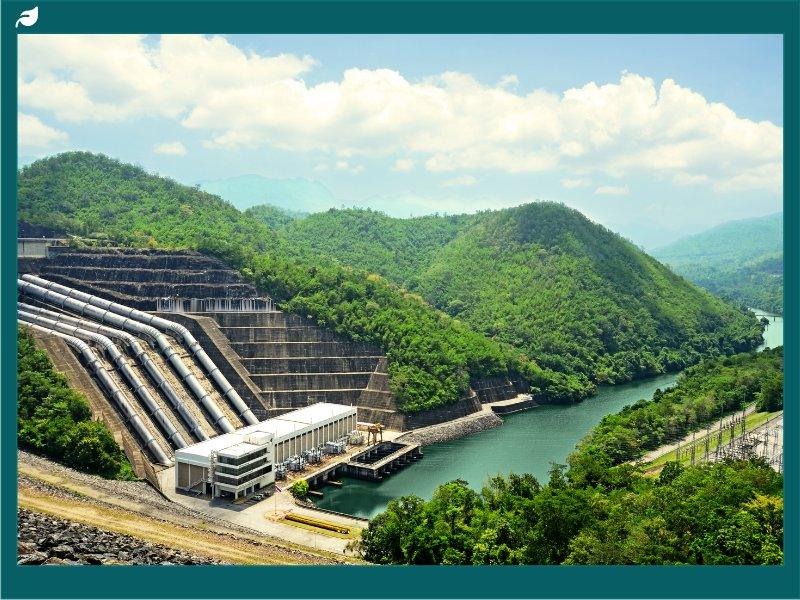
Projects around the world show just how flexible this idea is. Some are enormous dam complexes visible from space, holding back millions of tonnes of water behind walls of concrete and steel that took a decade or more to pour. Others are modest, community-scale setups built to serve a single valley or town, barely noticeable unless you know where to look, tucked behind a hillside or under a bridge. One of the most common approaches is the strategically placed hydroelectric dam, and these things rarely do just one job.
Beyond power generation, they handle flood control, support irrigation, and regulate water supply for entire regions, doing quiet, unglamorous work that rarely makes the news until something goes wrong. Installed capacity varies wildly from site to site, which is exactly why hydropower scales so well: a small river town and a sprawling metropolitan grid can both find a hydropower solution that fits their needs, their budget, and their geography.
As demand for clean energy climbs, engineers keep squeezing more out of installations that are already decades old. FDE Hydro reports that digital optimization of existing hydropower plants could add 42 TWh to global generation, while retrofitting non-powered dams in the U.S. alone could deliver 4.8 GW of new renewable capacity, without the need to build a single new dam. Retrofits and efficiency upgrades extend the working life of existing capacity, which matters enormously when you consider how much easier it is to improve a dam than to build a new one from scratch, both financially and politically. That efficiency gain is not a footnote, it is essential to meeting rising global electricity demand while keeping the environmental cost down. A turbine swap or a control-system upgrade can add years, sometimes decades, of productive life to a plant that might otherwise be written off as ageing infrastructure destined for decommissioning.
The way hydropower gets deployed differs enormously by geography. Densely populated regions lean on large-scale hydropower to cover heavy electricity demand, since a single well-sited dam can offset the output of several fossil fuel plants running around the clock. Nations blessed with abundant water resources have used hydropower to slash carbon emissions in a way few other technologies can match, tracking neatly with global efforts to clean up the environment and hit binding climate commitments. In many cases, the generation capacity of these projects doesn’t just compete with other renewables, it beats them outright, which is exactly why countries chasing energy independence keep coming back to water as their answer, again and again, decade after decade.
Compare hydropower to solar or wind and another advantage jumps out: control. Hydropower delivers constant, adjustable power that can be dialled up or down to match real-time demand, almost like a tap that can be opened wider or closed off as needed within seconds. That flexibility is gold for grid stability, and grid stability is what stands between a bad afternoon and a full-blown blackout that knocks out hospitals, traffic lights, and refrigeration all at once. As climate change puts more pressure on global energy security, hydropower’s ability to cut carbon while keeping the grid steady becomes harder to overstate.
Add pumped storage into the mix, which banks surplus energy and releases it exactly when it’s needed, and you start to see why hydropower plays so well with its renewable neighbours, filling in the gaps that solar and wind leave behind on cloudy or calm days when the rest of the grid needs backup.
None of this comes free, though. Building out hydropower infrastructure means grappling with real environmental impact, from disrupted ecosystems to displaced communities, and pretending otherwise would be dishonest and, frankly, insulting to the people who’ve lived through it. But with careful planning and the right technology, the sustainable upside of hydropower can be captured without steamrolling the natural world around it. Hydropower’s place in modern energy systems isn’t a relic of the past, it’s a live, evolving piece of the renewable energy puzzle, and as climate pressure mounts, it’s not going anywhere.
If anything, expect its role in the broader energy conversation to deepen as 2024 and 2025 bring even sharper focus on decarbonising national grids and squeezing every credible tonne of carbon out of the system.
The Mechanics of Energy in Moving Water
Water moving downhill carries energy. That’s not a metaphor, it’s physics, and hydropower is simply the machinery built to catch it. Understanding how that capture works, through dams, turbines, and a growing stack of digital tools, tells you a lot about why hydropower remains such a reliable slice of global power supply, decade after decade, regardless of what’s happening in commodity markets, elections, or geopolitics more broadly.
Key Technologies and Innovations in Hydropower
At the centre of it all sits the turbine, the piece of hardware that turns flowing water’s kinetic energy into something a generator can use. This conversion sits at the heart of hydroelectric power generation, and it’s a beautifully efficient trick: water in its natural flow, turned directly into usable energy without any intermediate combustion step or messy byproduct. Three turbine designs dominate the field: Kaplan, Francis, and Pelton, each suited to different water flow conditions and each squeezing maximum efficiency out of a given site’s specific characteristics. Kaplan turbines handle low-head, high-flow situations well, making them a natural fit for wide, gently sloping rivers.
Francis turbines cover a broad middle ground and end up being the workhorse choice in a huge share of the world’s hydropower plants. Pelton turbines thrive where high-pressure water drops from a great height, which is why you’ll find them clustered in mountainous terrain with steep natural drops. Picking the right one isn’t a minor detail, it’s the decision that determines whether a project can actually harness the available energy efficiently, shaped by factors like flow rate and head height that engineers measure obsessively before a single shovel hits the ground.
Modern engineering keeps pushing these machines further. Variable-speed turbines now offer flexibility across shifting water conditions, letting a plant respond to changing energy demand rather than just grinding along at a fixed rate regardless of what the grid actually needs at that particular moment. That responsiveness feeds straight back into grid stability, which, again, is the quiet hero of a reliable power supply that nobody notices until it fails, and by then it’s already a crisis rather than a footnote.
Dams deserve their own mention here, because they do more than block a river. They regulate flow and create a dependable reserve of water that operators can tap on demand, releasing it strategically rather than letting it rush past unused during a wet season only to run short in a dry one. Modern dam design has moved well past the brute-force approach of decades past, when engineers cared mostly about holding back water and little else. Fish-friendly designs now let fish pass safely upstream and down, a real nod to biodiversity rather than a PR gesture bolted on after the fact once the damage was already done.
Advances in concrete and construction technique have also made dams more durable and easier to maintain, stretching their working lifespan and cutting long-term costs, which matters enormously when a single dam might operate for a hundred years or more, quietly outliving the engineers who designed it.
Then there’s the smaller end of the spectrum: small-scale hydropower and run-of-the-river systems. These prove hydropower doesn’t have to mean a giant reservoir and a concrete wall the size of a city block looming over a valley. Small-scale plants can bring real energy independence to a single community, powering a town or a cluster of villages without the enormous capital outlay a mega-dam demands, and often without the years of regulatory wrangling that come attached to bigger projects. Run-of-the-river systems go a step further, generating power continuously without damming a river’s flow at all, which keeps the ecological disturbance to a minimum and leaves the natural river ecosystem largely intact, fish, sediment, and seasonal flow patterns included.
Digital technology is quietly transforming the sector too, and this part of the story doesn’t get nearly enough attention. Real-time monitoring and data analytics let operators fine-tune output and cut waste, squeezing more usable energy from the same water by adjusting turbine behaviour on the fly rather than relying on fixed schedules. Predictive maintenance, powered by machine learning that chews through operational data around the clock, catches faults before they become failures, which keeps plants running longer with fewer surprises and far less costly downtime. That data-driven approach is becoming standard practice across the industry, not a novelty reserved for flagship projects.
None of this happens in a vacuum. Engineers, environmental scientists, and policymakers all have to pull in the same direction, and increasingly they’re doing exactly that, blending hydropower with solar and wind into hybrid systems that lean on each technology’s strengths rather than treating them as competitors for the same slice of the grid. The result is a power supply that’s more resilient than any single source could manage alone, one that can absorb a dip in wind output or a run of cloudy days without the grid so much as flinching.
So no, hydropower isn’t standing still. It’s a sector in motion, driven by genuine innovation rather than nostalgia for old dam projects, and that momentum is exactly what will let it keep punching above its weight as global energy needs keep climbing through 2024, 2025, and well beyond, long after the current wave of grid modernisation projects wraps up.
Pumped Storage: Enhancing Efficiency in Energy Supply
Think of pumped storage as a giant battery built from water and gravity. That’s really all it is, and it happens to be one of the cleverest tricks in the entire energy supply toolkit, precisely because it’s so mechanically simple. By shifting water between two reservoirs sitting at different elevations, pumped storage smooths out the bumps between supply and demand, and it does so in real time, second by second if the grid needs it to. For a grid trying to stay balanced around the clock, that’s not a nice-to-have, it’s essential, and it’s becoming more essential every year as intermittent renewables take up a bigger slice of the generation mix and traditional baseload plants get retired.
The Role of Pumped Storage in Grid Stability
Here’s how it actually works. During off-peak hours, when electricity is cheap and plentiful, water gets pumped up to the higher reservoir, essentially storing energy as elevation, banking it the way you might bank cash for a rainy day. When demand spikes, that water comes rushing back down through turbines, generating electricity almost instantly, often within minutes of the call going out. Energy gets banked when nobody wants it and released the moment everybody does.
Few technologies offer that kind of on-demand flexibility, and it’s exactly why pumped storage has become such a prized asset for grids worldwide, from Europe’s alpine reservoirs tucked into mountain valleys to installations built into hillsides across Asia and the Americas.
Slot pumped storage into the wider grid infrastructure and it acts like a shock absorber, soaking up sudden spikes in demand before they turn into blackouts or brownouts that ripple across an entire city. The numbers back this up: pumped storage systems typically convert somewhere between 70 and 80 percent of the electricity used in pumping back into usable electricity. That’s a strong return, especially during stretches when other renewable sources are having an off day thanks to weather or some other external factor beyond anyone’s control, whether that’s a windless week or an overcast month. In effect, pumped storage backstops the rest of the hydropower fleet, keeping supply steady even when a primary source stumbles or underperforms unexpectedly.
Grid stability isn’t only about avoiding blackouts, either. Pumped storage also handles frequency regulation and voltage support, quietly absorbing or injecting energy to keep the grid within safe operating limits, second by second, without anyone downstream ever noticing the adjustment happening behind the scenes. That matters because intermittent renewables like solar and wind, for all their climate benefits, are inherently unpredictable in ways that fossil fuel plants historically weren’t. A cloud bank rolling in or a lull in the wind can shave output in minutes, sometimes seconds, and the grid has to respond just as fast or risk instability.
Pumped storage smooths over that unpredictability, giving the grid the steady backbone it needs to keep functioning as more intermittent sources come online year after year.
There’s also a resilience story here worth telling in full. As power grids grow more complex, weaving together more renewable technologies alongside legacy fossil generation and an ever-growing tangle of transmission lines, pumped storage becomes the emergency reserve that can react in seconds rather than hours. A sudden demand surge, an unexpected supply drop, doesn’t matter which. Pumped storage facilities can respond almost instantly, and that fast dispatch capability makes them genuinely valuable during disaster recovery, when essential services simply can’t afford downtime, whether that’s a hospital running life support equipment, a water treatment plant, or a communications network keeping emergency services connected.
Scalability is another strength worth dwelling on. Pumped storage pairs neatly with other renewables in ways that amplify the whole system rather than competing with it for space or funding or grid connections. Excess solar power at midday can pump water uphill, storing sunshine as elevation for use after dark when solar panels go dark and demand often peaks anyway. Excess wind power on a gusty night can do the same, banking energy that would otherwise go to waste or even have to be curtailed.
That cross-technology teamwork boosts overall grid efficiency and resilience, and it’s a big part of why pumped storage keeps showing up in every serious conversation about the future of energy supply, from national planning documents to investor pitch decks to academic papers on grid decarbonisation.
Environmental impact hasn’t been ignored either, and it shouldn’t be. New builds increasingly favour fish-friendly turbine designs and better sediment control, cutting the ecological footprint that older pumped storage schemes sometimes left behind when environmental review was more of an afterthought than a design constraint. Using existing reservoirs, rather than flooding new land, also helps preserve natural habitats that would otherwise be lost to new construction, letting developers add storage capacity without opening a fresh environmental wound in an already stressed landscape.
Put it all together and pumped storage looks less like a niche technology and more like a load-bearing wall in the modern energy system, one that rarely gets the credit it deserves outside engineering circles. Stability, reliability, efficiency: pumped storage delivers on all three fronts, and as the shift toward sustainable power accelerates, its role in balancing a diverse energy portfolio will only grow larger. Expect continued innovation here, because the flexible backbone it provides is exactly what a renewable-heavy grid needs to stay upright when the wind drops or the sun goes down, which happens every single day without exception.
Hydroelectric Power: A Major Player in Electricity Generation
Hydroelectric power isn’t a bit player propping up the renewable energy story, it’s one of the leads, and has been for longer than most people realise. It shows up at every scale, from continent-spanning dam systems to small regional plants tucked into a single valley, and it does the same basic job everywhere: turn the kinetic energy of moving water into electricity, cleanly and consistently, year after year, through droughts and floods and everything in between. Below, we stack it up against the alternatives to see where it truly shines and where the trade-offs live, because an honest comparison has to include both sides of the ledger, not just the flattering one.
Comparing Hydroelectric Power to Other Energy Sources
Put hydroelectric power next to coal or natural gas and the gap is obvious. Fossil fuel plants pump out greenhouse gases as a matter of course, every single day they operate, whether anyone’s watching or not; hydroelectric plants generate electricity without emitting any at all once they’re built and running, which is a genuinely rare quality among large-scale power sources. That single fact is why so many countries chasing tighter environmental regulation keep leaning on hydroelectric power to hit their targets, particularly as pressure mounts heading into 2025 to show real, measurable progress on decarbonisation rather than vague promises.
Cost tells a similar story, just on a longer timeline. Once a dam or hydropower project is built, running costs stay low, especially compared to fossil fuel plants that need a constant, expensive supply chain of coal or natural gas just to keep operating day after day. Hydroelectric plants can run for decades on the back of relatively simple technology, and in regions with predictable water flow, that translates into a genuinely stable, long-term electricity supply that isn’t hostage to volatile fuel prices swinging with every geopolitical shock.
Set hydroelectric power against wind and solar and you find a different kind of edge: consistency. As long as water keeps flowing, hydroelectric plants keep generating, day or night, rain or shine, storm or drought within reason. Solar and wind can’t say that; they’re at the mercy of weather and daylight hours, which is exactly why they need partners like hydropower and pumped storage to smooth over the gaps that intermittency inevitably creates. Hydroelectric power also ramps output up or down fast, which makes it a natural shock absorber during periods of peak electricity demand, stepping in exactly when the grid needs support to avoid shortages or costly emergency measures like firing up backup gas turbines.
Land footprint matters too, and it’s an underrated point in hydropower’s favour. Where solar farms sprawl across acres and wind farms dot the horizon with turbines spaced far apart to avoid wake interference, hydroelectric facilities tend to work with existing geography, rivers, waterfalls, natural elevation changes, rather than reshaping huge tracts of land from scratch. That said, this isn’t a free pass, and it would be dishonest to pretend otherwise. Construction and operation can still disrupt local ecosystems and displace communities, sometimes entire towns, and any honest accounting of hydroelectric power has to weigh those costs seriously rather than waving them away with a clean-energy label.
Modern projects try to soften that impact with fish ladders and habitat restoration, but the trade-off is real, not cosmetic, and communities living near proposed dam sites deserve a straight answer about what they’re gaining and losing before construction ever begins.
There’s also a pricing-stability angle that doesn’t get talked about enough in the broader energy debate. Fossil fuel prices swing wildly with politics and markets, oil shocks, gas squeezes, coal price spikes that ripple through entire economies overnight and show up directly on household bills. Hydroelectric power, tied to the natural water cycle rather than a commodity market, offers a far steadier cost structure for utilities and consumers alike, one that doesn’t lurch every time a pipeline gets disrupted somewhere on the other side of the world. Many hydroelectric projects also double as anchors for broader water management strategies, supporting irrigation, flood control, and recreation alongside electricity generation, which extends their value well past the power line and into the daily lives of the surrounding region, farmers and anglers included.
None of that erases the downsides, and it shouldn’t. Building a mega-dam demands enormous upfront investment and years of regulatory groundwork before a single turbine ever spins or generates a single unit of electricity. Geography constrains where large-scale hydroelectric projects can even be considered, and in water-scarce or arid regions, competition over that water can get fierce, pitting energy generation against agriculture and drinking water needs in ways that get politically explosive fast. So the picture is mixed, but it tilts favourably on balance.
Hydroelectric power remains effective, adaptable, and dependable, and as more countries hunt for sustainable, stable electricity generation, it’s hard to see it losing its seat at the table anytime soon, no matter how fast solar and battery costs keep falling.
Benefits of Hydropower in Sustainable Development
Sustainable development needs sources of energy that don’t cannibalize the future to power the present, and hydropower fits that brief better than almost anything else available at scale today. It produces electricity without draining natural resources, cuts greenhouse gas emissions at scale, and, with continued technological progress, keeps getting more efficient at doing both simultaneously. Here’s where hydropower helps communities, economies, and ecosystems all at once, and where it still asks hard questions that deserve honest answers rather than easy slogans plastered on a corporate sustainability report.

The Environmental Impact of Hydropower
Hydropower deserves its reputation as one of the biggest renewable energy success stories on the planet, but “renewable” doesn’t mean “consequence-free,” and anyone telling you otherwise is selling something. Both things are true at once, and any serious look at sustainable development has to hold them together without flinching from either side of that tension.
Start with the win: hydropower generates electricity with a fraction of the carbon emissions of fossil fuels across its operating lifetime, from construction through decades of running. That makes it a genuine asset for countries trying to hit climate targets like the Paris Agreement, which loom larger with every passing year as deadlines creep closer and progress stays uneven. Every megawatt of hydropower is a megawatt not coming from coal or natural gas, and given how much global carbon emissions owe to those two fuels, that substitution matters enormously, especially as global energy demand keeps climbing rather than levelling off, driven by everything from data centres to electric vehicles. It also offers something solar and wind can’t always guarantee: a continuous, steady supply that keeps grids stable rather than lurching with the weather, which is precisely why grid operators lean on it so heavily when planning for baseload power.
Now the harder part, and it deserves just as much space as the win. Large hydroelectric dams reshape the land and water around them, sometimes drastically and sometimes irreversibly, altering landscapes that took millennia to form. Reservoirs require land clearance, which can mean lost habitat and deforestation on a scale that’s easy to underestimate until you see the before-and-after satellite images side by side. Altered river flow changes water quality and disrupts aquatic life, and dams can block migration routes that fish have used for generations, with real consequences for biodiversity up and down the watershed, sometimes for hundreds of kilometres in either direction.
Fish ladders and better turbine design have chipped away at this problem, but they haven’t erased it, and biologists will tell you plainly that no engineered bypass perfectly replicates a free-flowing river, no matter how well designed.
Sediment tells its own story, and it’s one of the less visible costs of dam building. Regulating river flow changes how sediment moves downstream, which can trigger erosion and long-term degradation of both land and aquatic ecosystems, sometimes hundreds of kilometres from the dam itself, affecting deltas and coastlines that depend on that sediment for their very existence. That’s exactly why rigorous ecological impact assessments need to happen before, not after, a new hydropower project breaks ground, when problems are still preventable rather than merely manageable. Engineers and environmental scientists now work side by side on sediment management strategies designed to keep that disruption to a minimum, using techniques like sediment flushing and carefully timed reservoir drawdowns that mimic natural flood cycles as closely as possible.
The social ripple effects matter just as much as the ecological ones, arguably more, because they land directly on people’s lives. Communities that depend on rivers for fishing can see their livelihoods hit hard when fish populations shift or collapse following construction. Water quality issues, including eutrophication from stagnant reservoir conditions, can strip oxygen from the water and harm marine life, sometimes triggering algal blooms that make the problem visible to everyone downstream, from anglers to municipal water suppliers. Engineers are responding with dam designs that actively manage temperature and water quality rather than just holding water back and hoping for the best, releasing water from different depths within the reservoir to mimic more natural thermal conditions that fish and other species evolved around.
Smaller installations offer a genuine alternative here, and one worth taking seriously rather than dismissing as a lesser option. Small-scale and run-of-the-river hydropower projects carry a much lighter ecological footprint than their giant counterparts, since they skip the large reservoir entirely and let river ecosystems function closer to naturally, with fish and sediment moving largely as they always have, undisturbed by a wall of concrete blocking the way. In geographies where ecological sensitivity is high, that difference can be the deciding factor in whether a project should exist at all, and increasingly, planners are choosing the smaller footprint over the bigger number on a spec sheet, favouring long-term ecological health over short-term generation gains.
Even with these trade-offs on the table, hydropower’s overall contribution to environmental sustainability stands strong when you look at the full picture. It gives countries a genuine path away from carbon-heavy fuel portfolios, and nations like Norway and Canada show that heavy hydropower use can coexist with serious environmental stewardship when the planning is rigorous and the political will is there to back it up with real funding and enforcement. They’re proof, not theory, that the balance is achievable, even if it takes decades of careful policy work, public consultation, and course correction to get there properly.
So yes, hydropower carries environmental costs that deserve honest scrutiny rather than a quick pass because it’s labelled renewable and therefore assumed virtuous. But paired with careful assessment and ongoing investment in eco-friendly technology, it remains one of the strongest tools available for building an energy system that respects both people and the planet, and that combination, power without excessive plunder, is worth protecting and improving as the technology matures further into 2024 and beyond, with each new project ideally learning from the mistakes of the last.
Challenges Facing the Expansion of Hydropower Infrastructure
Hydropower’s potential is enormous, but expanding it is not simply a matter of building more dams and calling it a day. One of the biggest obstacles is environmental impact. New dam construction can tear through local ecosystems, push out wildlife, and degrade water quality in ways that take generations to reverse, if they reverse at all. Altering a river’s natural flow tends to hit aquatic species hardest, fish in particular, and while fish ladders and sediment control systems have helped considerably, the underlying tension between ecological preservation and hydropower growth hasn’t gone away and probably never will completely, no matter how good the engineering gets.
Money is the next hurdle, and it’s a big one, often the deciding factor long before environmental review even enters the conversation. Building a dam and installing turbines takes serious capital upfront, often more than governments or private investors are comfortable committing without guarantees of return. Hydropower plants pay that investment back over decades through low operating costs and long service life, but the initial outlay can be steep enough to scare off financing, particularly in regions where other energy projects promise a cheaper, faster path to power, even if that path comes with higher emissions attached and a shorter useful lifespan.
Global energy prices complicate things further, and the volatility cuts both ways. Natural gas and coal often benefit from short-term price dips and subsidies that make them look more attractive on a balance sheet, even when hydropower wins on long-term value once the full lifecycle cost is considered honestly. In places where fossil fuels are cheap and abundant, hydropower projects can struggle to compete financially, and shifting energy prices can stall infrastructure plans entirely unless governments step in with incentives or supportive policy that levels the playing field between old and new technology.
Geography draws its own hard limits, and no amount of clever engineering can fully overcome them, no matter what a glossy feasibility study might suggest. Not every region has the water resources or topography needed for a hydropower plant to make sense in the first place. Areas hungry for more installed capacity may simply lack the flowing or stored water needed to spin a turbine reliably throughout the year. In arid or seasonally dry regions, keeping a hydropower facility running year-round becomes its own engineering headache, sometimes forcing operators to scale back generation during dry months and lean harder on other sources to fill the gap.
Then there’s the paperwork, which is rarely simple and almost never fast, and which frustrates developers and communities in roughly equal measure for opposite reasons. Large hydropower projects typically require extensive environmental impact assessments, multiple permits, and years of negotiation over climate concerns, community displacement, and water rights that can drag on far longer than the construction itself. Add public opposition, especially where a project threatens local culture, sacred sites, or environment, and the regulatory road can stretch out for years before a single turbine turns, let alone generates its first kilowatt of electricity for the grid.
Technology still has ground to cover too, and it would be misleading to suggest the engineering problems are all solved. Efficiency gains have been real and measurable over the past few decades, but squeezing more installed capacity out of the same infrastructure footprint remains genuinely difficult, especially on older dams built to yesterday’s engineering standards and never designed with modern grid flexibility in mind. Variable-speed and fish-friendly turbine designs show promise, yet they need further research and real-world testing before they’re standard practice everywhere, particularly in retrofits where space and structural constraints limit what’s physically possible. Integrating hydropower cleanly into smarter, more digital grid systems adds another layer of logistical and technical complexity that the sector is still working through, particularly as grids become more decentralised, more data-driven, and more dependent on split-second coordination between dozens of different generation sources.
Water itself is political, and that creates a socio-political layer of difficulty on top of everything else already discussed, one that no amount of clever financing or turbine design can fully resolve. As countries diversify their energy sources, fair distribution of water resources becomes a genuinely delicate issue, especially where rivers cross borders and multiple nations depend on the same watershed for drinking water, agriculture, and power all at once. Disputes over water rights between neighbouring countries can stall hydropower projects outright, sometimes for years or indefinitely, which means international cooperation isn’t a nice diplomatic extra, it’s often the thing standing between a project and reality, no matter how sound the engineering or how strong the financial case looks on paper.
None of this makes hydropower a lost cause. Quite the opposite. These challenges are exactly why continued investment in innovative technology, smarter economic policy, and stronger international cooperation matters so much right now, not as an afterthought but as a core part of energy planning from day one. Get those pieces right, and hydropower keeps doing what it’s always done best: providing a dependable, low-carbon backbone for the world’s shift toward a genuinely sustainable energy future, one that can absorb shocks, adapt to new demand, and still be running strong decades from now, long after the current generation of energy planners has moved on and handed the reins to whoever comes next.