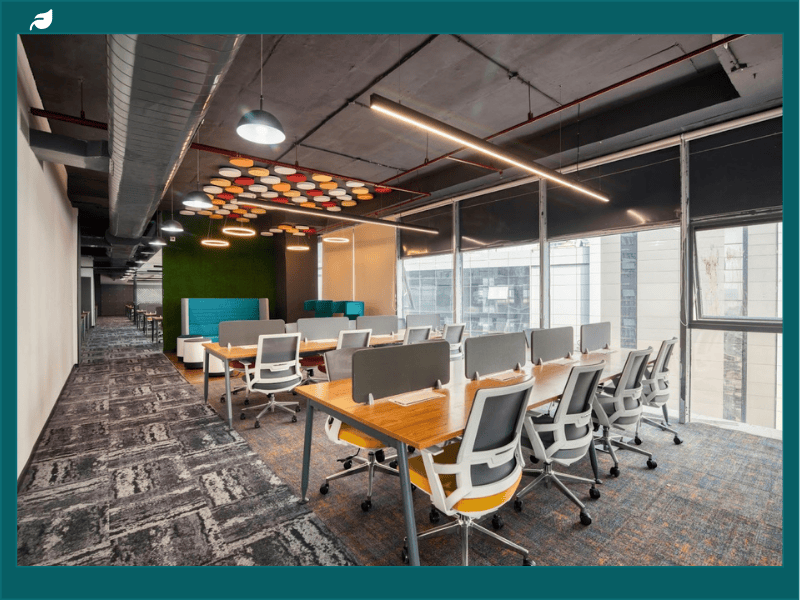
Creating a greener office requires low-effort strategies, such as procuring certified refurbished hardware, to reduce manufacturing emissions. Deploying energy-efficient modular privacy spaces instead of conditioning empty conference rooms also makes a huge impact.
These straightforward operational shifts bypass the need for expensive renovations or complex sustainability committees. By addressing the hidden environmental costs of standard procurement, businesses can achieve a drastically reduced carbon footprint while lowering expenses.
The environmental cost of running a typical office is often hidden in plain sight. Research indicates that the production of electronic devices accounts for approximately 60 to 80% of the environmental impact of the whole digital sector.
Choosing refurbished laptops cuts e-waste and extends device lifecycles significantly. This simple switch is a cornerstone of refurbished tech sustainability in any modern workplace.
Similarly, standard HVAC systems account for massive commercial building energy consumption, much of it spent conditioning empty rooms. Integrating office meeting pods contributes to energy-efficient, flexible workspaces that visibly reduce HVAC loads.
This approach promotes focused remote collaboration and serves as a prime example of eco-friendly workspace design. Shrinking a corporate footprint is much easier when organizations prioritize these smart green office solutions.
1. Buy Refurbished, Not New, to Slash Emissions
The single most impactful element in corporate sustainability planning is frequently buried deep within standard procurement workflows.
According to a survey, the carbon footprint of a laptop is on average around 330 kg of CO₂, which is equivalent to about 11 days of your total carbon footprint, or to a flight from London to Rome.
Certified refurbished hardware sidesteps this massive manufacturing burden entirely. Because the device already exists, the initial emissions are already spent.
Organizations upgrading their fleets have verified circular ecosystem options that extend hardware life by years. Extending a working lifespan absorbs sunk environmental costs and defers the production cycle that would eventually replace it.
For a practical example, a company looking to purchase new laptops for the office can choose PCLiquidations’ certified refurbished laptops, which help them avoid thousands of kilograms of emissions through a refurbished channel. That figure does not include water savings, reduced mining activity, or avoided shipping emissions.
Transitioning to refurbished technology requires evaluating vendors based on testing rigor and lifecycle capabilities. Establishments operating at scale typically process enterprise-grade hardware through strict data destruction protocols.
Thorough condition grading and standard warranties directly address the reliability objections that historically deterred IT managers. Using pre-owned equipment is now a highly reliable strategy for forward-thinking businesses.
The global e-waste problem gives this procurement shift immediate relevance. Data shows that in 2022, 62 Mt of e-waste was generated globally, equivalent to 1.55M 40-t trucks, and only 22% was recycled.
Global e-waste is projected to increase to 82 Mt by 2030, making hardware recycling incredibly critical. Routing hardware through certified disposition programs provides measurable contributions for essential corporate ESG reporting.
| Key Insight: 70 to 80 percent of a laptop’s lifetime carbon footprint is created before it ever turns on. Buying certified refurbished hardware completely bypasses this massive manufacturing emission burden. |
2. Swap Unused Rooms for Energy-Efficient Pods
The average conference room in a U.S. office building is occupied roughly 30 to 40 percent of the time it is booked. Despite this low use, it remains actively conditioned throughout the entire workday.
Running climate control and powered AV infrastructure for two people on a short call represents a massive continuous energy leak. Workplace utilization studies constantly highlight this widespread operational inefficiency.
The traditional fix involves building out smaller dedicated focus rooms, which requires permits and generates significant construction waste. Modular acoustic pods fill this gap effortlessly without requiring structural modifications.
Facilities managers frequently compare traditional builds against modular units that concentrate conditioned air strictly where occupants sit. The energy footprint of a focused conversation in a pod is a fraction of a full room.
Premium pods also deliver rigorous acoustic performance alongside their efficiency benefits. Certified testing confirms exceptional sound isolation and optimal reverberation times to ensure speech remains confidential.
PrivacyPod’s soundproof office meeting pods are particularly well-suited for organizations seeking high-performance solutions that maintain confidentiality without drilling for stones. This allows for private meetings without requiring heavily insulated drywall build-outs.
Many contemporary acoustic spaces utilize recycled materials, certified wood, and formaldehyde-free panels for a low embodied carbon profile. Multi-fan ventilation systems deliver fresh air efficiently without adding measurable load to the building’s central HVAC system.
Since installation requires no permanent modifications, zero construction waste is generated. Pods simply plug into standard power and relocate as headcount and work patterns evolve.
| Important: Traditional conference rooms are massive energy drains, often occupied only 30% of the time while actively conditioned all day. Avoid permanent structural builds and opt for energy-efficient modular privacy pods. |
3. Lock In Gains With Four Simple Habits
The first two strategies establish the foundation of a highly sustainable and efficient workspace. Implementing a maintenance layer of low-effort practices prevents backsliding over time.
These simple steps build a credible sustainability record that benefits both the environment and corporate operations. Following these guidelines ensures lasting structural improvements.
First, audit device lifecycles annually to track age, warranty status, and projected replacement windows. Identify units approaching end-of-life and route their replacements through certified refurbished channels rather than defaulting to new retail procurement.
Second, establish a formal IT asset disposition program to prevent decommissioned hardware from sitting in storage. Partnering with a certified provider ensures outgoing devices are wiped securely and recycled properly.
Third, pilot one or two pods before scaling them across the entire facility. Place a single acoustic pod in an area with high demand for private calls and compare room booking data. This concrete picture of freed square footage justifies expanding the pod footprint over time.
Taking a gradual approach allows for measured and documented improvements in the office layout.
Finally, track and report the specific metrics that matter most to your organization. Log the ratio of refurbished devices to new purchases and estimate the avoided emissions per device.
Tracking hardware units diverted from landfills supports recruiting in a market where professionals value environmental standards. Publishing an internal sustainability update signals a strong corporate commitment to employees.
| Pro Tip: Don’t let old hardware sit in storage as a data liability. Partner with a certified IT Asset Disposition provider to ensure secure data destruction and generate verified documentation for ESG reports. |
The Bottom Line
A greener office is not inherently tied to massive structural overhauls or inflated facility budgets. It is built on a series of basic purchasing and operational pivots that are economically smarter by design.
These shifts reduce overhead costs, extend the useful life of enterprise assets, and optimize resources. They also passively shrink the energy and material footprint of day-to-day operations.
Halting the automatic procurement of newly manufactured hardware in favor of certified pre-owned technology makes a tremendous difference.
Deploying modular privacy spaces rather than perpetually heating empty rooms fundamentally changes how businesses consume power. Both approaches strip the friction out of standard corporate environmental initiatives by minimizing resistance.
These low-effort strategies require no ongoing committee approvals or complicated management oversight. They deliver immediate, measurable improvements to the workplace ecosystem almost overnight.
By adopting these targeted actions, organizations can efficiently modernize their infrastructure. Ultimately, these steps lay the groundwork for a truly resilient and eco-conscious business model.