The Global Cement and Concrete Association (GCCA), established in 2018, is an industrial consortium which joins the world’s leading concrete and cement manufacturers to represent the aims and needs of the sector. The GCCA is composed of 40 industrial leaders including, for instance, Cemex in Mexico and CNBM in China.
The GCCA and its members have now announced their commitment to cut carbon emissions by 25% by 2030. The consortium claims the move – as part of their wider roadmap to a more sustainable industry, achieving full decarbonization or net-zero by 2050 – will remove almost 5 billion tonnes of carbon emissions from industry processes. According to the GCCA, their commitment is the biggest global pledge by an industry to achieve net-zero so far, partnering companies from across the Americas, Africa, Asia, and Europe.
As the GCCA points out, this is significant since cement production accounts for around 7% of global CO2 emissions. Yet, they note, the global concrete and cement products market is expected to almost double within the decade as governments across the globe invest in and repair infrastructure. As such, the consortium argues decarbonization must begin now; they are likewise calling upon policymakers, governments, and public authorities to join them in their support of a low-carbon future and the advancement of green industrial technologies.
“Global cooperation on decarbonizing concrete is a necessity, as countries developing their infrastructure and housing will be the biggest users of concrete in the coming decades,” said Thomas Guillot, Chief Executive of the GCCA. “Concrete is the world’s most used building material and provides the foundation for renewable energy transition, resilient infrastructure and new homes around the world. I am proud of the commitment made by our members today to take decisive action and accelerate industry decarbonization between now and 2030, an important milestone towards the ultimate goal of net zero concrete.”
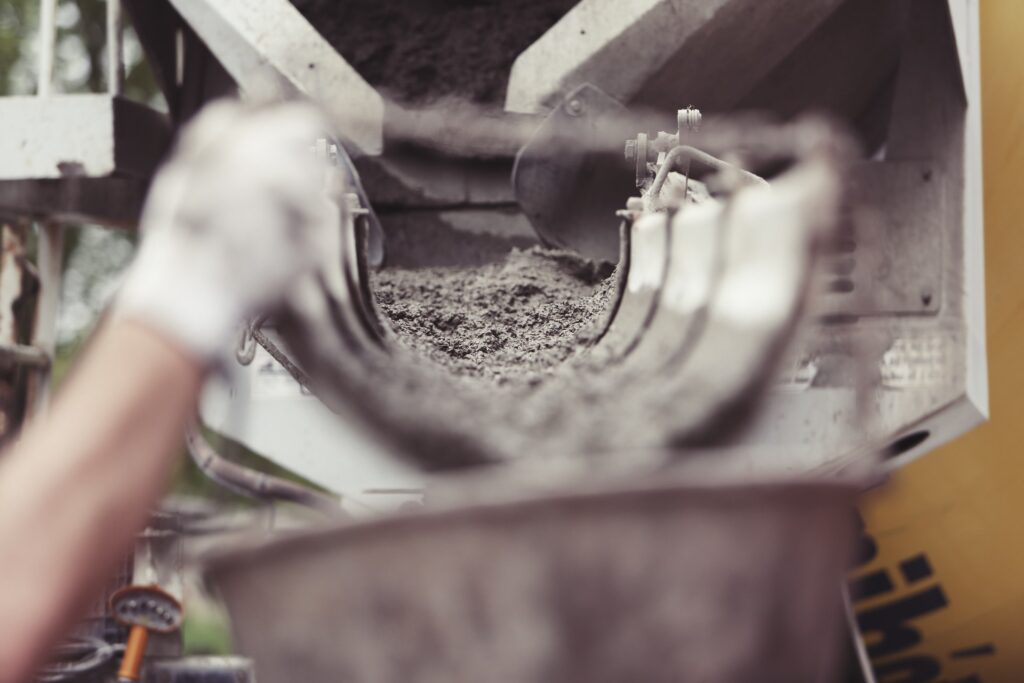
The GCCA observes that 14 billion cubic meters of concrete is produced annually for various purposes: highways and bridges, tunnels and buildings, hydropower installations and weather defenses. Though strong, resilient, and accessible, the environmental consequences of such a compound cannot be overlooked.
“I envision a world in the not too distant future where the foundation of a sustainable, zero carbon global economy will literally be built with green concrete,” said Mr. Guillot. “We now need governments around the world to work with us and use their huge procurement power to advocate for low carbon concrete in their infrastructure and housing needs. We require their support to change regulation that limits the use of recycled materials and impedes the transition to a low carbon and circular economy.”
The roadmap announced by the GCCA is constructed around a seven-point plan that insists upon the necessity of reducing the amount of carbon dioxide-intensive clinker in cement, in turn reducing the overall fossil fuel usage in concrete manufacturing and accelerating carbon neutrality and innovation within the industry.
“I invite all cement companies to join this vital endeavour,” commented António Guterres, Secretary-General of the United Nations. “The transition cost should not be borne only by the first movers. I call on all governments and relevant actors to align public and private finance and procurement to create strong markets for net zero-aligned industrial production and develop national sectoral roadmaps towards net zero emissions. Three quarters of the infrastructure that will exist in 2050 has yet to be built. Without credible action now, future generations will have no liveable planet to build upon.”