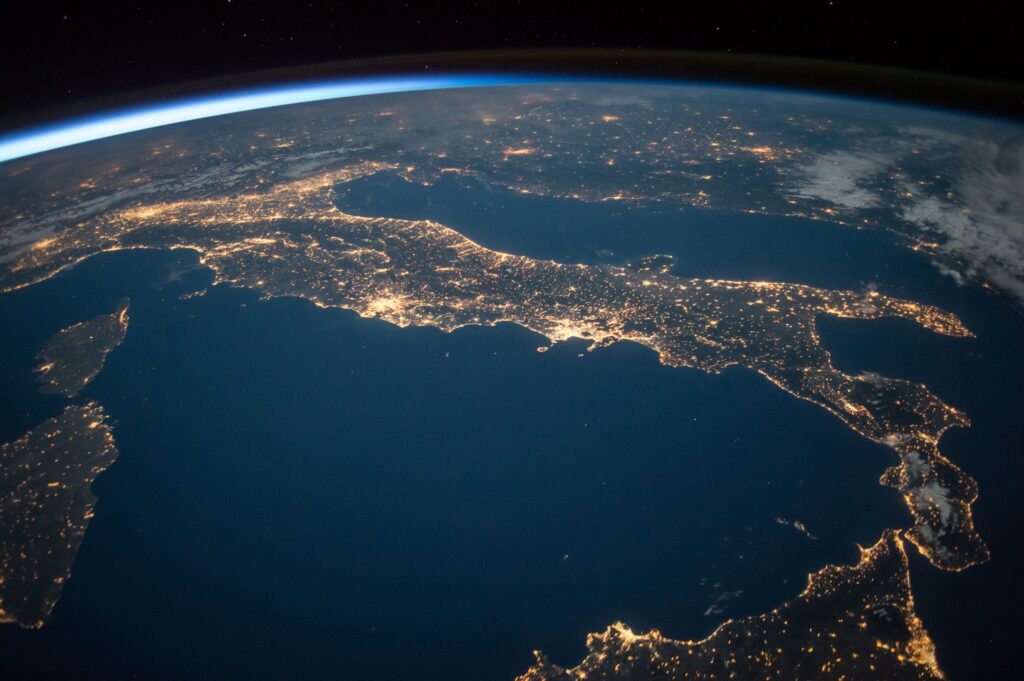
The launch is set to bring South Africa to the forefront of the new space race – but, amid the devastation of our current climate crisis, is now really the time to be exploring space?
The South African government has announced the launch of a locally-produced nanosatellite constellation, the first of which to be developed entirely on the African continent.
The launch of the Maritime Domain Awareness Satellite constellation is part of Elon Musk’s SpaceX Transporter-3 mission, following three years after the launch of the ZACube-2, South Africa’s most advanced constellation to date.
“Since its launch in 2018, ZACube-2 has been providing cutting-edge very high frequency (VHF) data exchange communication systems to the country’s maritime industry,” said Dr Blade Nzimande, Minister of Higher Education, Science and Innovation.
According to Dr Nzimande, the satellite launch will benefit South Africa’s economy in numerous ways. “[MDASat-1 will] help the country to capture a valuable share of a niche market in the fast-growing global satellite value chain.”
Not only this, but Nzimande believes the constellation will contribute towards Operation Phakisa, a program launched by the government to encourage economic growth within the Ocean’s Economy.
The purpose of the MDASat constellation is to detect, identify, and monitor vessels, further aiding South African maritime domain awareness.
In spite of these economic benefits, however, there are growing concerns regarding the environmental issues prevalent in South Africa.
The oil company Shell is currently embroiled in a legal battle over their intentions to conduct seismic surveys across the Wild Coast of South Africa, famed for its natural beauty and wildlife.
Allowing the surveys to go ahead will not only impact natural habitats, but also the local fishing and eco-tourism industries.
Pollution has also been a longstanding problem in the country, with only recently the collapse of a coal mine dam in KwaZulu-Natal causing polluted waste to flow through rural communities and wildlife conservation areas.
Space exploration in itself is also highly damaging to the environment: the burning of rocket fuels contributes to a large carbon footprint. Ultimately, the environmental crises already present in South Africa brings into question the necessity of space exploration in this current climate.