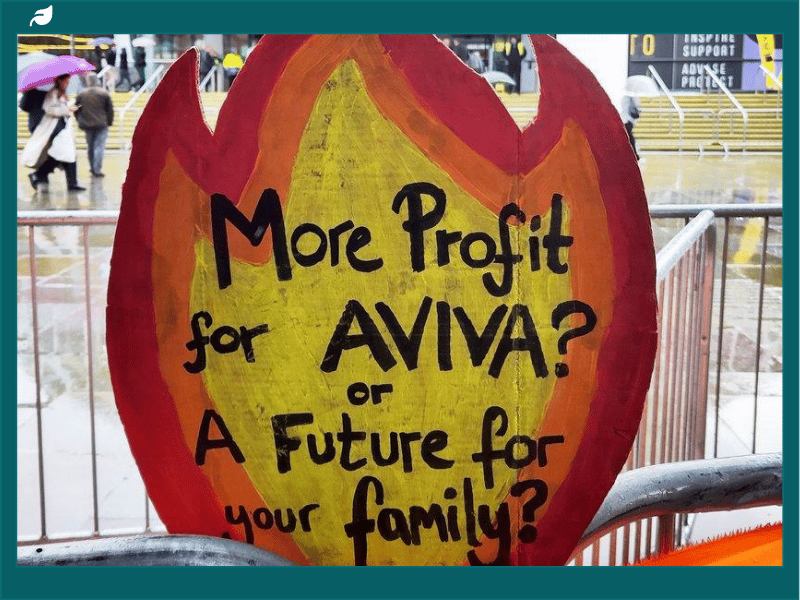
The insurance industry faced direct confrontation over its climate policies as Extinction Rebellion Manchester activists staged a protest outside the British Insurance Brokers’ Association (BIBA) Conference in Manchester. Thirteen campaigners gathered at Manchester Central Convention Complex on 13 May, targeting major insurers including Aviva, Chubb, and AXA with pointed questions about their continued support for fossil fuel projects and controversial industries. The demonstration highlighted how insurance companies enable environmentally destructive activities through their underwriting policies, with activists displaying flame-shaped placards and climate-themed banners to conference attendees.
Industry’s Environmental Accountability Under Scrutiny
The protest directly challenged BIBA’s conference theme “Time: To Address the Burning Questions” by posing equally urgent questions to attending insurers. Campaigners distributed leaflets detailing the environmental impact of the insurance industry whilst displaying a large orange banner reading “Time: To address the burning questions” alongside imagery contrasting environmental destruction with renewable energy solutions.
The demonstration featured a person dressed as the Grim Reaper, symbolising what activists described as the deadly consequences of climate breakdown and human rights abuses linked to industries insured by major conference attendees.
An Extinction Rebellion Manchester spokesperson said:
“Insurance companies help make destructive industries possible. Without insurance, new fossil fuel projects can’t go ahead, pipelines are not built, and weapons manufacturers cannot operate. BIBA’s conference theme this year is ‘TIME: To Address the Burning Questions’. We agree. It is time to ask why insurers continue to profit from industries linked to climate destruction, war and human suffering. We want a liveable future for everyone, not huge profits for a few.”
Major Insurers Face Fossil Fuel Exposure
The activists presented detailed research on leading insurers’ fossil fuel underwriting activities. Chubb recorded $745 million in fossil-fuel Gross Direct Premiums Written (GDPW) in 2024, positioning it as the world’s third-largest fossil-fuel underwriter by this measure. The company has received low scores from Insure Our Future for its underwriting policies on fossil fuels.
AXA recorded $595 million in fossil-fuel GDPW in 2024, ranking seventh globally for fossil-fuel underwriting, whilst also insuring the Cameron LNG terminal in Louisiana. Insure Our Future has similarly criticised AXA’s oil and gas underwriting policies.
Markel explicitly markets underwriting services for upstream, midstream and downstream oil and gas operations, recording $305 million in fossil-fuel GDPW in 2024 and ranking 27th globally among fossil-fuel underwriters. Allied World, through its parent company Fairfax, is linked to $720 million in fossil-fuel GDPW in 2024, making it the world’s fourth-largest fossil-fuel underwriter by this measure.
Human Rights Concerns Beyond Climate
The protest expanded beyond environmental issues to highlight human rights concerns within the insurance sector. Aviva is among insurers underwriting or investing in UK detention, accommodation, and surveillance contractors, including Serco and G4S, which face accusations of human rights abuses.
Intact’s insurance coverage of Boeing and investments in companies linked to Israel’s military operations in Gaza drew particular scrutiny, with activists highlighting the use of US-made JDAMs in multiple Israeli strikes in Palestine.
Insurance Industry At Crossroads
The Manchester protest represents growing pressure on the insurance sector to align its practices with climate commitments and human rights standards. BIBA represents insurance brokers and intermediaries nationwide, making its annual conference a strategic target for activists seeking to influence industry policy.
The demonstration called on insurance brokers attending the conference to challenge insurers over their underwriting policies and investment decisions, positioning brokers as potential agents of change within the sector. This approach recognises the interconnected nature of the insurance ecosystem, where brokers serve as intermediaries between insurers and clients seeking coverage for potentially controversial projects.
As the insurance industry grapples with its role in enabling or constraining environmentally and socially harmful activities, the Manchester protest highlighted the tension between profitability and sustainability that defines much of the current corporate climate debate.