Burckhardt Compression has doubled the mean time between failures of a critical dry-running compressor serving a refinery hydrocracker hydrogen application. Working through an existing service agreement, the company deployed its PROGNOST®-NT 360° digital condition monitoring system and upgraded sealing components with Redura® designs and Persisto® 850 material. Mean time between failures rose from below 8,000 hours to more than 16,000 hours, while availability increased and operating costs fell. The project illustrates how targeted engineering work and condition data can improve the dependability of ageing assets in hydrogen production.
A Critical Hydrogen Asset
Compressor reliability is central to operational efficiency where hydrogen is supplied to a refinery hydrocracker. An unplanned interruption can affect the wider process, placing a premium on identifying equipment issues before they develop into failures.
The industrial gas facility had experienced repeated failures involving key components on its critical compressor. With mean time between failures consistently below 8,000 hours, the operator lacked a clear explanation for the equipment’s performance and needed a more detailed view of its operating condition.
The work focused on a dry-running compressor, where dependable operation matters both for production continuity and for planning maintenance around the machine’s actual needs. The approach provided a route to investigate recurring issues rather than continuing with fixed maintenance intervals alone.
Condition Data Identifies Causes
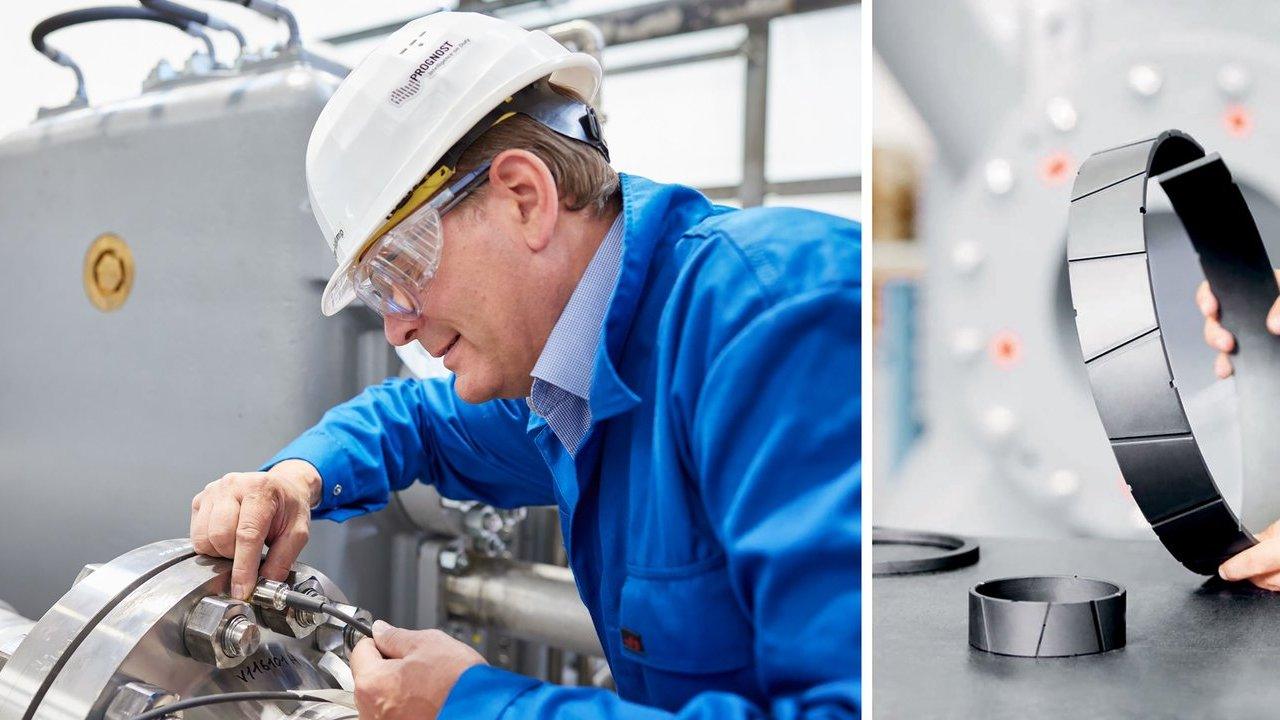
Burckhardt Compression temporarily installed its PROGNOST®-NT 360° digital condition monitoring system under the existing service agreement. The system supplied real-time data to original equipment manufacturer experts and machine diagnostic specialists, allowing developing issues to be detected early and abnormal behaviour to be investigated.
The monitoring arrangement also checked the correct operation of the compressor’s stepless flow control system. Remote access to specialist expertise enabled potential issues to be diagnosed quickly, including outside normal operating hours, helping the operator reduce the risk of an unexpected shutdown.
Continuous machine data supplied a clearer basis for assessing component condition and failure patterns. This created a stronger connection between routine maintenance decisions and the operating state of the compressor.
Targeted Reliability Improvements
Condition monitoring was paired with engineering changes intended to address known failure points. Following the analysis, the compressor’s sealing elements were upgraded using the latest Redura® designs and Burckhardt Compression’s proprietary Persisto® 850 material.
The combined work delivered a marked change in reliability. Mean time between failures more than doubled, rising from less than 8,000 hours to more than 16,000 hours. Compressor availability also increased, while operating costs were reduced.
For an operator managing critical compression equipment, the result demonstrates the value of combining diagnostic insight with component improvements. The project moved maintenance planning closer to the equipment’s measured condition, instead of relying solely on scheduled interventions.
Expanding The Monitoring Programme
The operator will now install a permanent PROGNOST-NT system at a sister hydrogen plant. It will monitor a similar compressor that has been in operation for 40 years, extending continuous visibility of equipment health to another important asset.
The permanent installation includes a SIL3 emergency shutdown function to support personnel safety and asset protection. Regular data assessments by Burckhardt Compression experts will support a longer-term predictive maintenance programme at the site.
The expansion signals confidence in condition-led maintenance as a practical route for extending the reliable operation of established compression equipment. It also shows that older machinery can benefit from digital monitoring when expertise and component knowledge are applied alongside the data.
Predictable Maintenance For Hydrogen Operations
As hydrogen production systems depend on reliable compression, avoiding unplanned equipment failures remains an important operational priority. This project demonstrates that digital condition monitoring can offer more than early warning when it is connected to detailed machine diagnostics and targeted engineering changes.
By identifying root causes, improving sealing elements and maintaining expert oversight, Burckhardt Compression helped turn a recurring reliability issue into a more predictable maintenance strategy. The resulting increase in uptime offers a useful example for operators seeking fewer failures and stronger reliability from critical compressor assets.