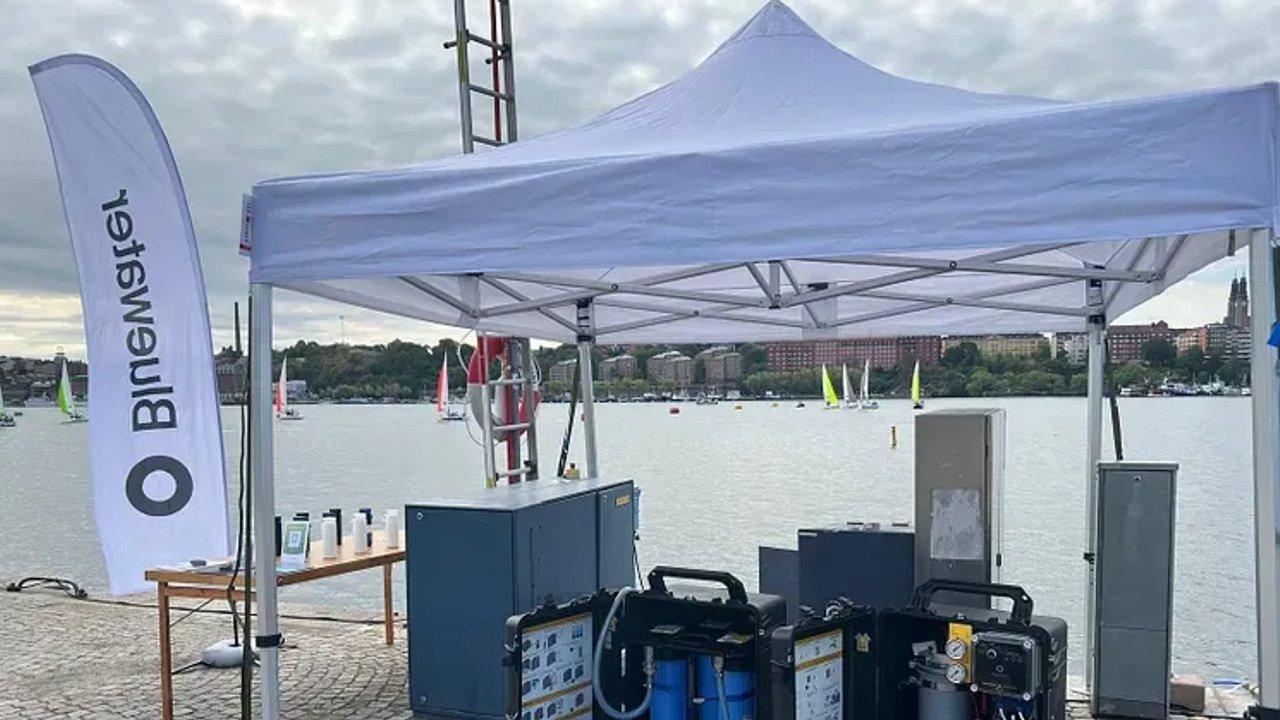
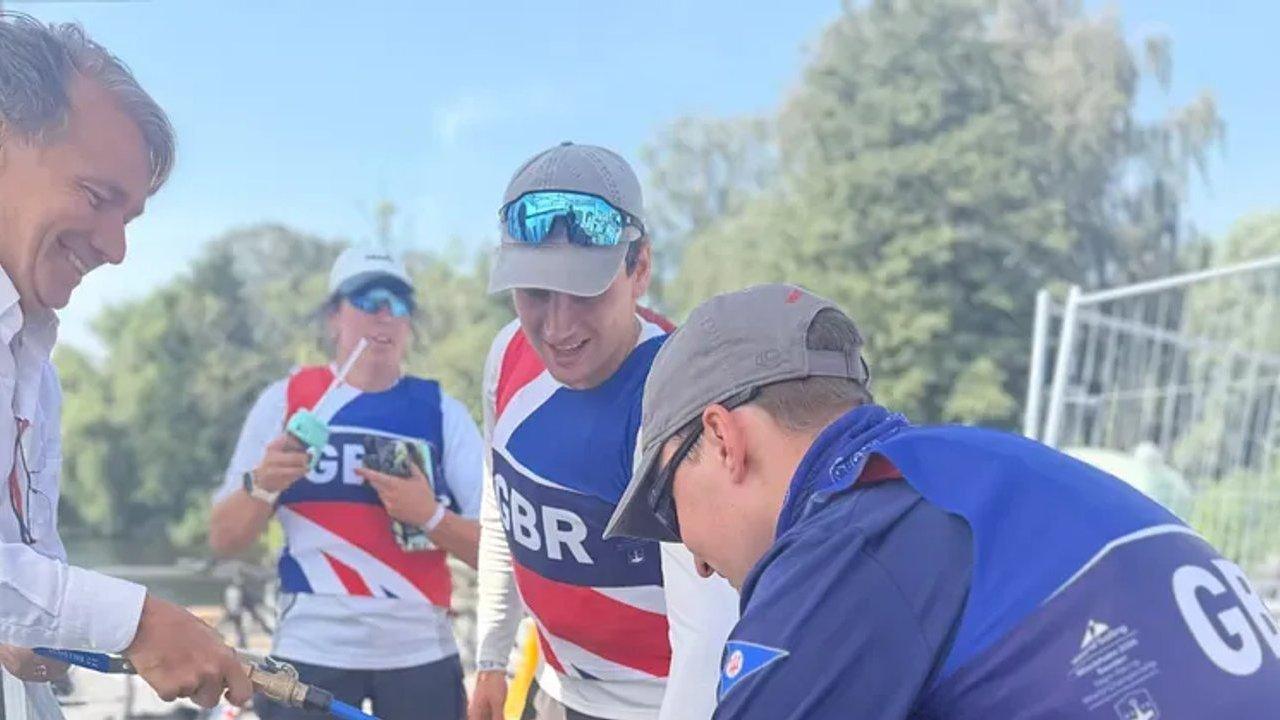
Bluewater is supplying fresh drinking water drawn from the Baltic Sea during the Team Racing World Championship in central Stockholm, demonstrating a portable response to water security at a major sporting event. Its Emergency Water Station is serving sailing crews, spectators and visitors on Riddarfjärden beside Stockholm City Hall. The system uses multi-stage purification including reverse osmosis and can produce up to 20,000 litres of purified water a day. The championship brings together 12 national teams and 96 sailors racing identical J/80 keelboats.
Water At The Point Of Need
Bluewater’s deployment puts the event’s surrounding waterway at the centre of the story. Stockholm is built around water, but the Baltic Sea faces pollution, eutrophication, hazardous substances and marine litter. The company’s approach is to purify locally available water where it is needed, reducing reliance on bottled water transported to an event or community.
The Emergency Water Station is designed for mobility, packing into two rugged cases for rapid deployment. It can operate without fixed water infrastructure, using multiple treatment stages to remove contaminants and create drinking water from local sources. In Stockholm, this turns the water beneath the competing boats into a visible example of decentralised water provision.
Bengt Rittri, Founder and CEO at Bluewater, said:
“We are moving into a period when both water availability and water quality are coming under increasing pressure. Europe is already experiencing extreme temperatures, drought and devastating wildfires. No one needs a science degree to understand that society has to prepare for a more challenging future — and water resilience has to be part of that preparation.”
Portable Purification Capacity
The EWS is built around advanced reverse osmosis and is intended to produce large volumes of fresh water at the point of need. Bluewater says the unit can generate up to 20,000 litres per day, positioning it for use where conventional water networks are unavailable, disrupted or insufficient.
For an event setting, the format provides a practical alternative to the transport and disposal associated with single-use bottled water. The model also has relevance for emergency services and organisations needing a flexible source of clean water, particularly when dependable access to drinking water is under pressure.
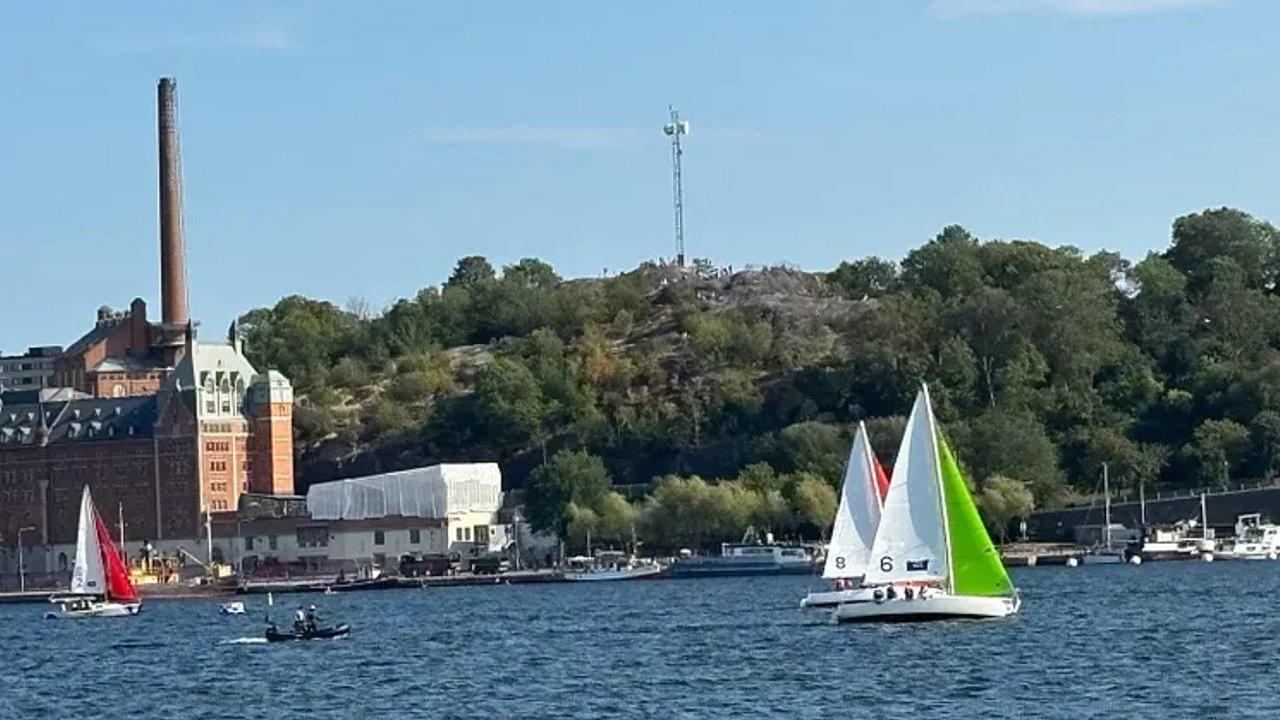
The sailing championship offers a fitting setting for the demonstration. Team racing requires crews to perform in two-boat-against-two-boat competition, where speed, precision and teamwork are central. Bluewater’s installation places equal attention on the practical value of reliable drinking water at a gathering dependent on the marine environment.
A Kungsholmen Resilience Scenario
Bluewater has used Kungsholmen, the district hosting the championship, to illustrate the potential role of distributed purification in a disruption scenario. The district has approximately 71,600 residents. At a daily requirement of two litres of drinking water per person, demand would amount to around 143,200 litres.
A unit delivering 10 litres a minute could produce approximately 14,400 litres daily. On that basis, 10 units could theoretically supply two litres of drinking water a day for every Kungsholmen resident. Bluewater makes clear that the calculation is not intended as a replacement for Stockholm’s municipal water system, but as an illustration of how deployable treatment capacity could support resilience when conventional infrastructure is disrupted.
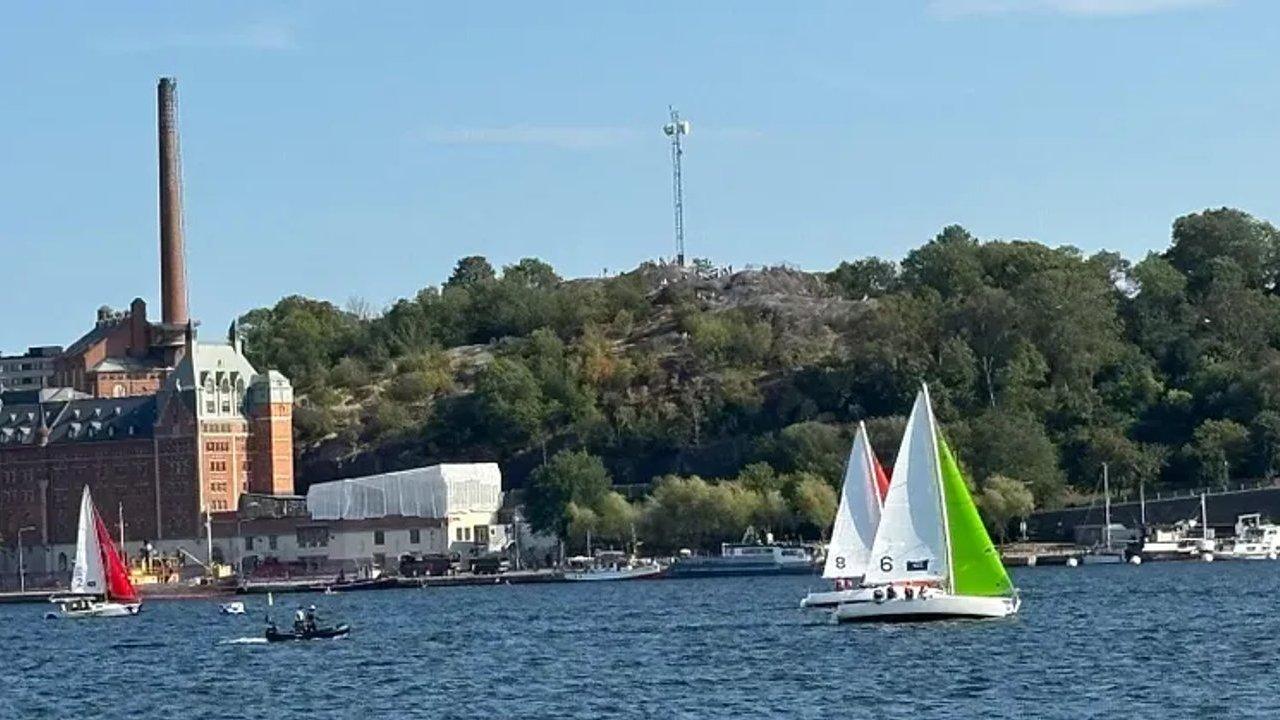
This kind of distributed capacity is increasingly relevant to community preparedness. Rather than depending solely on a centralised network, portable purification can provide an additional option for maintaining drinking water supplies close to where people are located.
Interest From Public Services
Bluewater reports that the Swedish Armed Forces have recently placed a substantial order for Emergency Water Stations, including a specialised version designed to operate in polar environments and extremely low temperatures. The company also says interest is increasing among military, civil defence and police organisations internationally.
That demand reflects the versatility of a system able to be moved, set up rapidly and supplied from locally available water. Its use at the Stockholm championship demonstrates the same operational principle in a public setting, while placing the issue of water resilience before an international audience.
Bengt Rittri, Founder and CEO at Bluewater, said:
“We cannot live without water. Yet we continue to pollute our water resources, waste water, and underinvest in the infrastructure needed to protect them. We need to act now to protect our children, grandchildren and future generations from a water crisis that could become impossible to manage.”
A Visible Water Resilience Test
Bluewater’s Stockholm installation makes the case for water treatment that is both practical and deployable. By converting Baltic Sea water into drinking water during an international sailing championship, the company is illustrating how treatment technology can bring supplies closer to users, even in locations without a conventional source of fresh water.
The demonstration does not diminish the need for maintained municipal networks and protected water resources. Instead, it presents portable purification as a valuable complementary layer for events, communities and public services. With water quality and availability under pressure, Bluewater’s approach offers a clear, tangible model for preparedness.