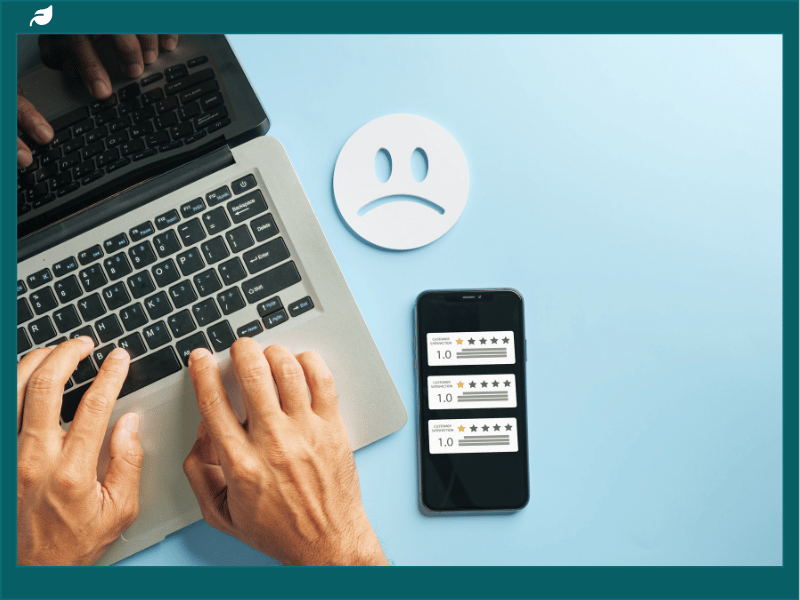
As regulators and customers ask for evidence rather than promises, companies are turning to data to stand behind what they say about their supply chains.
A decade ago, a line about responsible sourcing on a packet or in an annual report was rarely challenged. That era is ending. Regulators across Europe are tightening the rules on environmental claims, watchdogs are quicker to call out anything that looks like greenwashing, and customers have grown sceptical of language they have heard too many times. The claim itself is no longer the point. The proof behind it is.
Proving a sustainability claim is far harder than making one, because most of what a business is claiming happens somewhere it does not directly control. A promise about a lower-carbon product or a fairly treated workforce usually rests on a chain of suppliers, and their suppliers in turn, stretching across borders and out of easy view. Closing the gap between what a company says and what it can show has become one of the defining challenges of responsible business.
When a Claim Meets a Complex Supply Chain
For most companies, the bulk of their environmental and social footprint sits outside their own operations. The emissions, the water use and the labour conditions that matter most are usually those of their suppliers, and often of firms several steps removed that the buyer has never dealt with directly. A company can audit its own factory floor to the last bolt and still be blind to what happens three suppliers upstream.
That is what makes verification so difficult. A statement such as “responsibly sourced” is only as reliable as the visibility behind it, and visibility tends to fade further down the chain. The companies taking this seriously have accepted that they cannot simply take a supplier’s word for it. They need evidence, and increasingly they need to gather it themselves.
Building the Evidence Base
A great deal of the raw material for that evidence is already public. Suppliers publish certifications, policies and audit summaries. Retailers list products and the claims attached to them, market by market. Regulators, NGOs and certification bodies maintain registers that anyone can consult. The information exists; the difficulty is pulling it together into something coherent.
Assembling a picture that spans dozens of markets is largely a data exercise. The same corporate page can carry different wording, or a different environmental label, depending on the country it is served to, so a claim examined from a single location gives only a partial view. The way around this is a fixed vantage point inside each market. An ISP proxies provider supplies a static local address inside the country being examined, and the page it returns is the one a shopper there actually loads, not the version served to head office. Because the same address holds over months, an investigator can come back to it and see whether a claim has quietly changed since the last visit.
The gathering is only the start. The data then has to be cleaned, matched against the claims being made, and checked for the gaps and contradictions that matter. Done well, it turns a vague sense that something does not add up into a specific, documented question a business can act on.
Where the Gaps Show Up
The same evidence base that supports honest claims is what exposes weak ones. When a product marketed as sustainable in one market carries no such claim in another, or when a supplier’s public certifications have quietly lapsed, the discrepancy is visible to anyone prepared to look. Regulators and campaign groups increasingly are looking, and the reputational cost of being caught overstating a claim now tends to outweigh whatever the claim was worth.
For responsible businesses, this scrutiny is less a threat than a discipline. Knowing that a claim can and will be checked encourages companies to make only the claims they can support, and to fix the problems they find rather than paper over them.
Why Transparency Pays
Treating verification as a cost to be minimised misses the point. The businesses that invest in it do so because the evidence is worth having.
- Regulation is converging on disclosure. Rules such as the EU’s corporate sustainability reporting and due diligence requirements expect companies to know and report what happens in their supply chains, not merely to hope for the best.
- Customers and investors reward credibility. A claim backed by evidence carries weight that a slogan does not, and it is increasingly a condition of winning contracts and capital.
- Visibility builds resilience. A company that can see into its supply chain spots disruption, risk and abuse earlier than one that cannot.
From Monitoring to Measurable Change
Data on its own changes nothing. Its value lies in what a business does with what it finds, and the organisations getting this right treat verification as the first step in a longer process rather than an end in itself. A lapsed certification becomes a conversation with a supplier. A pattern of concerns in one region becomes a targeted audit, or the trigger for a partnership to address the root cause. The measurable environmental and social improvements that follow are the real return on the effort, and they are what separates genuine progress from a well-worded report.
That shift, from asserting to demonstrating, is quietly reshaping how sustainability is done. Transparency is no longer a communications exercise bolted on at the end. It is becoming part of how responsible companies operate.
The Direction of Travel
The pressure to prove rather than promise will only grow. Regulation is tightening, scrutiny is sharper, and the tools to check a claim are more accessible than they have ever been. For any business that makes public claims, the practical upshot is that each one should be treated as something a regulator, an investor or a journalist may one day pull the thread on. Companies that build for that reality will carry the scrutiny comfortably. The ones that do not will find it an expensive surprise.
FAQ
What is supply chain transparency, and why does it matter?
It is the degree to which a company can see, and show, what happens across its network of suppliers, from raw materials to finished goods. It matters because most of a business’s environmental and social impact sits in that chain, so a claim about sustainability is only as credible as the visibility behind it.
What counts as evidence for a sustainability claim?
Credible evidence usually combines several sources: supplier certifications and audits, independent verification, and publicly available information such as regulatory registers and the claims a company makes in different markets. The strongest cases cross-reference these rather than leaning on any single document.
How does public data help detect greenwashing?
Because inconsistencies tend to surface in the open. A product presented as sustainable in one market but not another, or a certification that has expired, is visible in public information. Comparing what a company says across markets against the record is one of the most direct ways to test whether a claim holds up.
Which regulations are pushing companies towards proof?
In Europe, corporate sustainability reporting and due diligence rules now require many companies to understand and disclose the impacts in their supply chains, while separate measures are tightening the rules on environmental claims made to consumers. Together they are moving the baseline from voluntary storytelling towards documented accountability.