


The Offshore Wind Growth Partnership has awarded seven UK companies a share of £1m to progress near-to-market offshore wind technologies. The Innovation Funding programme backs projects spanning robotic inspection, digital twins, floating wind anchors and electrical connection systems, with support focused on foundations and substructures, alongside substations and electrical design. Acuity Robotics, Akselos, Crondall Energy, Fathom, Quoceant, Sperra Seaworks and T12 Engineering will now develop solutions intended for commercial deployment. The competition draws on industry insight from Equinor and SSE, and is funded by the Offshore Wind Industry Council.
Targeting Supply Chain Growth
The awards are designed to reinforce UK capability in parts of the offshore wind supply chain where turbine scale, water depth and project complexity are creating new engineering requirements. The funded businesses are based across Scotland and the north and south of England, illustrating the geographical spread of specialist expertise supporting the sector.
OWGP has directed the funding towards priorities identified by the Industrial Growth Plan. Foundations and substructures are identified as a potential £209 billion global market opportunity, with industrialised production, automation and new installation approaches expected to become increasingly relevant as offshore turbines grow in size and move into deeper waters.
Electrical systems are another focal point. The programme recognises the UK’s established expertise in electrical engineering and offshore systems, and supports technologies aimed at higher-capacity transmission, more complex offshore networks and future deployment needs.
Tom Speedie, Project Manager at the Offshore Wind Growth Partnership, said:
“These awards reflect OWGP’s commitment to backing the technologies and businesses that can strengthen the UK’s offshore wind supply chain for the long term.
The quality and ambition of the applications we received demonstrate the depth of ingenuity across the supply chain – now it’s time to bring those innovative ideas to life.
We’re excited to support these companies as they take their next steps towards commercialisation. As these businesses grow, so too does the opportunity to create skilled jobs, attract investment and deliver economic benefits in the communities where they are based.”
Seven Technologies Selected
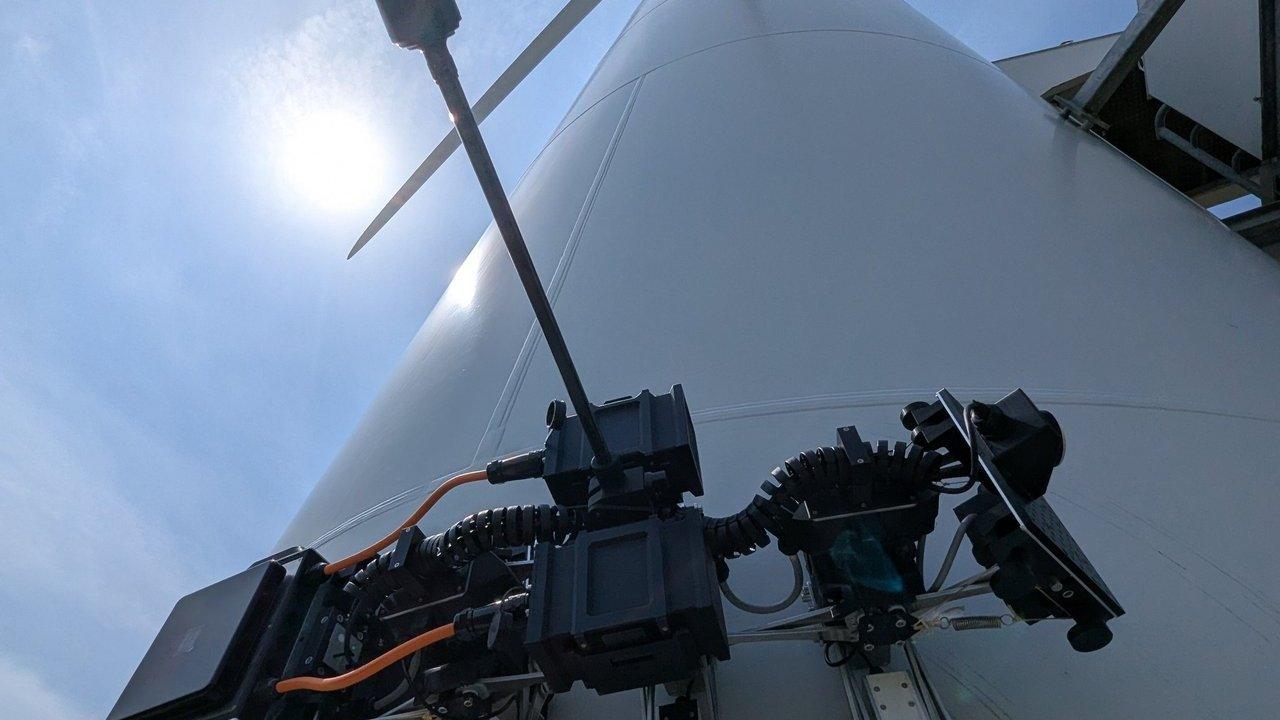
The successful projects cover a range of practical offshore wind applications. Acuity Robotics is developing Squirrel, a remotely enabled robotic inspection system for offshore monopile transition pieces. Akselos is working on a high-fidelity Design for Manufacture and Assembly optimisation framework for industrial-scale UK offshore wind substructures.
Crondall Energy’s SafeMoor project will move into its service build-out phase. Fathom is benchmarking and productising a Bayesian model updating module within METHOD, its physics-based digital twin platform for offshore wind farms.
Quoceant’s 66kV Q-Connect project will progress from design to demonstration, while Sperra Seaworks is undertaking project-specific design and technology qualification for a low-cost, low-carbon concrete suction anchor for UK floating offshore wind. T12 Engineering is developing a floating mooring system with an installation and maintenance tooling ecosystem.
Together, the projects address both asset performance and the commercial conditions needed for UK-developed technologies to compete in international offshore wind markets. The programme’s focus on evidence generation and readiness for deployment is particularly relevant for technologies seeking to progress beyond early development.
Industry Insight Shapes Competition
Equinor and SSE acted as Industry Champions for this year’s competition, helping align the funding call with the immediate requirements and longer-term priorities of offshore wind developers. Their involvement links the selected technologies to the practical demands of projects operating at greater scale and in more challenging marine environments.
Tom Nightingale, Local Supply Chain Manager (UK), Power at Equinor, said:
“This funding targets areas that will be critical to delivering the next generation of offshore wind projects. We were pleased to provide industry insight to help ensure the competition reflects market needs and supports UK companies with strong commercial potential.
As projects increase in scale and move into deeper waters, innovation in manufacturing, structural design, power transmission and system integration will be essential. Supporting these technologies will help improve efficiency, strengthen supply chain resilience and enable the UK to compete in global offshore wind markets.”
The selected work reflects the close relationship between physical infrastructure and system design in offshore wind. Improvements in foundations, moorings and anchors can support the development of larger and floating installations, while advances in electrical design can help projects manage higher-capacity generation and more sophisticated offshore networks.
Route Towards Commercial Deployment
The seven companies will work with OWGP during the next phase of their projects to develop their technologies, build evidence of performance and prepare for future commercial opportunities. This emphasis on market readiness gives the programme a clear role in bridging the gap between promising engineering concepts and solutions that developers can adopt.
James Lightfoot, Senior Innovation Manager, SSE, said:
“The UK has a strong opportunity to develop small and medium-sized enterprises and their technologies to support the delivery of future offshore wind projects, creating jobs, strengthening UK supply chains and unlocking long-term economic value for the country. This funding will help UK-based companies test and commercialise innovative solutions, bringing new technologies closer to deployment in support of secure, homegrown energy.
For developers, proven technology reduces risk and increases confidence in project delivery. That can help drive greater efficiency, support cost reduction and expand the range of competitive UK supply chain options available to the sector.
We look forward to seeing these companies progress their technologies and contribute to the continued growth of the UK’s offshore wind industry.”
Building UK Offshore Capability
The awards offer a focused investment in the technical building blocks required by an expanding offshore wind market. From inspection and digital modelling to substructures, anchors, moorings and grid connections, the funded projects address areas where reliable, scalable technology will matter to project delivery.
For the UK supply chain, the programme presents a constructive route for specialist businesses to demonstrate performance, strengthen commercial propositions and build on domestic engineering capability. With a £209 billion global opportunity identified in industrial foundations and substructures alone, supporting deployable technologies could help UK companies secure a stronger position in the offshore wind value chain.










