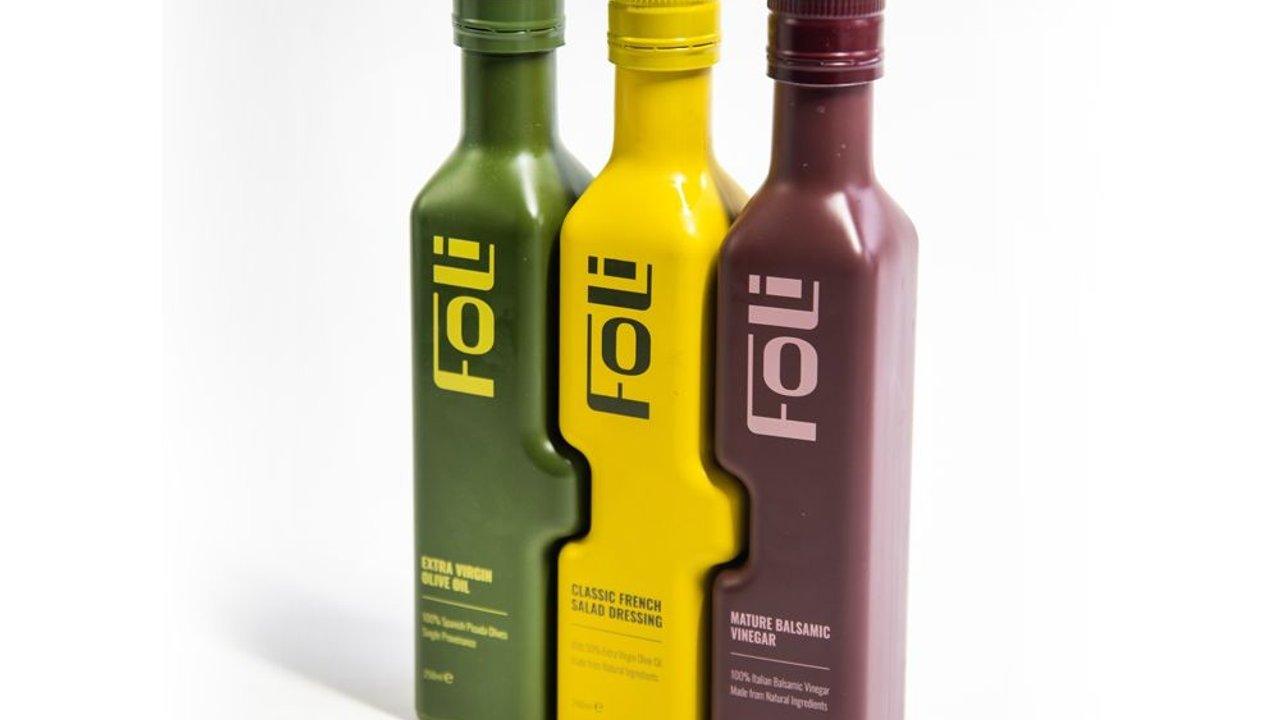
Easyfairs will bring FOLI founder Nohra Currie to London Packaging Week 2026, where the emerging condiment brand’s unusual interlocking bottles will be discussed as an example of category convention being challenged. FOLI’s range comprises Extra Virgin Olive Oil, Classic French Salad Dressing and Mature Balsamic Vinegar from Modena, presented in sculptural glass packs designed to connect as a set. The brand launched in 2026, has secured a Harrods listing and is stocked through a growing network of independent retailers. Currie will appear at London Packaging Week at Excel London on 16 September alongside HairGym Co-Founder Arianna Broderick and Citizens of Soil Head of Operations Natalie Williams.
From Salad Dressing To Brand
FOLI began with Currie’s dissatisfaction with a shop-bought salad dressing rather than a conventional packaging or brand-development brief. Growing up near Lyon, she had been accustomed to fresh produce, olive oil and homemade vinaigrette, and her experience of packaged dressings prompted a search for ingredients that better reflected those expectations.
The resulting product range brought together three staples intended for use and display on the dining table. Currie sourced olive oil and balsamic ingredients in Italy and Spain, before considering how the products could be sold as a coherent proposition.
Nohra Currie, Founder at FOLI, said:
“There are lots of them, but I realised there wasn’t really a good one. They’re all made with refined oil, a lot of sugar and a lot of water. It’s a lot of nothing in a bottle. It’s really industrial.”
Her early focus on the contents of the bottle is central to FOLI’s positioning. The packaging arrived after the products had been defined, with the aim of giving everyday condiments a more permanent and considered place in the kitchen and on the table.
An Interlocking Glass System
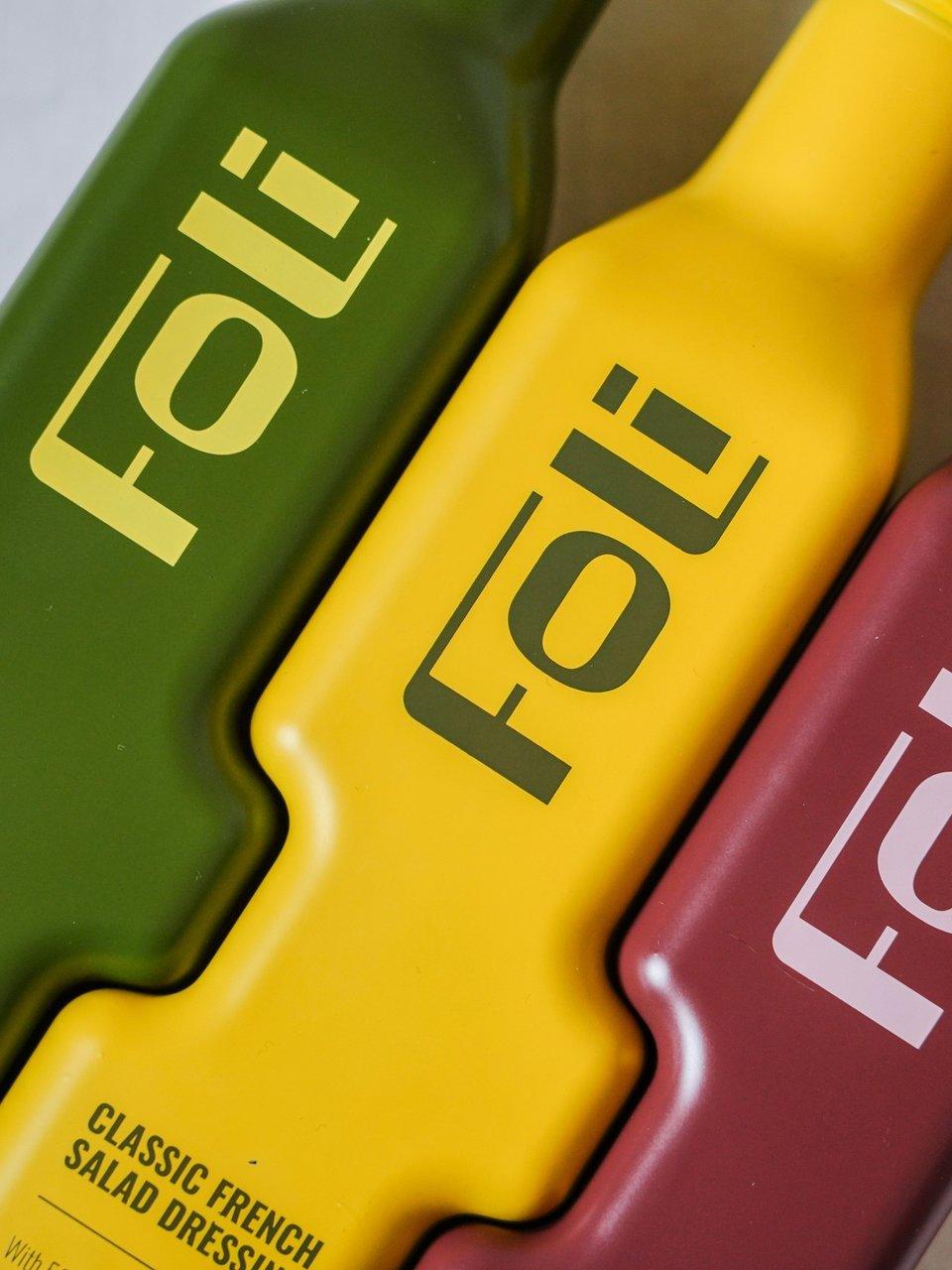
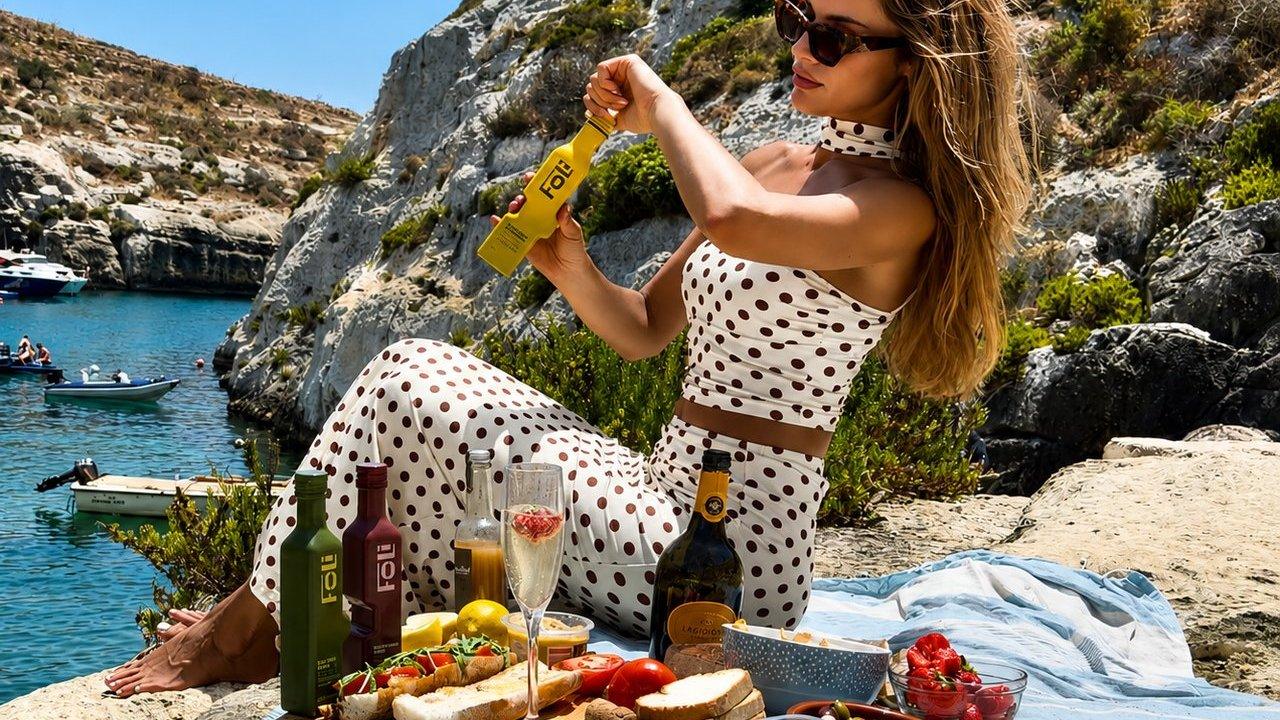
FOLI’s registered design centres on glass bottles that physically interlock. Together, the three bottles create a single composition, while each individual unit retains a distinctive silhouette. Different colours identify the products and make the collection visually recognisable without relying on the familiar visual codes of the condiment aisle.
The system was also conceived to accommodate growth. Additional bottles can be designed to sit between existing forms, enabling a future range of four, five or more products to retain the same connected architecture. This gives the packaging a role beyond containment, creating a reason for shoppers to build a collection over time.
Nohra Currie, Founder at FOLI, shared:
“I started to play with colours and pastels, and I could see straight away that it was so attractive. I knew I had something a bit special very quickly because everyone was saying, ‘Oh my gosh, that’s amazing. I want it.’”
The name FOLI combines “oli”, referring to olive oil, with the French “folie”. The latter reflects the sense of playfulness and exuberance that Currie wanted to bring to a product category more commonly associated with functional, disposable packaging.
Persistence Through Production Challenges
Turning the concept into a manufacturable bottle required a lengthy search. Currie estimates that she contacted around 100 manufacturers in the UK, Europe and Asia. Aluminium was considered, but could not deliver the intended shape, while other manufacturers raised concerns about stability, durability, grip and pouring performance.
The eventual outcome demonstrates the value of persistence when a design sits outside established production expectations. One manufacturer agreed to try making the bottle, despite being unable to promise success, and the design progressed into production.
Nohra Currie, Founder at FOLI, stated:
“I was like a machine. I was going to do it. It was difficult to find people to execute it, but I knew what I wanted.”
For the packaging sector, the story offers a useful reminder that technical objections can be part of product development rather than an endpoint. The FOLI format required a manufacturer prepared to test an unconventional proposition, and it has produced a pack designed for repeat interaction rather than passive shelf presence.
Designed For Repeat Use
Retail and pre-launch testing revealed a response that went beyond visual interest. Consumers handled and repositioned the bottles, exploring how they connect. Retailers noticed shoppers playing with the display, while customers who took the products home began keeping empty bottles for refilling or repurposing as vases.
FOLI says its printed glass helps protect products from light and makes oil drips and marks less visible than on clear bottles. Alongside glass bottles, the range uses lightweight recyclable aluminium caps and recyclable cardboard outer packaging. These material choices support the brand’s emphasis on longevity, while the visual design gives consumers an incentive to retain bottles after use.
Nohra Currie, Founder at FOLI, reflected:
“I think people have an emotional attachment to them. They get attached to it. I didn’t understand the extent to which people would get so excited about it.”
The commercial effect has been equally notable. Although FOLI initially launched as a set with individual bottles available for replenishment, retail behaviour has shown that customers often begin with one product before returning for the others. The interlocking construction makes the relationship between the individual SKU and the wider range immediately visible.
A Different View Of Condiments
Currie’s perspective was shaped by entering packaging without a traditional bottle-design background. Her previous work included senior corporate roles and businesses across PR, events and fashion, but she had not previously developed a bottle. That distance from category assumptions allowed the brand to start with a simple consumer question: what would she want on her own table?
Nohra Currie, Founder at FOLI, said:
“Create what you would buy yourself. Don’t create something for someone else.”
At London Packaging Week, Currie will join the “Brands to watch: businesses blowing up” session on the Luxury stage from 3:35 pm to 4:15 pm on Wednesday 16 September. Her experience provides a timely case study in packaging that combines product protection, recyclable materials, refill potential and a design intended to remain valued beyond the initial purchase.