Sustainability in the built environment is often discussed in terms of energy systems, insulation, and material sourcing. But there’s a quieter layer of sustainable design that rarely makes it into the conversation: the signage that helps people navigate a building every single day. Restroom signs, in particular, sit at an intersection of social sustainability, material longevity, and operational efficiency that deserves closer attention — especially as unisex and all-gender facilities become standard in modern construction.
The shift toward inclusive restroom design isn’t just a cultural change. It’s a practical one, with real implications for how buildings are planned, maintained, and experienced over their full lifecycle.
Accessibility as Social Sustainability
Sustainability frameworks like the UN Sustainable Development Goals and standards such as WELL and LEED increasingly recognize that a truly sustainable building must work for everyone — not just in terms of energy performance, but in terms of daily usability and inclusion.
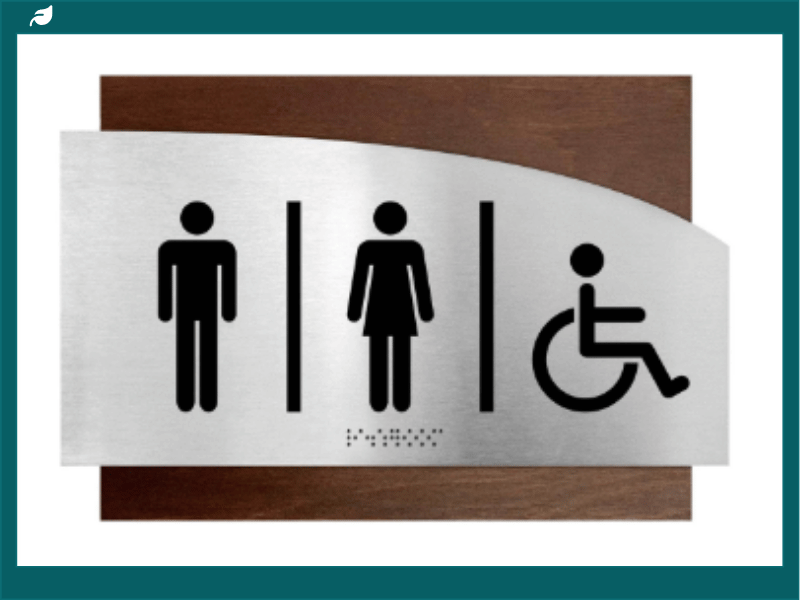
Unisex restroom signage is part of this picture. Clear, neutral identification allows all visitors to navigate with confidence, regardless of gender identity, physical ability, or familiarity with the building. When signage includes tactile lettering and Braille, it extends that access to visitors with visual impairments, supporting independent movement without staff intervention.
This is social sustainability in its most tangible form: designing spaces that reduce barriers, minimize confusion, and respect the dignity of every user. Buildings that achieve this don’t just score well on certification checklists — they function better for the people inside them.
Material Durability and Lifecycle Impact
One of the least discussed sustainability benefits of well-specified signage is longevity. A sign that lasts fifteen years without replacement represents a fundamentally different environmental footprint than one that degrades and needs to be discarded and remanufactured every two or three years.
Material choice is the primary factor here. Three materials consistently demonstrate strong lifecycle performance in interior signage applications:
- Wood — a renewable resource that, when properly finished, offers decades of service in interior environments. Its production footprint is lower than most synthetic alternatives, and at end of life, it’s biodegradable rather than destined for landfill.
- Stainless steel — highly durable, corrosion-resistant, and fully recyclable. Signs made from stainless steel can outlast the buildings they’re installed in, and the material retains its value in recycling streams without quality degradation.
- Acrylic glass — lightweight, precise, and resistant to UV degradation and chemical cleaning agents. While acrylic is a polymer-based material, its exceptional durability in signage applications means replacement cycles are measured in decades, significantly reducing cumulative waste.
The sustainability case for durable signage materials is straightforward: fewer replacements mean less manufacturing energy, less transport, less packaging waste, and less material entering waste streams over the building’s operational life.
Wayfinding Efficiency in Sustainable Building Design
Green building certifications increasingly evaluate occupant experience alongside energy and material metrics. Wayfinding — how easily people navigate a space — is part of that evaluation, because buildings that confuse their occupants generate inefficiencies that ripple through daily operations.
Unclear restroom signage, for example, increases foot traffic in wrong directions, generates repeated questions to reception or facility staff, and creates moments of hesitation that subtly degrade the user experience. In high-occupancy buildings, these micro-inefficiencies compound.
Effective unisex restroom signs eliminate this friction. When signage is consistent in placement, clear in visual hierarchy, and inclusive in design, occupants navigate intuitively. Staff spend less time giving directions. And the building communicates its values — accessibility, clarity, respect — without saying a word.
Production Methods That Align with Sustainability Goals
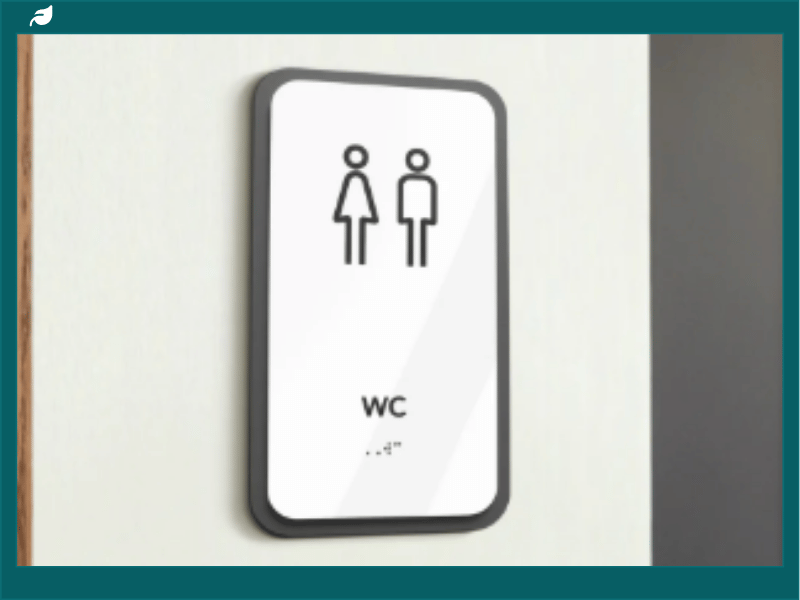
How signage is manufactured matters as much as the material it’s made from. CNC laser cutting, for example, produces precise cuts with minimal material waste compared to traditional fabrication methods. UV printing bonds pigment directly to the surface without solvent-based processes, reducing VOC emissions during production. And when signs are made to order rather than mass-produced, overproduction waste is eliminated entirely.
These aren’t headline-grabbing sustainability measures. But across a building with hundreds of signs — each one specified, produced, and installed once rather than replaced repeatedly — the cumulative impact on resource consumption is meaningful.
The Bigger Picture
Restroom signage may seem like a minor detail in the context of sustainable building design. But sustainability is, at its core, about systems thinking — understanding how small decisions compound over time. A sign that’s durable enough to last the life of a building, inclusive enough to serve every occupant, and clear enough to eliminate daily confusion is doing quiet, continuous work toward a more sustainable built environment.
As inclusive restroom facilities become standard in new construction and renovation projects, the signage that identifies them deserves the same level of specification as any other building system. Material lifecycle, accessibility integration, production efficiency, and wayfinding performance aren’t secondary considerations — they’re the details that determine whether a building’s sustainability commitment extends from the mechanical room to the corridor.