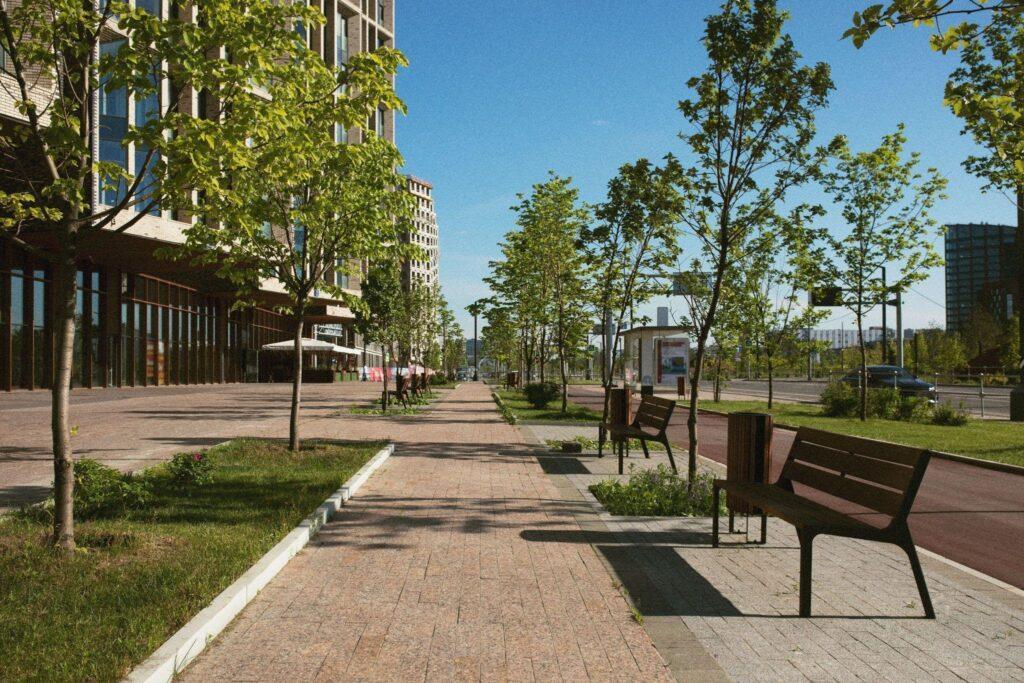
The built environment exists all around us. From initial planning and construction for new houses or development of business locations, through to ongoing maintenance and eventual demolition or recycling, there are multiple stakeholders involved in every aspect of the built environment. Companies in building, construction and maintenance must work with finance, real estate, business customers, government, public sector organisations, communities and individuals that live and work there.

This sector has a huge part to play in improving sustainability. According to the World Green Buildings Council, buildings are currently responsible for 39 percent of global energy related carbon emissions – this includes 11 percent for the materials and construction to create new buildings and 28 percent for the energy to heat, cool and power them over time. Improvements in efficiency will make a huge contribution to meeting the UK government target around reducing CO2 emissions by 78 percent compared to 1990 levels, before the year 2035.
However, sustainability is about much more than simply cutting energy. Buildings exist in specific locations, they have history and social significance. They must be paid for and managed, so there are financial implications around any development or re-development work. For companies in the built environment sector, creating a sustainability strategy involves much more than looking at energy efficiency or carbon reduction on its own.
Leadership skills are needed
Professionals in the built environment sector need leadership skills in order to make changes to how their organisations work around sustainability. They have to understand how to be both authoritative and innovative in their work, so they can shape and drive their organisation’s goals and ambitions. Because there are so many moving parts involved in sustainability and the built environment, professionals have to develop their understanding around finance, social, cultural and leadership issues in general. There is no one size fits all approach that can be deployed, so each decision and proposal has to be judged on its own merits and in context.
To help create this next generation of professionals, the University College of Estate Management has developed a new Master’s degree programme that will provide insight and expertise into how to create strong sustainability programmes in the built environment sector. Based on a mix of peer discussion, insight into different perspectives, and a thorough understanding of the underpinning policies, research and discourse around sustainability, the UCEM Master’s course will equip these change-makers with the language and capabilities to make a difference in their organisations.
Increased effort around sustainability is required to support the United Nations’ Sustainable Development Goals (SDGs) and as part of the global aim to deliver the goal of reducing climate emissions and getting to net zero by 2050. While legislation can establish goals and make companies take initial action, professionals in the built environment sector will have to think beyond these regulations and see the wider environmental and business impact they can have.
Getting ahead of future requirements
Alongside the goals set out in the United Nations SDGs, the built environment sector will face more stringent policy and regulation over time as the deadlines for net zero compliance get nearer. In the UK, the Environmental Audit Committee is already planning consultation on whole-life carbon assessments for buildings in 2023. This would aim to address 25 percent of the UK’s greenhouse gas emissions.
By planning ahead on this issue, companies involved in construction and building can avoid the challenges involved in managing these commitments and adapt their approaches. For the professionals leading these initiatives, taking a proactive and joined-up approach around sustainability will ensure that they can generate the most impact and deliver the highest returns for us all.
By Dr James Ritson, Programme Leader, MSc Building Surveying & Dr Graeme Larsen, Associate Dean of Sustainability, University College of Estate Management