Scotland Food & Drink Partnership has published a Climate Transition Plan setting out priority action for the nation’s food and drink sector as it works towards Scotland’s legally binding 2045 net zero target. Developed through its Net Zero Commitment Programme, the plan sets out a practical route for businesses and recommendations for government. The sector generates £19 billion in annual turnover, contributes £7 billion in GVA and supports around 115,000 jobs. It positions emissions reduction and resilience as closely connected commercial priorities amid climate volatility, higher input costs and changing market expectations.
A Route To Net Zero
The plan considers the full food and drink supply chain, from field to point of delivery, and draws on engagement with industry, government, academia and advisory bodies. Its publication comes as extreme weather, water scarcity and flooding affect production and supply chains, while energy and input costs continue to add uncertainty for businesses.
Rather than presenting the transition as dependent on untested solutions, the Climate Transition Plan finds that many relevant technologies and practices are already proven. The immediate task is to expand their use in ways that remain commercially viable and practical across a varied sector that includes primary producers, manufacturers and food businesses.
The programme’s Climate Transition Plan aims to provide a shared basis for action, identifying steps that businesses can take directly while recognising the enabling conditions required from government and other organisations.
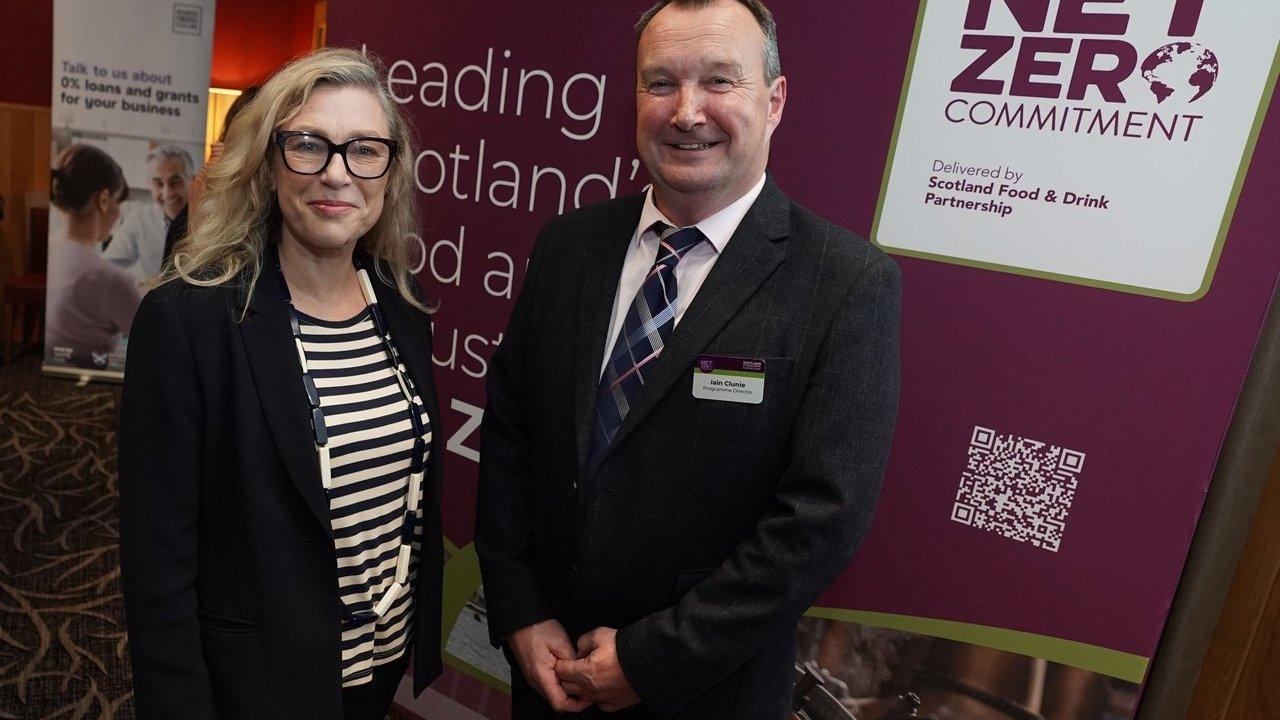
Iain Clunie, Programme Director of Scotland Food & Drink’s Net Zero Commitment, said:
“Scotland’s food and drink businesses are already taking action, but the operating environment is changing quickly. This plan provides a shared route forward, identifying where businesses can act and where wider conditions need to improve to support progress.
Resilience Alongside Emissions Cuts
A central theme of the plan is that decarbonisation cannot be treated separately from business resilience. For a sector exposed to weather disruption, fluctuating costs and changing customer expectations, lowering emissions can also help reduce exposure to volatility and support long-term productivity.

The plan identifies four areas expected to be important in strengthening the sector’s resilience: finance and investment, energy and infrastructure, workforce and skills, and on-farm and product diversification. Together, these areas recognise that progress depends not only on individual business decisions but also on access to capital, reliable systems and the capability to put new practices into operation.
Iain Clunie, Programme Director of Scotland Food & Drink’s Net Zero Commitment, said:
“Reducing emissions and strengthening resilience are increasingly part of the same challenge. As policy, regulatory and market expectations change, the transition to net zero is becoming increasingly important to competitiveness, productivity and long-term commercial sustainability. The plan sets out practical actions to help businesses reduce their exposure to volatility and prepare for what comes next.”
Conditions For Business Action
The Climate Transition Plan places responsibility across the supply chain, while also recognising barriers that cannot be addressed by businesses alone. It calls for government action to improve energy infrastructure and provide better access to trusted technical and advisory support, particularly for SMEs and primary producers.

This focus on practical conditions is notable for a sector spanning agriculture, aquaculture, fishing, food production and drink manufacturing. Access to infrastructure, specialist knowledge and investment can determine whether established emissions-reduction measures can be implemented at the pace required.
The Net Zero Commitment Programme works across industry, government and wider partners to turn ambition into practical action. Its work focuses on influencing, guiding, sharing, evidence and a just transition, with the stated aim of helping businesses understand the changes needed and learn from one another as the sector responds.
Government Support For Transition
The plan has received support from the Scottish Government through the Sustaining Scotland, Supplying the World strategy. Its arrival highlights the economic importance of a sector described as Scotland’s largest manufacturing sector by employment, with food and drink exports standing at £7.5 billion.
Gillian Martin, Climate Action and Rural Affairs Secretary, said:
“Scotland’s food and drink industry is a cornerstone of our economy and a key part of Scotland’s journey to net zero. I am delighted that Scottish Government support for the Sustaining Scotland, Supplying the World strategy is helping the sector take forward this important work.
Gillian Martin, Climate Action and Rural Affairs Secretary, added:
“I congratulate the Scotland Food & Drink Partnership on the significant progress made to date. This Climate Transition Plan demonstrates the ambition, collaboration and innovation that will be needed to deliver a fair and successful transition.
A Shared Sector Commitment
Scotland’s Climate Transition Plan offers a clear framework for an industry facing immediate operational pressures while pursuing a longer-term net zero objective. By connecting practical business measures with recommendations on infrastructure, finance, skills and advice, it gives the sector a structured basis for coordinated progress.
Gillian Martin, Climate Action and Rural Affairs Secretary, stated:
“By continuing to reduce emissions, strengthen resilience and embrace sustainable growth, Scotland’s food and drink sector will be a key partner in helping us meet our net zero ambitions while supporting jobs, investment, and communities across the country.”