Introduction to the Japanese Spider Crab
Stretch your arms as wide as they’ll go. Now imagine something alive that spans four times that distance, walking slowly across the ocean floor on legs like stilts. That’s the Japanese spider crab, and it’s very real.
Found in the Pacific Ocean off the coast of Japan, this creature holds the title of largest arthropod on Earth. Legs reaching up to 12 feet tip to tip. A body that looks less like a crab and more like something evolution dreamed up on a dare. National Geographic reports that researchers observed a single Japanese spider crab molt in captivity that lasted 103 minutes and resulted in a growth rate of nearly 22% during that cycle. Marine biologists have studied it for decades, and it still manages to surprise them.
If you’ve never given much thought to what lives at the bottom of the sea, the Japanese spider crab is a pretty compelling reason to start.
These spider crabs aren’t just remarkable for their size. They play a genuine role in the health of their ecosystem, scavenging the ocean floor, cycling nutrients, and keeping the deep-sea food web ticking along. They’re not decorative. They’re load-bearing.
And understanding what they actually do down there, in the cold and the dark, matters more now than it ever has.
Physical Characteristics and Anatomy
The Japanese spider crab’s anatomy is built around one central reality: surviving at depth, under pressure, in the dark, with very little margin for error. Every feature serves a purpose. Nothing is accidental.
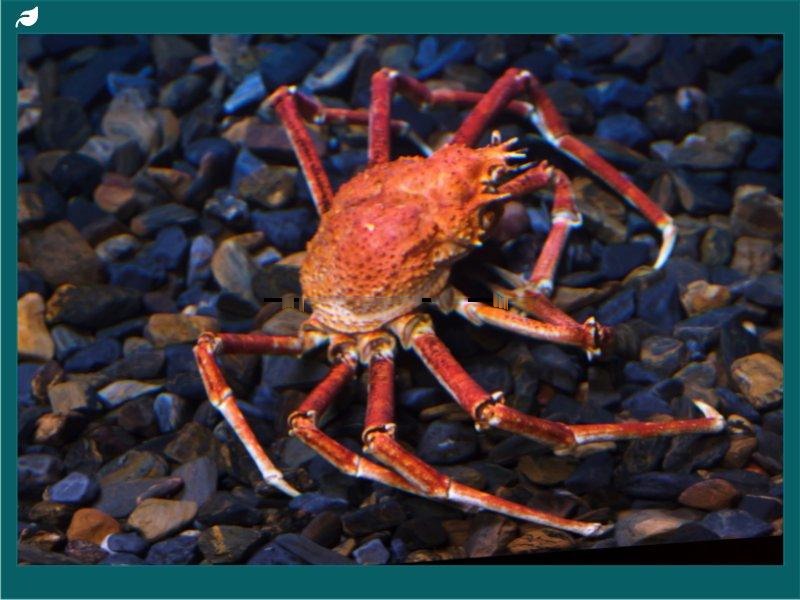
Its exoskeleton acts as both armor and structural support, holding together a body that can weigh up to 42 pounds in large adults. The coloration runs from orange to off-white, which sounds almost cheerful until you realize it works as camouflage against the rocky, sandy substrates of the ocean floor. Predators scan right past them. The texture of the shell adds to this effect, often rough and irregular enough to mimic the surface of a rock when the crab stays still, which it’s very good at doing.
Unique Features of the Japanese Spider
The Japanese spider crab belongs to the genus Macrocheira, and that name tells you something. “Macrocheira” means large hand in Greek, a direct nod to the crab’s most defining physical fact: those extraordinary legs.
Each leg is long, spindly, and surprisingly nimble. The full span can reach 12 feet, giving the crab an almost ridiculous reach when foraging across the seafloor. In an environment where food sources are spread thin and competition is real, that reach is a serious advantage. The Japanese spider can cover ground that smaller crabs simply can’t access, picking through detritus, cracking open shells, and scavenging whatever the ocean delivers down to those depths.
But the legs aren’t just for movement. They’re sensory tools. The tips are sensitive enough to detect texture and chemical signals, helping the crab locate food in low-visibility conditions where sight is nearly useless. Deep water doesn’t come with good lighting, and the Japanese spider crab has adapted accordingly, relying on touch and chemical detection the way shallow-water creatures rely on vision.
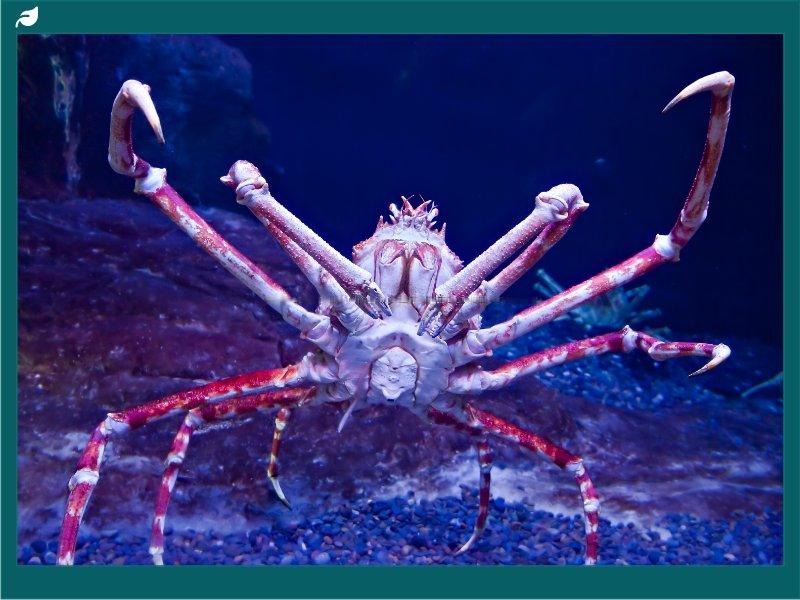
The claw structure deserves attention too. The chelae, the front claws, are powerful enough to pry open mollusks and handle prey with precision. They’re not the largest claws relative to body size in the crab world, but they’re effective and durable, built for a long career on the seafloor. A crab that might live for 100 years needs tools that hold up, and these do.
Here’s the thing that tends to stop people cold: the Japanese spider crab can regenerate lost limbs. Lose a leg to a predator or a bad encounter with a rock formation, and the crab grows it back over successive molts. It’s a slow process, sometimes taking several molting cycles before the regenerated limb reaches full size, but it works. In an environment as unpredictable as the deep sea, that regenerative ability isn’t a bonus feature.
It’s a survival strategy baked into the biology.
The molting process itself is worth understanding. As the crab grows, it sheds its exoskeleton entirely, leaving itself briefly soft and vulnerable while a new, larger shell hardens around it. During this window, the crab hides. It has to.
A soft Japanese spider is essentially defenseless, and the ocean doesn’t offer grace periods. The crab often seeks out crevices in the rock or buries itself partially in sediment, staying as still as possible until the new shell firms up. Given how large these animals become, that hardening process takes considerably longer than it does for smaller crustaceans, extending the period of vulnerability in ways that make each molt a genuinely risky event.
Habitat and Distribution
The Pacific Ocean off Japan’s coast is where you’ll find the overwhelming majority of Japanese spider crabs, though their range shifts depending on season and life stage. They’re not creatures of one fixed depth. They move, and they move deliberately.
Life in Coastal Waters and Beyond
Younger crabs tend to stay in shallower coastal waters, where food is more abundant and temperatures are warmer. As they age and grow, they migrate deeper, sometimes reaching depths of 1,000 feet or more. The deep ocean is colder, darker, and slower, but for a fully grown spider crab armored in a thick exoskeleton, it’s manageable. In fact, the relative scarcity of large predators at those depths works in their favor.
The seafloor is their primary territory. Long legs carry them across sand, silt, and rock with a gait that’s almost mechanical in its steadiness. They don’t rush. They don’t need to.
At their size, with their armor, very few things in the ocean are actively hunting them. Their movement is unhurried and deliberate, covering the seafloor with a patience that suits an animal built to live for a century.
What they’re doing down there, most of the time, is scavenging. Dead fish, plant matter, shellfish, whatever the ocean provides. This makes them critical contributors to nutrient cycling. By breaking down organic material on the ocean floor, they release nutrients back into the water column, which feeds other organisms higher up the food chain.
Remove the spider crab from that system, and you feel the absence in ways that ripple up through multiple species.
Their seasonal movements also matter for reproduction. During spring, many crabs migrate to shallower waters near the coast to spawn, where warmer temperatures and better food availability give larvae a stronger start. Freshwater input from nearby river systems can also influence water temperature and nutrient levels in these coastal zones, shaping the conditions larvae encounter in their earliest days. This rhythm between deep and shallow, between cold and warm, between feeding and breeding, is central to how the species sustains itself across generations.
Interactions with other marine life shape their role further. They share the seafloor with fish, mollusks, sea urchins, and other crustaceans. While they’re not aggressive hunters, they’re opportunistic enough to take advantage when prey is available and slow enough to catch. Their sheer size means they interact with a wider range of species than most bottom-dwellers, and their presence influences the local balance in ways that extend well beyond their immediate surroundings.
In the sea, few things exist in isolation.
Lifecycle and Reproduction
The Japanese spider crab is the largest arthropod on Earth, but it starts life as something you could fit on a fingernail. The distance between those two states involves years of growth, repeated molting, and a series of developmental stages that are as remarkable as the adult form itself.
From Larvae to Adult Crabs
Eggs hatch into free-floating larvae that drift on ocean currents, feeding on microscopic organisms and avoiding the considerable list of things that want to eat them. This is the most dangerous phase of the spider crab’s life. Survival rates are low. The ocean is vast and full of predators, and a larval crab has essentially no defenses beyond sheer numbers.
A female can carry up to 1.5 million eggs at once, and even that extraordinary quantity only translates into a small number of adults.
Those that survive go through a series of zoeal stages, molting repeatedly as they develop. Each molt brings new complexity: more defined legs, a hardening body, a recognizable crab shape emerging from something that initially looks almost nothing like one. The transformation takes time and energy, and the crab must keep feeding throughout, making early access to food-rich coastal shallows genuinely critical to survival.
Eventually, the juvenile crab settles onto the seafloor and begins the long process of growing into its adult form. This isn’t fast. Japanese spider crabs are thought to live for up to 100 years, and they grow throughout their lives. The largest individuals you’ll encounter are almost certainly very old.
Those 12-foot leg spans represent decades of survival, molting, and growth in one of Earth’s most demanding environments. When you look at one of the largest specimens on record, you’re looking at an animal that has been navigating the Pacific Ocean floor since before most living humans were born.

As adults, they contribute to the ecosystem in ways that go well beyond their own survival. Their scavenging keeps the seafloor from accumulating too much dead organic matter. Their movement disturbs sediment in ways that support benthic communities. They live long enough, and grow large enough, to become genuine fixtures in their local ecosystem, reliable presences in the deep that other species orient around.
Conservation Status and Efforts
The Japanese spider crab isn’t currently listed as endangered, but it faces real and growing pressure. Overfishing, habitat disruption, and shifting ocean conditions all push against a species that reproduces slowly and takes years to reach maturity. A crab that lives 100 years and grows throughout its life is not something a population bounces back from losing quickly. The math of slow reproduction and fast extraction doesn’t work in the species’ favor.
Japan has historically had a significant commercial fishery for spider crabs. They’re considered a delicacy, and demand has been consistent. The problem is that the same features that make them fascinating, slow growth, long life, late maturity, also make them vulnerable to overexploitation. Take too many too fast, and the population can’t keep pace with the losses.
That’s not a theoretical risk. It’s a pattern that has played out with other slow-maturing marine species around the world.
Protection in Japanese Coastal Waters and Rivers
Conservation responses in Japan focus on the coastal waters and river systems where these crabs complete critical stages of their lifecycle. The shallow spawning grounds and the areas where juveniles develop need active protection if adult populations are going to remain stable. Disruption at those early stages doesn’t show up in the adult population immediately. It shows up years or decades later, by which point course correction is much harder. A study published on PubMed (NCBI) established baseline hemocyte concentrations and biochemical values for a managed population of Japanese spider crabs, providing critical reference data for future health assessments that can help detect population stress before it becomes irreversible.
Here’s why the river connection matters more than most people realize. Freshwater discharge from river mouths alters salinity, temperature, and nutrient concentrations in the nearshore zones where spider crab larvae spend their earliest and most vulnerable weeks. When a river carries heavy agricultural runoff or urban waste into coastal spawning grounds, the chemical changes can devastate larval survival rates across entire stretches of coastline. Protecting the crab means paying attention to what happens well inland, not just at the water’s edge.
Fishing regulations now include size limits that prevent the capture of juvenile crabs before they’ve had a chance to reproduce. Seasonal fishing bans give populations breathing room during the most sensitive periods, particularly the spring spawning migration when crabs move into shallower waters and become more accessible to fishing vessels. These aren’t revolutionary ideas, but they work when enforced consistently. Japan has moved toward stricter enforcement in recent years, with monitoring programs in key coastal zones tracking population trends across seasons.
Habitat restoration is the harder challenge. Mud deposition in riverbeds can suffocate the benthic life that young crabs depend on for food and shelter. When a river carries excess sediment into coastal waters, it clouds the water column and smothers the sandy and rocky substrates that juvenile spider crabs need. Coastal development and agricultural runoff alter water chemistry in ways that affect larval survival, often invisibly and at a distance from where the damage is most visible.
Reversing that kind of environmental degradation takes sustained effort and cooperation between government agencies, environmental groups, and local fishing communities. The economic pressures on those communities are real. Sustainable fishing practices have to make financial sense for the people doing the fishing, or the regulations don’t hold regardless of how well-designed they are.
Public education has a role here too. Communities that understand what the Japanese spider crab contributes to the ocean’s health are more likely to support protective measures, even when those measures impose short-term costs. The crab’s extraordinary appearance helps. It’s hard to be indifferent to something that looks like this, and that visibility translates into public interest that conservation programs can build on.
The goal isn’t to stop people from fishing for spider crabs entirely. It’s to make sure that the population in Japan’s coastal waters remains healthy enough to sustain both the ecosystem and the fishery over time. Those two things don’t have to conflict. But they require care, consistency, and a long view that matches the remarkable longevity of the animal itself.
A creature that can live for a century deserves a conservation strategy built to last at least as long.